Pure Shilajit: Uses, Safety, Quality and How to Choose High-Grade Resin
-

- February 23rd, 2026
- 1,273 views
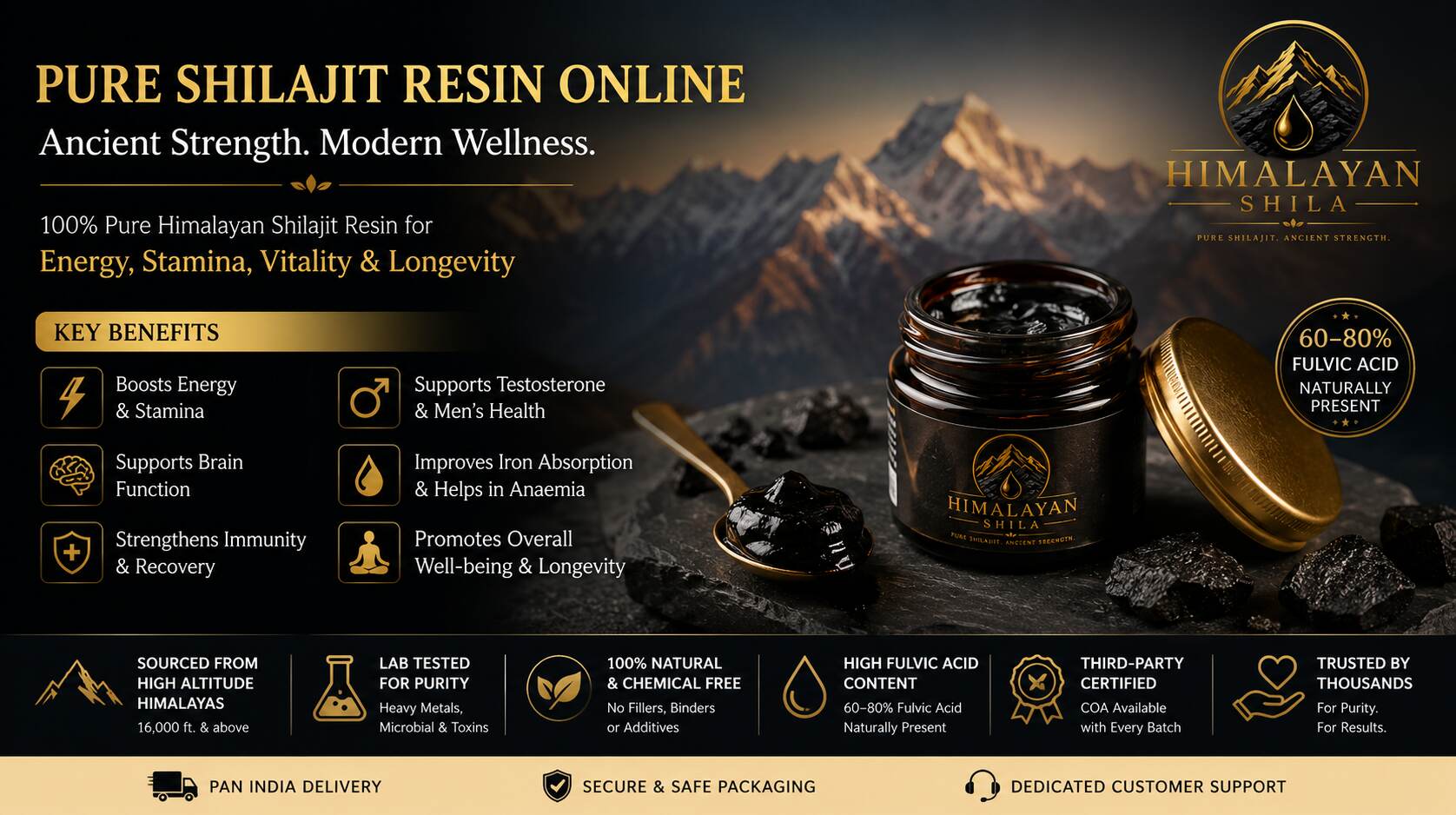
Pure Shilajit is a dark, tar-like resin traditionally used in Ayurvedic practice and sold today as a dietary supplement. Interest in this natural substance has grown because of its unique composition—rich in fulvic acid and trace minerals—and claims about physical and cognitive effects. Standards for product quality and scientific evidence vary, so understanding composition, safety, and regulation is important before purchase or use.
- Pure shilajit is a mineral-rich, humic substance traditionally used in Ayurveda.
- Key components include fulvic acid, humic acids, and trace minerals; composition varies by source.
- Research is limited and mixed; laboratory testing for contaminants (heavy metals, toxins) is advisable.
- Regulation for supplements differs by country; consult healthcare or regulatory guidance for safety concerns.
Pure Shilajit: composition and traditional uses
Pure Shilajit is formed over centuries from the decomposition of plant material and microbial action in mountainous regions. The resulting resin contains fulvic acid, humic substances, and a variety of trace minerals including iron, zinc, and selenium in variable amounts. In classical Ayurvedic texts, shilajit is described as a rejuvenating substance used for energy, stamina, and recovery, and it continues to be used in traditional medicine systems in South Asia.
What laboratory analysis shows
Chemical components
Laboratory studies typically identify fulvic acid and related humic compounds as major organic constituents. Fulvic acid is a low–molecular-weight humic substance associated with mineral chelation and transport in soil science. Mineral content depends on geological source and processing methods; precise profiles differ between batches and suppliers.
Contaminants and heavy metals
Testing by independent laboratories sometimes finds heavy metals (lead, mercury, arsenic) or other contaminants in shilajit products. Standards for acceptable levels depend on national regulators. The U.S. Food and Drug Administration (FDA) and equivalent agencies in other countries provide guidance on contaminants in dietary supplements, while research institutions recommend third‑party testing for heavy metals and microbial contamination before use.
Evidence for effects and limitations of research
Scientific studies on shilajit are limited in number, size, and design quality. Some small clinical trials and preclinical studies report potential effects on energy metabolism, antioxidant status, and fatigue, but findings are preliminary. Systematic reviews note heterogeneity across studies, small sample sizes, and differences in product standardization. Reliable conclusions about consistent health effects require larger, well-controlled clinical trials and standardized product characterization.
Safety considerations and who should be cautious
Interactions and medical precautions
Because shilajit contains bioactive constituents and minerals, interactions with prescription medicines or conditions that affect mineral balance are possible. People with blood-clotting disorders, on anticoagulant therapy, with iron overload conditions, or with chronic illnesses should consult a qualified healthcare professional. Pregnant and breastfeeding people are commonly advised to avoid herbal resins due to limited safety data.
Product quality and adulteration
Adulteration and mislabeling occur in the supplement market. Pure-looking resin can be diluted, mixed with synthetic compounds, or contaminated during processing. Choosing products that provide third-party testing results (for identity, potency, and contaminants) and certificates of analysis can reduce risk. Certificates should show testing for heavy metals, microbial contamination, and purity assays where available.
How to choose and evaluate products
Labels and certificates
Look for transparent labeling that lists source region, extraction method, and batch testing. Independent laboratory reports or certificates of analysis (COAs) are valuable; these documents often report heavy-metal levels, microbial counts, and active‑component measurements such as fulvic acid percentage. Avoid products that make disease treatment claims or lack basic information about testing.
Form and dosing considerations
Shilajit is available as raw resin, extracts, and combined formulations. Resin tends to be considered closer to traditional forms, while extracts may concentrate certain constituents. Because dosing protocols are not standardized across products, follow label instructions and consider professional guidance when used alongside medications.
Regulation and where to find reliable information
Dietary supplements, including shilajit products, are regulated differently across jurisdictions. In many countries, supplements are not subject to the same premarket approval as pharmaceutical drugs. For credible, evidence-based information about supplements, official resources such as national health institutes or peer-reviewed literature provide context on safety and research status. For a broad collection of biomedical literature and reviews, PubMed is a useful resource (PubMed).
Practical checklist before buying
- Confirm the seller provides batch-specific certificates of analysis for heavy metals and microbial testing.
- Check for transparent sourcing (geographic origin) and extraction methods.
- Avoid products with unsupported claims of curing diseases or guaranteed performance.
- Consult a qualified healthcare professional when taking other medications or if pregnant, breastfeeding, or managing chronic conditions.
References and official sources
Regulatory bodies like the U.S. Food and Drug Administration (FDA) and health research institutes (for example, the U.S. National Institutes of Health) provide guidance on dietary supplement regulation and safety monitoring. Academic literature available through medical databases summarizes clinical and preclinical studies on shilajit components such as fulvic acid.
FAQ
Is Pure Shilajit safe to use?
Safety depends on product quality, purity, and individual health status. Laboratory-tested products with third-party verification reduce, but do not eliminate, risk. Potential contamination with heavy metals or interactions with medications are the main concerns. Consultation with a healthcare professional is recommended for people with medical conditions, those taking prescription drugs, and pregnant or breastfeeding individuals.
What are the main active components in shilajit?
Main components include fulvic acid, humic substances, and a range of trace minerals. Concentrations vary by geological source and processing method.
How do regulators treat shilajit products?
Regulation varies by country. In many places, shilajit is sold as a dietary supplement and is subject to postmarket surveillance rather than premarket approval. National regulatory agencies provide specific guidance on contaminants and labeling requirements.
How can contamination be checked?
Request a certificate of analysis from the manufacturer showing heavy metal testing, microbial counts, and, where applicable, active-component assays. Independent laboratory testing offers additional assurance.
Are there reliable clinical benefits proven?
Some small studies report potential benefits for energy and fatigue-related outcomes, but evidence is limited and heterogeneous. Larger, rigorous clinical trials and consistent product standardization are needed to draw definitive conclusions.