Why Your Resource Plan Looks Perfect but Projects Still Miss Deadlines
-

- Published Updated
- 7,218 views
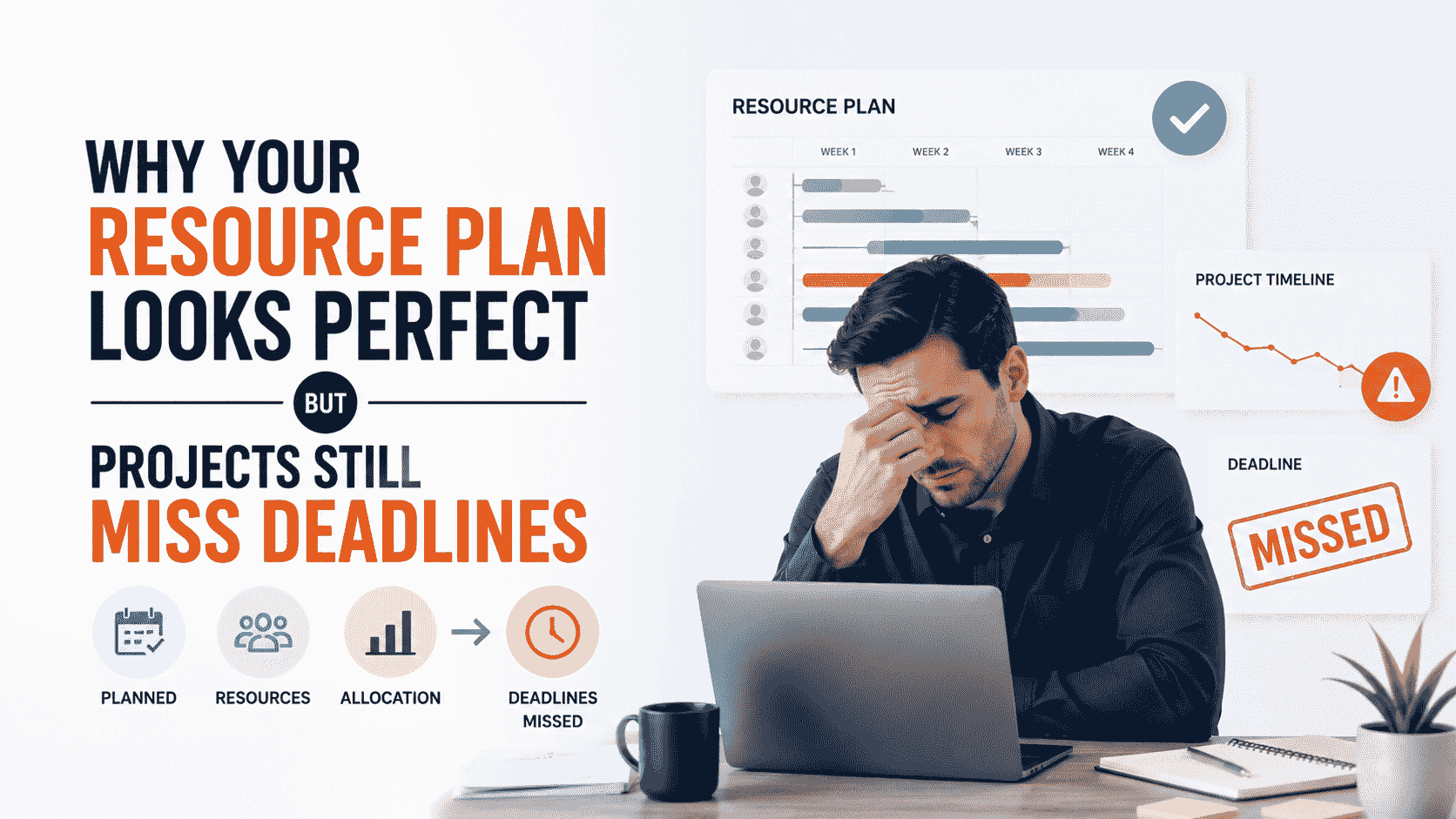
You made the plan. You assigned every task. The timeline looked clean and the spreadsheet showed no red flags. So why did the deadline still get missed?
The answer is rarely about team effort alone. Resource plans fail not because managers plan badly, but because the information behind the plan goes out of date and nobody catches it. A clean plan and a realistic plan are two different things.
What Does a "Perfect" Resource Plan Actually Look Like?
A typical plan lists names, tasks, and dates. On paper it looks balanced. Everyone has work and the hours seem to add up.
But a plan only captures intent at one point in time. It does not show who is already stretched, which task is quietly running late, or where the next conflict is forming. That gap between what the plan says and what is actually happening is where projects fall behind.
Why Do Projects Miss Deadlines Even With a Plan in Place
The most common cause: no live view of how people are actually being used.
- People are overbooked without anyone seeing it. Two projects at 50% each sounds fine on paper. But when both get busy in the same week, that person is fully loaded on both and the plan still shows nothing wrong.
- Leave is not factored in. A plan made in January rarely accounts for sick days, public holidays, and personal leave that arrive in March. The hours shrink but the timeline does not adjust.
- Dependencies break without warning. One task slips two days and the task depending on it cannot start. By the time a manager notices, the project is a full week behind.
- Resources are shared but plans are not. The same designer or developer works across three projects. Every manager treats them as fully available and nobody sees the full picture.
Is Resource Overallocation Really That Serious?
Yes. Overallocation means asking someone to deliver more work than their hours allow, and it almost never looks obvious in a plan.
A person at 110% will keep going for a while. They skip steps and rush tasks. By week three those small cracks become missed deadlines. Most teams find out when someone says they cannot finish on time, and by then the schedule is broken.
Does the Tool You Use for Resource Planning Matter?
More than most teams expect. A spreadsheet records what was planned at one moment. It cannot show live conflicts, real availability, or what has changed since the last update.
Teams often discover that visibility, not planning, is the real problem. Platforms such as eResource Scheduler help managers identify conflicts before they impact delivery. When leave, bookings, and project timelines all live in one system, overallocations show up early, not after a deadline has been missed.
Good resource planning software does not just store assignments. It gives managers a current view of the whole team so they can make better decisions every day.
What Is the Difference Between Resource Planning and Capacity Planning?
Resource planning covers the present: who is doing what and when. Capacity planning looks further ahead and asks whether the team has enough hours for everything coming next month.
Both are necessary. Skip either one and you are managing blind today or getting blindsided next month.
How Do You Catch a Resource Problem Before It Becomes a Deadline Problem?
Look for these early signs: people regularly finishing work late, the same names on too many projects, managers surprised by conflicts, and no quick answer to who has capacity next week.
These are not random events. They mean your team lacks real visibility. The fix is not a more detailed plan. It is better information about where your people stand right now.
What Should a Resource Plan Always Include?
Many plans are too thin. A solid plan should show actual available hours after meetings, confirmed leave and holidays, a shared view of all active bookings, and alerts when someone is near their limit.
Without these, the plan looks complete but runs on incomplete data.
The Real Reason Deadlines Keep Getting Missed
The plan was never the problem. The information feeding the plan was incomplete.
Teams that hit deadlines know where their people are, who is close to their limit, and where the next conflict is heading. That knowledge lets them fix problems early instead of explaining missed deadlines.
The right resource planning software makes all of this visible automatically. The question is whether your team has that picture right now, or is still making decisions based on a spreadsheet that stopped reflecting reality weeks ago.