What Is an RTG Crane — And Why Do Ports and Logistics Yards Rely on It?
-

- March 25th, 2026
- 7,715 views
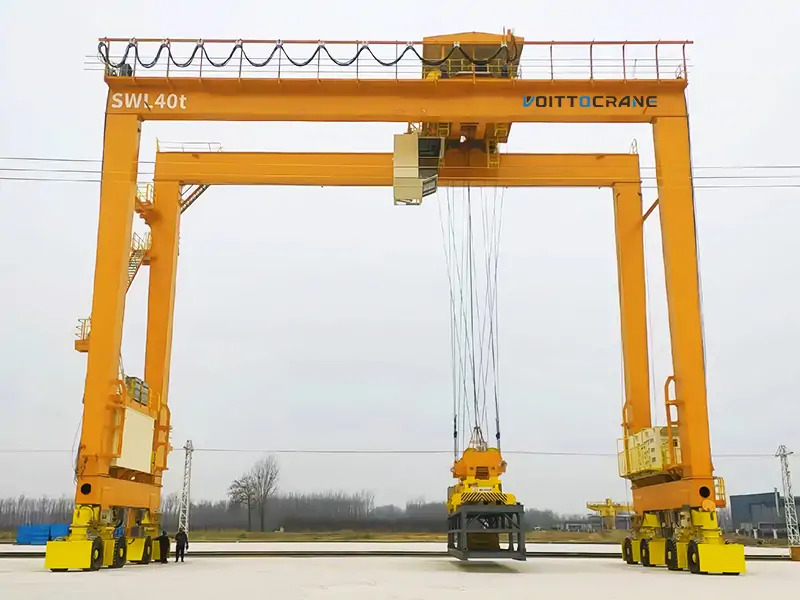
What Is an RTG Crane? A Complete Guide to Rubber-Tired Gantry Cranes
If you work in port operations, container logistics, or freight management, you've almost certainly encountered an RTG crane — even if you didn't know it by name. These towering machines are a common sight at container terminals worldwide, quietly handling thousands of containers every single day. But what exactly is an RTG crane, how does it work, and why has it become such a critical piece of equipment in modern logistics infrastructure?
This guide breaks it all down.
What Does RTG Stand For?
RTG stands for Rubber-Tired Gantry. The name describes exactly what the crane is: a gantry crane — a large frame structure that straddles a work area — mounted on rubber tyres instead of fixed steel rails. That distinction matters more than it might seem, and we'll get to why shortly.
What Is an RTG Crane?
An RTG crane is a large, mobile, rail-free gantry crane designed to lift, move, and stack intermodal containers in container yards, port terminals, logistics hubs, and railway freight facilities. It operates by straddling rows of containers, picking them up from above using a spreader bar attached to a hoist, and placing them precisely where needed.
The crane travels on rubber tyres across hardened ground surfaces, giving it the flexibility to move between container rows, reposition across a yard, and adapt to changing operational layouts — all without any track infrastructure.
RTG cranes are purpose-built for high-volume container handling. A single machine can span multiple container rows and stack containers several tiers high, making it one of the most space-efficient handling solutions available for large-scale container operations.
How Does an RTG Crane Work?
The basic working principle is straightforward. The crane operator — seated in a cab at the top of the structure or operating via remote control — positions the crane over the target container. The spreader lowers, locks onto the container's corner castings, and lifts the load. The crane then travels to the destination position and lowers the container precisely into place.
Modern RTG cranes incorporate active load control technology, which automatically compensates for container sway during travel. This keeps loads stable, improves placement accuracy, and reduces cycle times — all of which matter in a high-throughput terminal environment.
The crane's rubber tyre drive system allows it to travel at operational speeds, typically up to 30 m/min under full load, and significantly faster when empty. Turning capability varies by model, with many units offering 0–90 degree steering for tight maneuvering in constrained yard layouts.
Key Specifications
RTG cranes vary by model, but typical specifications include:
| Parameter | Specification |
|---|---|
| Lifting Capacity | 35 – 70 ton |
| Span | 23.47 – 26 m |
| Lifting Height | 15.5 – 18.5 m |
| Crane Travel Speed | Up to 130 m/min (empty) |
| Hoisting Speed | 20 – 50 m/min |
| Power Options | Diesel / Hybrid / All-Electric / Battery |
Power Options: Diesel, Hybrid, and Electric RTG Cranes
One of the most significant developments in RTG crane technology over the past decade has been the shift toward cleaner power systems.
Diesel RTG cranes are self-sufficient and easy to deploy at any facility with hardened ground. However, they produce emissions and carry higher fuel and maintenance costs over time.
Hybrid RTG cranes combine diesel engines with energy recovery systems that capture braking and lowering energy. This reduces fuel consumption significantly while maintaining full mobility.
All-electric and cable-reel RTG cranes connect to a fixed power grid via a trailing cable or busbar system. They produce zero on-site emissions and lower operating costs, but require electrical infrastructure investment.
Battery-powered RTGs take this further, offering full mobility without cables — and are increasingly popular in facilities with strong sustainability targets.
The right power choice depends on your facility's infrastructure, operational requirements, and long-term energy goals.
Where Are RTG Cranes Used?
Container Ports and Marine Terminals
This is the most common application. RTG cranes handle the loading, unloading, and organized stacking of containers between ship-side operations and inland storage yards. Their ability to span multiple rows and stack high makes them ideal for maximizing terminal throughput without expanding physical footprint.
Logistics and Intermodal Yards
In logistics parks and intermodal facilities, RTG cranes move containers between storage positions and transfer points — whether that's a truck lane, a rail track, or a warehouse loading dock. Rubber tyre mobility allows rapid repositioning as cargo flow patterns change.
Railway Freight Hubs
RTG cranes play a growing role in rail-to-road container transfer operations. They lift containers from flatbed wagons onto road vehicles or into yard storage, shortening dwell time and improving multimodal freight efficiency.
Industrial Warehouse Facilities
In large industrial environments handling heavy equipment, bulk materials, or oversized components, RTG cranes provide high-capacity lifting across open yard areas without fixed infrastructure.
RTG Crane vs. Other Container Handling Equipment
| Equipment | Mobility | Stacking Height | Infrastructure Needed | Best For |
|---|---|---|---|---|
| RTG Crane | High | 4–6 tiers | Hardened ground only | Flexible, high-volume yards |
| RMG Crane | None (rail-fixed) | 6+ tiers | Fixed rail tracks | Automated, high-density terminals |
| Straddle Carrier | High | 2–3 tiers | Hardened ground | Lower-density operations |
| Reach Stacker | High | 3–5 tiers | Hardened ground | Small to medium yards |
For operations that need high capacity, flexible mobility, and space-efficient stacking — RTG cranes remain the benchmark solution.
Is an RTG Crane Right for Your Facility?
If your operation handles containers at scale and you need flexible, high-capacity lifting without the commitment of fixed rail infrastructure, an RTG crane is worth serious consideration.
Key factors to evaluate:
- Container throughput volume
- Yard layout and ground conditions
- Available power infrastructure
- Long-term energy and sustainability targets
RTG cranes are a significant capital investment, but for the right application they deliver measurable returns through improved yard utilization, reduced handling costs, and faster cargo turnaround.
About Voitto Crane
Voitto Crane is a professional crane manufacturer with over 26 years of global export experience, supplying lifting equipment to customers in more than 80 countries. Our RTG crane range covers capacities from 35 to 70 tons, with full customization options across span, lifting height, power supply, and control systems.