Efficient Ruby on Rails Task Management Apps for Project and Team Workflows
-

- Published Updated
- 1,528 views
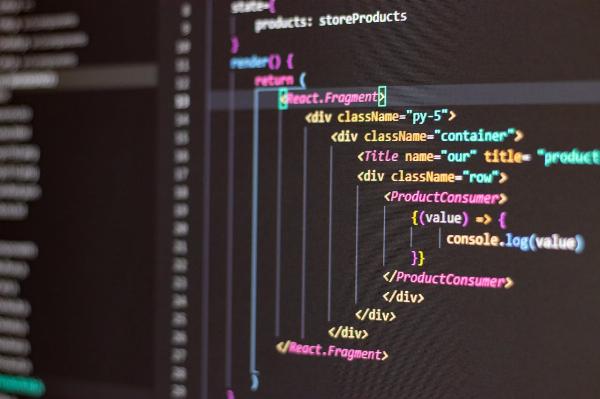
Ruby on Rails task management applications
Ruby on Rails task management applications help teams organize projects, track tasks, and automate workflows using the Rails web framework and common components such as MVC, ActiveRecord, and RESTful APIs. These applications typically combine data modeling, user interfaces, background processing, and real-time updates to support collaborative project work.
Overview and common use cases
What task management apps do
Task management systems organize work into projects, tasks, subtasks, labels, milestones, and assignments. Common features include task creation, status tracking, due dates, attachments, comments, search, and reporting. Integration points often include calendars, email notifications, and external issue trackers.
Typical users and workflows
Users range from individual contributors to cross-functional teams. Workflows include kanban-style boards, sprint planning for agile teams, recurring task scheduling, and approval flows. Role-based access and permissions are important for enterprise and multi-tenant deployments.
Architecture and core components
MVC and data layers
Rails follows the Model-View-Controller pattern. Models typically use ActiveRecord for database access and schema migrations. PostgreSQL is a common choice for relational storage because of its support for transactions, JSONB columns, and full-text search extensions.
Controllers, views, and APIs
Controllers expose RESTful endpoints for tasks and projects, while views render HTML for web clients. APIs using JSON are common for single-page applications (SPA) or mobile clients; token-based authentication and rate limiting help secure those endpoints.
Background processing and real-time features
Long-running work such as sending notifications, processing attachments, or generating reports is delegated to background job processors. Real-time collaboration (live updates to boards or comments) can be implemented with WebSockets or Rails' Action Cable for push notifications.
Key features to implement
Data modeling for projects and tasks
Typical models include Project, Task, User, Comment, Attachment, Label, and Membership. Use normalized tables for relational integrity and consider JSONB for storing flexible metadata. Add indexes on commonly queried fields like project_id, assignee_id, status, and due_date.
Task lifecycle and workflows
Define status transitions, validations, and callbacks. Use state machines or domain services for complex approval flows to keep controllers thin and models focused on business rules.
Search, filtering, and reporting
Implement full-text search, faceted filtering, and saved queries. PostgreSQL full-text search or dedicated search engines can improve performance for large datasets.
Scalability, performance, and reliability
Caching and database scaling
Use fragment and action caching at the view layer and low-latency caches like Redis for frequently accessed query results. For large-scale deployments, separate read replicas for the database and optimize queries with EXPLAIN.
Background jobs and asynchronous processing
Background job systems handle email notifications, file processing, and scheduled tasks. Idempotent job design and a robust retry strategy reduce duplicate work and improve reliability.
Monitoring and observability
Collect metrics, logs, and traces for response times, job queues, and database performance. Observability helps identify bottlenecks and guide capacity planning.
Security, compliance, and best practices
Authentication and authorization
Implement secure authentication flows and multi-factor options where needed. Use role-based access control (RBAC) or attribute-based access control (ABAC) to enforce permissions. Follow guidance from organizations such as OWASP for common web security risks.
Data protection and privacy
Encrypt sensitive data in transit and at rest, apply least-privilege access to production systems, and design logging policies to avoid storing personal data unnecessarily. For regulated environments, consult relevant data protection authorities and comply with applicable standards.
Testing, CI/CD, and deployment
Automated testing
Unit tests for models and services, integration tests for controllers and APIs, and system tests for end-to-end user flows support maintainability. Tools for test coverage and continuous integration validate changes before deployment.
Deployment patterns
Containerization and infrastructure-as-code help standardize environments. Blue-green or rolling deployments reduce downtime. Use migrations and feature flags to control schema changes safely.
Operational considerations and maintenance
Upgrades and dependency management
Keep Ruby and Rails versions up to date to receive security fixes and performance improvements. Regularly audit gem dependencies and follow the Rails upgrade guides for major version changes. Official documentation and release notes available from the Rails project provide migration guidance: Ruby on Rails.
Documentation and onboarding
Provide API docs, onboarding guides, and searchable help content to reduce support load and ensure consistent adoption across teams.
Extensibility and integrations
Design clear integration points (webhooks, API tokens) to allow third-party tools to interact with the task management system while maintaining security boundaries.
When to choose Rails
Rails is suitable for applications that benefit from convention-over-configuration, rapid development, and a mature ecosystem. Consider team expertise, long-term maintenance, and integration needs when selecting a framework.
Costs and resources
Development effort
Estimate effort by listing MVP features: user accounts, projects, task CRUD, comments, notifications, search, and basic reporting. Add time for testing, security hardening, and DevOps setup.
Community and learning materials
Use official guides, community tutorials, and security resources to build and maintain robust Rails-based applications. Refer to community-maintained style guides and the Rails Guides for conventions and patterns.
FAQ
What are Ruby on Rails task management applications and who uses them?
Ruby on Rails task management applications are web-based systems built on the Rails framework to organize projects and tasks. They are used by teams, project managers, and organizations of varying sizes to coordinate work, track progress, and collaborate.
How should data be modeled for tasks and projects?
Model core entities like Project, Task, User, Comment, and Label. Use foreign keys for relationships, index frequently queried columns, and consider JSONB for flexible metadata. Apply database constraints and migrations to maintain schema integrity.
Which scalability techniques apply to Rails apps?
Techniques include caching, background job processing, database read replicas, connection pooling, and horizontal scaling of web and worker processes. Observability and load testing inform scaling decisions.
How to secure a Rails-based task management system?
Follow secure development practices: use strong authentication, proper authorization, input validation, parameterized queries, and regularly apply security patches. Consult OWASP guidance for common web vulnerabilities.