Smart School Management Simplified with ERP Technology
-

- Published Updated
- 8,249 views
Digital Transformation in Educational Institutions
In today’s rapidly changing educational landscape, schools and colleges are increasingly using digital solutions to improve efficiency and communication. Traditional methods, which rely on paperwork and disjointed systems, often result in delays, confusion, and heavy workloads for teachers and administrators. Modern School ERP software helps transform educational institutions into organized, tech-savvy environments.
https://franciscansolutions.com/
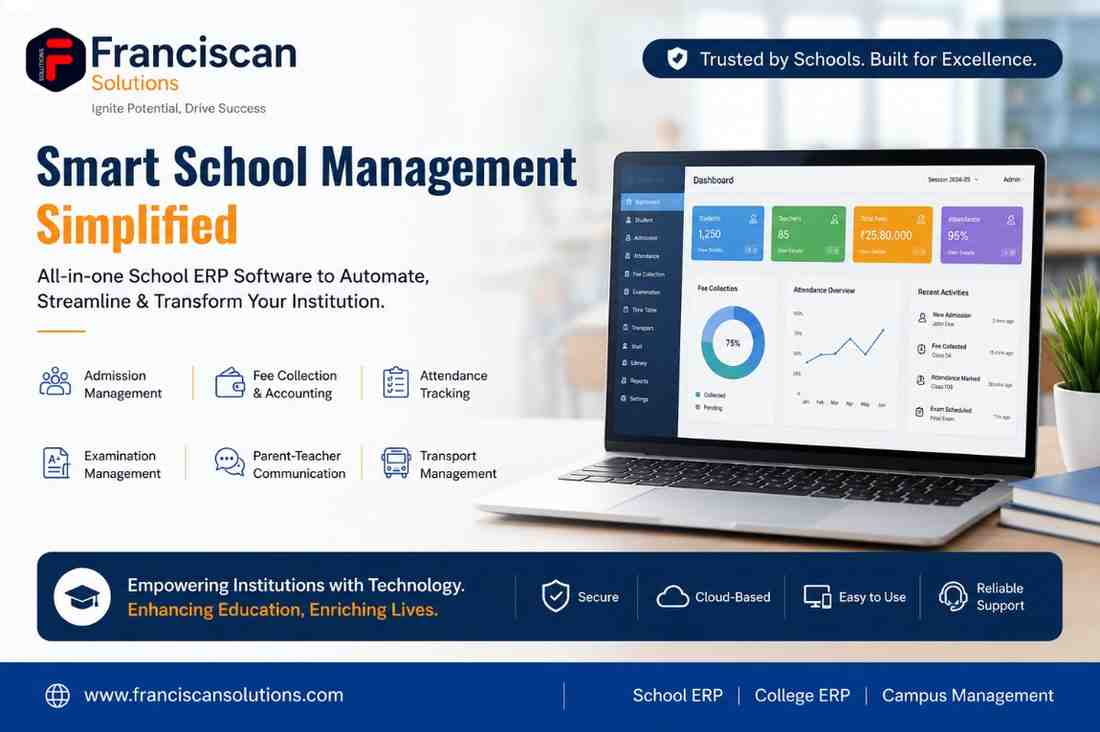
A School ERP system is a platform that manages and automates various academic and administrative tasks within an institution. It handles everything from student admissions to tracking attendance, managing fees, keeping examination records, overseeing transport, and facilitating parent-teacher communication. By centralizing these operations, ERP software increases efficiency, saves time, and enhances decision-making.
One significant advantage of ERP technology is the automation of routine administrative tasks. Schools manage large amounts of data related to students, staff, examinations, fee collection, and communication. Handling this information manually can lead to errors and delays. With ERP software, processes become streamlined and precise. Attendance records can be updated immediately, fee reminders can be automated, and reports can be created in real-time without extra manual effort.
Another key benefit of School ERP software is centralized data management. Educational institutions need access to updated information at all times. When data is spread across various systems or files, it is challenging for administrators to ensure accuracy and consistency. ERP systems address this by storing all information in a centralized database, accessible securely to authorized users. This enhances transparency and facilitates coordination among departments.
Benefits of Cloud-Based ERP Systems for Schools
Communication also improves significantly with ERP solutions. Strong communication among teachers, parents, students, and school management is crucial for smooth operation. Modern ERP systems provide tools for notifications, announcements, alerts, and parent portals. These features keep everyone informed. Parents can easily track attendance, academic performance, fee status, and school updates from their mobile devices, boosting engagement and transparency.
Cloud-based ERP systems are gaining popularity due to their flexibility and accessibility. Schools no longer rely exclusively on desktop systems or physical records. Cloud ERP solutions allow users to access important information from smartphones, tablets, and laptops anytime and anywhere. This flexibility proved especially valuable during the shift to online and hybrid learning, where digital access was essential for maintaining educational continuity.
Real-time reporting and analytics add further value to ERP systems. School administrators often need accurate data to make informed decisions about academics, finance, admissions, and planning. ERP software can generate instant reports on attendance trends, examination performance, fee collection, staff management, and other critical activities. These insights help management increase efficiency and allocate resources effectively.
Security and reliability are also vital in today’s educational management. Schools handle sensitive information about students, faculty, and finances. A secure ERP system protects data through modern security measures, controlled access, and backup systems. This minimizes risks linked to data loss or unauthorized access while preserving confidentiality.
Another major advantage of ERP software is scalability. As educational institutions expand, their operational needs become more complex. A scalable ERP system can adjust to a growing student population, new branches, and changing administrative demands without disrupting daily operations. This adaptability makes ERP solutions suitable for small schools, large campuses, colleges, and universities.
How ERP Technology Shapes the Future of Education
Modern ERP systems also promote better resource use within institutions. By reducing paperwork and automating repetitive tasks, teachers and administrative staff can devote more time to academic quality and student development. Instead of spending excessive time on manual record-keeping, educators can focus on teaching, mentoring, and enhancing student engagement.
Digital transformation in education is no longer optional; it is essential. Institutions adopting smart ERP solutions are better prepared to tackle administrative challenges, improve efficiency, and meet the demands of today's tech-driven environment. A well-implemented ERP system simplifies management processes and enhances the educational experience for students, parents, and faculty.
ERP software also supports long-term institutional growth by creating a more organized and connected educational ecosystem. Schools can maintain student records more efficiently, monitor staff performance, and simplify administrative approvals through digital workflows. Educational institutions that adopt ERP technology are often able to improve productivity while minimizing operational confusion. The integration of multiple functions into one centralized platform reduces dependency on manual processes and improves overall coordination among departments. This allows institutions to respond faster to administrative requirements and provide a smoother experience for students and parents alike.
As schools and colleges continue to evolve, investing in reliable ERP technology can help them become more organized, efficient, and ready for the future. From automation and centralized management to communication and real-time reporting, ERP systems play a crucial role in shaping the future of educational administration.