Top 8 SEO Techniques That Help Build Long-Term Organic Traffic
-

- Published Updated
- 1,506 views
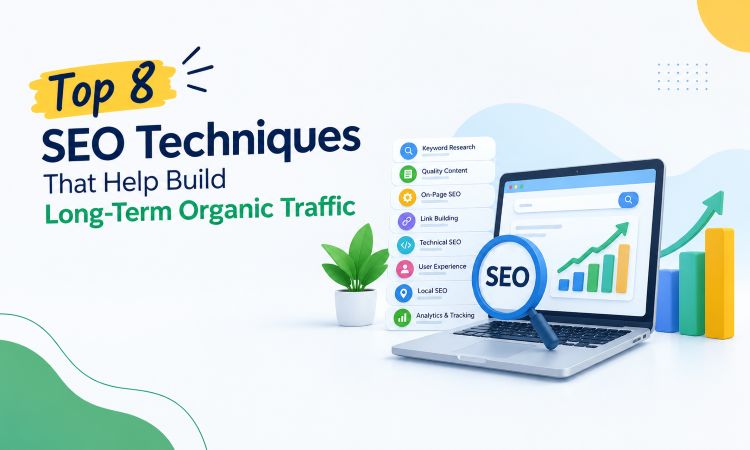
Getting organic traffic is not simply about publishing more articles or adding keywords to a webpage. Sustainable search visibility comes from creating useful content, improving website quality, understanding search intent, and building authority over time.
Search is also becoming more conversational and AI-driven. Businesses now need content that works for traditional Google results while also being clear and useful enough to be understood by AI-powered search experiences. A strong organic growth strategy therefore combines technical improvements, helpful content, topical relevance, authority, and continuous optimization.
What Is SEO?
SEO is no longer limited to keywords and backlinks. Modern search optimization focuses on helping search engines understand content and providing users with the most relevant, useful information. A SEO Expert understands these changing search behaviors and helps businesses create strategies that align with both search engines and user needs.
Key areas of modern SEO include:
User experience (UX)
AI-driven search optimization
Intent-based content
Semantic search
Entity-based understanding
Search engines such as Google increasingly aim to provide precise, helpful, and contextually relevant answers, including through AI-powered search experiences.
Here are eight practical techniques that can help businesses build long-term organic traffic.
1. Start With Search Intent, Not Just Keywords
A keyword tells you what someone searches for, but search intent explains why they are searching.
Before creating a page, identify whether the user wants to:
Learn something
Compare different options
Find a specific service or product
Solve a problem
Make a purchase or enquiry
For example, someone searching for “SEO audit checklist” probably wants actionable information, while “SEO consultant for small business” indicates stronger commercial intent.
Matching content with intent makes a page more useful and reduces the chances of attracting irrelevant visitors.
2. Build Topical Authority With Helpful Content
One article rarely establishes strong authority around a competitive subject. A better approach is to create a group of closely connected pages covering a topic from different angles.
For example, a website targeting organic growth could publish content about:
Technical SEO
Keyword research
Content optimization
Internal linking
Local search
Link building
AI-powered search
SEO performance measurement
Connect these pages naturally through internal links. This creates a clear content structure for both users and search engines.
The goal is not to publish hundreds of similar articles. It is to create useful topical depth that answers the important questions a potential customer may have.
3. Strengthen Technical SEO and Website Experience
Excellent content can struggle when a website has technical problems. Technical SEO creates the foundation that allows search engines to crawl, understand, and index important pages.
Focus on areas such as:
Mobile usability
Page speed and Core Web Vitals
Crawlability and indexation
XML sitemaps
Canonical URLs
Broken links and redirects
HTTPS security
Structured data where appropriate
Website experience matters as well. Pages should be easy to navigate, readable on mobile devices, and designed around the visitor's needs.
A technically healthy website gives valuable content a stronger foundation for organic visibility.
4. Create Content That Demonstrates Real Expertise
Search engines are increasingly surrounded by content generated or assisted by AI. That makes original, genuinely useful information more valuable.
Instead of repeating information already available online, add something that makes the page different:
Original examples
First-hand observations
Unique data
Expert commentary
Case studies
Practical processes
Clear explanations of difficult topics
This approach also helps when people discover information through AI-powered search. Structured clarity, source authority, and original evidence can make content more useful and trustworthy across AI search systems.
5. Optimize Existing Content Instead of Always Starting New
Publishing a new article every week is not always the best use of an SEO budget. Existing pages may already have impressions, backlinks, rankings, or historical authority that can be improved.
Review important pages regularly and look for opportunities to:
Add missing information
Improve outdated statistics
Answer new related questions
Strengthen internal links
Improve titles and headings
Remove unnecessary sections
Update examples
Improve conversion opportunities
A page ranking on the second page of Google may need better depth and relevance rather than an entirely new URL.
6. Build Authority Through Relevant Mentions and Links
Backlinks remain an important part of building website authority, but quality matters more than simply collecting large numbers of links.
Prioritize relevant opportunities such as:
Industry publications
Expert interviews
Guest contributions
Business directories
Digital PR
Resource pages
Partner websites
Original research
The strongest links usually come from content that another website has a genuine reason to reference.
Avoid creating links purely for quantity. A smaller number of relevant, trustworthy mentions can be more useful than a large collection of unrelated links.
7. Optimize Content for Traditional and AI Search
Modern search visibility extends beyond conventional blue-link rankings. Google AI Overviews, AI Mode, ChatGPT, Perplexity, and other AI experiences are changing how users discover information.
This does not mean abandoning traditional SEO. Instead, content should be structured so that important information is easy to understand and extract.
Useful practices include:
Use descriptive H2 and H3 headings
Answer important questions directly
Keep explanations clear and specific
Support claims with reliable evidence
Connect related concepts naturally
Establish clear author and brand information
Include original insights where possible
These practices strengthen both human readability and machine understanding.
An AI SEO Expert can help businesses evaluate how their content is structured for changing search environments, but the underlying principle remains simple: create information that deserves to be discovered and referenced.
8. Measure Business Results, Not Just Rankings
Ranking positions are useful indicators, but they are not the final objective of organic marketing.
Track metrics that show whether search visibility is contributing to business growth:
SEO Metric |
What It Helps Measure |
Organic clicks |
Visitors coming from search |
Impressions |
Search visibility |
Keyword positions |
Ranking progress |
Organic conversions |
Business actions from search |
Engagement |
Visitor interaction with content |
Leads or sales |
Commercial impact |
Indexed pages |
Search engine coverage |
Backlinks |
Authority and referral potential |
For example, increasing traffic from 5,000 to 10,000 monthly visitors sounds impressive, but the real question is whether those visitors are relevant and whether they generate enquiries, purchases, or other valuable actions.
How to Build a Sustainable SEO Strategy
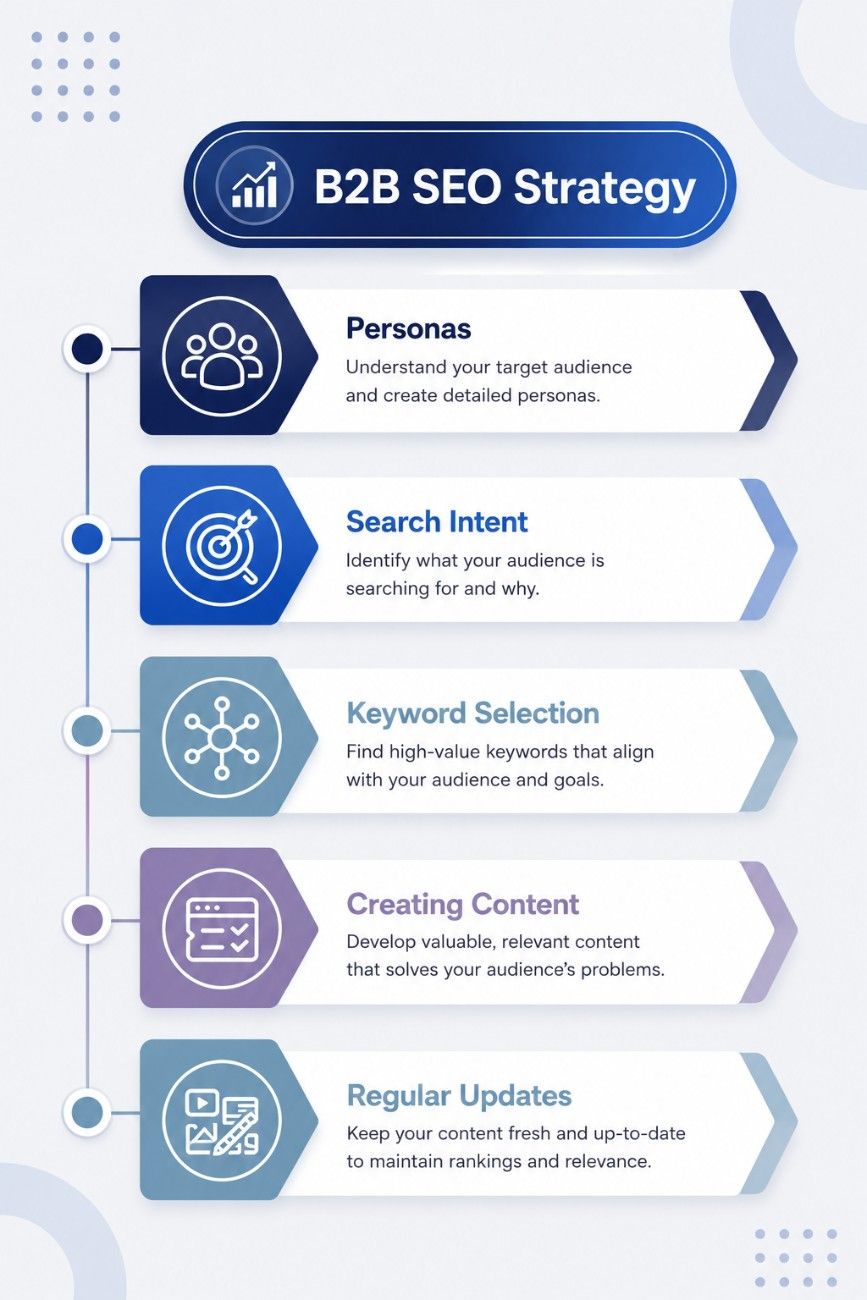
Building a sustainable SEO strategy means focusing on useful content, search intent, technical SEO, relevant keywords, quality backlinks, and a smooth user experience. Instead of chasing quick rankings, businesses should regularly track traffic, engagement, conversions, and search performance to make informed improvements.
When it comes to this approach, Pranav Jha is a good example of how SEO can be connected with business goals. His work combines SEO, content, data, and AI-driven search to build stronger organic visibility and support long-term business growth.
Final Thoughts
Long-term organic traffic is built through consistent improvements rather than one quick optimization. Businesses need technically strong websites, useful content, clear search intent, topical authority, relevant links, and regular performance analysis.
The most effective SEO Strategies are also adaptable. As search behavior evolves, businesses should continue improving their content instead of relying on outdated tactics.
The most useful SEO Tips are often the simplest: understand your audience, answer their questions better than competing pages, demonstrate genuine expertise, keep important content updated, and measure whether organic visibility is producing meaningful business results.
When these eight techniques work together, SEO becomes more than a ranking exercise—it becomes a sustainable channel for qualified traffic, visibility, leads, and long-term business growth.