How SEO Tools Help Improve Website Rankings
-

- September 18th, 2026
- 146 views
Search engine optimization (SEO) is essential for improving a website’s visibility and attracting organic traffic. However, achieving consistent search rankings requires more than simply adding keywords to web pages. SEO involves technical performance, content quality, backlinks, keyword targeting, user experience, and regular monitoring. This is where SEO tools become valuable.
SEO tools help website owners, marketers, and businesses collect important search data, identify problems, discover opportunities, and measure SEO performance. By turning complex website data into actionable insights, these tools make it easier to build and improve an effective SEO strategy.
1. Find the Right Keywords
Keyword research is one of the most important parts of SEO. Before creating content, businesses need to understand what their target audience is searching for. SEO tools can help identify relevant keywords, search trends, keyword difficulty, and related search terms.
Instead of targeting only highly competitive keywords, businesses can discover long-tail and specific phrases that may provide realistic ranking opportunities. For example, a business selling digital marketing services could research terms related to SEO services, website audits, keyword research, or local SEO.
Keyword research tools also help identify search intent. Understanding whether users are looking for information, products, services, or solutions allows businesses to create content that better matches their needs.
2. Analyze Website Performance
A website can have excellent content but still struggle to rank if it has technical problems. SEO tools can analyze important website elements and identify issues that may affect search visibility.
A website audit tool can check factors such as broken links, missing meta tags, duplicate content, page titles, headings, redirects, crawlability, and other technical SEO elements. Regular audits help website owners identify problems before they negatively affect organic performance.
Fixing technical issues can make it easier for search engines to crawl, understand, and index website pages. It can also create a better experience for visitors.
3. Improve On-Page SEO
On-page optimization involves improving individual web pages so that search engines and users can understand their content more effectively. SEO tools provide useful information for optimizing titles, meta descriptions, headings, keywords, URLs, and content structure.
For example, a content analysis tool can identify whether a page adequately covers its topic and whether important terms are used naturally. It can also highlight opportunities to improve readability and content organization.
However, optimization should not mean excessive keyword usage. Keywords should be incorporated naturally while the primary focus remains on providing useful and relevant information.
4. Monitor Keyword Rankings
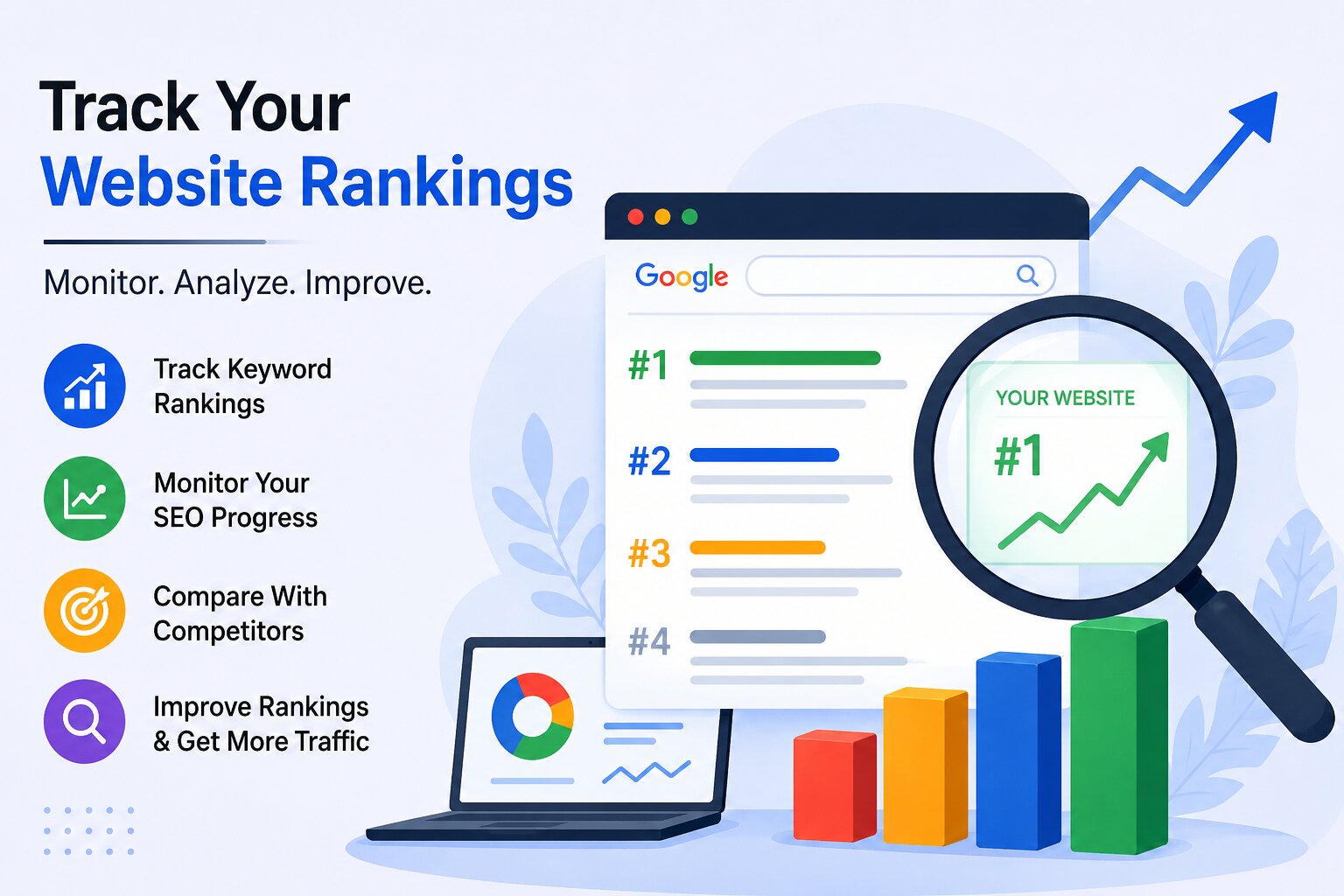
SEO is an ongoing process, and ranking positions can change over time. A rank tracker allows businesses to monitor how their important keywords perform in search results.
By tracking rankings regularly, marketers can identify which pages are improving and which keywords may require additional optimization. Ranking data can also help businesses understand the impact of content updates, technical improvements, and link-building activities.
For local businesses, tracking location-specific keywords can be particularly useful. It helps businesses understand their visibility in the areas they serve and identify opportunities for improving local search performance.
5. Identify Backlink Opportunities
Backlinks are links from other websites pointing to your website. They can contribute to a website’s authority and help search engines understand its relevance and reputation.
A backlink checker or backlink analysis tool can show which websites link to a domain, which pages receive links, and what types of backlinks a website has. This information can help businesses evaluate their existing link profile and discover potential opportunities.
SEO tools can also help identify potentially harmful or low-quality links that deserve further investigation. Rather than focusing only on the number of backlinks, businesses should prioritize relevant and trustworthy links.
6. Analyze Competitors
Understanding competitors can reveal useful SEO opportunities. SEO tools can provide insights into competing websites, including their ranking keywords, content topics, backlinks, and search visibility.
Competitor analysis does not mean copying another website. Instead, it helps businesses understand what topics and search terms are already being addressed within their industry.
For example, if competitors consistently rank for specific informational topics, a business can analyze those topics and create more useful, original content that addresses user needs. This approach can uncover content gaps and opportunities that may otherwise be overlooked.
7. Improve Content Quality
High-quality content plays an important role in SEO. SEO tools can help evaluate existing content and identify areas for improvement.
A content optimization tool may provide insights into keyword relevance, content structure, readability, topic coverage, and other factors. These insights can help marketers make articles more comprehensive and useful.
Content audits are also valuable. By reviewing existing pages, businesses can identify outdated information, thin content, duplicate topics, or pages that receive little organic traffic. Updating, combining, or improving these pages can make the website more useful for visitors and easier to manage.
8. Find Technical SEO Issues
Technical SEO problems can prevent search engines from properly accessing or understanding a website. SEO tools can help detect issues such as broken pages, incorrect redirects, slow-loading resources, indexing problems, and missing technical elements.
Regular technical monitoring is especially important for large websites because problems can occur when new pages are added or existing pages are changed.
An SEO audit can provide a structured overview of technical problems and help marketers prioritize fixes. Addressing important issues first can make SEO work more efficient.
9. Track Website Progress
One of the biggest advantages of SEO tools is the ability to measure results. Businesses can monitor rankings, organic traffic, backlinks, keyword performance, and other SEO metrics over time.
This data helps marketers determine whether their SEO strategies are producing meaningful improvements. If a particular page gains rankings after being updated, the results can provide useful insight for future content optimization.
Regular reporting also makes it easier to communicate SEO progress with clients, managers, or team members. Instead of relying on assumptions, businesses can make decisions based on measurable data.
10. Discover New SEO Opportunities
SEO tools are not only useful for finding problems. They can also uncover new opportunities for growth.
Keyword research may reveal search terms that a website has not yet targeted. Competitor analysis can identify content gaps. Backlink analysis can reveal potential outreach opportunities. Ranking reports can show keywords that are close to reaching higher positions.
These insights allow businesses to continuously expand and refine their SEO strategy. Over time, small improvements across content, technical SEO, keywords, and authority can contribute to stronger organic visibility.
Conclusion
SEO tools make search engine optimization more organized, measurable, and data-driven. From keyword research and website audits to backlink analysis, rank tracking, competitor research, and content optimization, they provide valuable insights throughout the SEO process.
However, SEO tools are most effective when their data is combined with thoughtful strategy and high-quality execution. Businesses should use these tools to understand problems, identify opportunities, and make informed improvements rather than relying on automated recommendations alone.
With regular monitoring and optimization, SEO tools can help businesses build stronger websites, create more relevant content, improve search visibility, and work toward sustainable organic growth.