How to Choose the Best Sewage Treatment Plant Manufacturers in Noida — Top 10 Vendors & Selection Checklist
-

- Published Updated
- 1,152 views
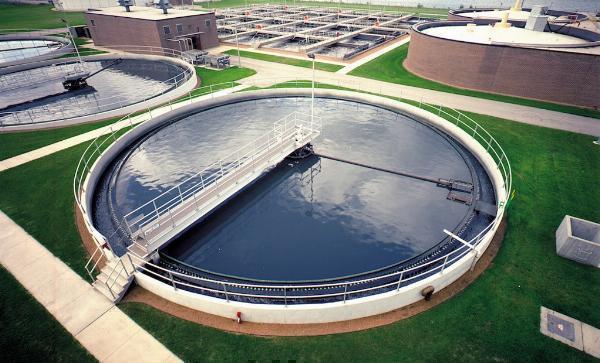
The following guide helps facility managers and procurement teams evaluate sewage treatment plant manufacturers in Noida for municipal, commercial, or industrial projects. It covers the top vendors, a practical vendor-selection framework, real-world scenarios, and procurement tips to compare technologies like MBBR, SBR, and MBR.
Detected intent: Commercial Investigation
- Top 10 manufacturer list plus procurement checklist for STP projects in Noida.
- Named framework: S.T.E.P. Vendor Selection Checklist (Site, Technology, Performance, Experience, Post-sale).
- Practical tips, trade-offs, and a short example procurement scenario.
Top 10 sewage treatment plant manufacturers in Noida — quick shortlist
This section lists commonly shortlisted vendors and vendor types encountered in Noida procurement. Local system integrators, EPC contractors, and specialized STP manufacturers appear across sectors (residential, commercial, industrial). The list below reflects common market players and supplier categories rather than ranked endorsements.
- Local EPC contractors offering complete civil + mechanical STP packages
- Packaged STP fabricators (prefabricated FRP/HDPE tanks)
- Membrane bioreactor (MBR) specialists for high-quality reuse
- MBBR/SBR technology suppliers for compact footprint solutions
- Turnkey wastewater treatment suppliers for industrial effluents
- Large national vendors with O&M contracts and monitoring services
- Design consultants partnered with equipment manufacturers
- Equipment-only suppliers (pumps, blowers, diffusers, membranes)
- Modular containerised STP providers for quick deployment
- Desludging and sludge-management service providers linked to STP vendors
S.T.E.P. Vendor Selection Checklist (named framework)
Use the S.T.E.P. checklist to score vendors during shortlisting. S.T.E.P. stands for:
- Site — site conditions, soil, groundwater, access, and space constraints.
- Technology — MBBR, SBR, MBR, activated sludge; energy and chemical needs.
- Performance — guaranteed effluent parameters (BOD, COD, TSS, TN), trial runs, and compliance to local norms.
- Experience — similar project references, maintenance contracts, and compliance history.
- Post-sale — spare parts availability, remote monitoring, training, and O&M capability.
How to score vendors
Assign 1–5 points per S.T.E.P. category and prioritize performance guarantees and O&M capacity. Include lifecycle cost (CAPEX + 10-year OPEX) in final scoring.
Core cluster questions (content hub ideas)
- What is the difference between MBBR, SBR, and MBR for municipal STPs?
- How to estimate lifecycle cost for an STP in a residential complex?
- Which permits and discharge standards apply to STPs in Noida?
- What are the common causes of STP performance failure after commissioning?
- How to include O&M and remote monitoring in an STP contract?
Practical procurement tips
- Request guaranteed effluent numbers (BOD, COD, TSS, fecal coliform) and ask for third-party test reports for reference installations.
- Include a 6–12 month performance acceptance period in the contract with clear penalties for non-compliance.
- Specify spare parts list and response SLAs for critical equipment (blowers, membranes, control panels) as contract deliverables.
- Prioritize vendors with local O&M teams or authorised partners to reduce downtime and logistics delays.
Common mistakes and trade-offs
Common procurement errors include underestimating OPEX (energy and consumables), choosing the cheapest CAPEX option without checking field performance, and skipping sludge-management planning. Trade-offs to consider:
- Cost vs quality: MBR gives superior effluent for reuse but higher maintenance and membrane replacement costs.
- Footprint vs simplicity: SBR and MBBR can save space but may require more sophisticated control and operator skill.
- Local supplier vs national OEM: Local vendors often provide faster service; national OEMs may offer longer warranties and better spare-part pipelines.
Short real-world example
Scenario: A 500 KLD residential township in Noida requires treated water for landscaping and flushing. Using the S.T.E.P. checklist, procurement compared three bids: a packaged MBBR (low CAPEX, moderate OPEX), a decentralized MBR (high CAPEX, low TSS/COD, suitable for reuse), and a civil-EPC activated sludge system (moderate CAPEX, highest space requirement). The final selection prioritized guaranteed reuse-quality effluent and local O&M coverage, choosing the MBR solution with a 12-month performance acceptance clause and remote SCADA monitoring.
Standards and regulatory note
Design and discharge parameters should align with Central Pollution Control Board (CPCB) and Uttar Pradesh Pollution Control Board rules. Refer to CPCB guidelines for effluent standards and monitoring protocols for factual regulatory requirements: Central Pollution Control Board.
Practical tips — quick checklist before signing
- Verify two recent site references with similar load and wastewater characteristics.
- Require a spares kit and a detailed preventive-maintenance schedule in the contract.
- Include a clause for operator training and remote monitoring handover.
- Confirm sludge handling and disposal responsibilities and costs up front.
FAQ: What are the best sewage treatment plant manufacturers in Noida?
Search results will list local EPCs, packaged STP fabricators, MBR specialists, and national vendors. Use the S.T.E.P. checklist to compare their site fit, technology, performance guarantees, experience, and post-sale support before choosing a supplier.
How do STP technologies (MBBR, SBR, MBR) differ for municipal use?
MBBR uses moving carriers to increase biofilm area; SBR treats wastewater in time-phased batches; MBR combines biological treatment with membrane filtration for superior effluent but higher costs. Selection depends on effluent quality needs, space, and OPEX tolerance.
What permits are required to install an STP in Noida?
Permits commonly include environmental clearance and consent to establish/operate under the state pollution control board. Confirm local UPPPCB and municipal requirements and include permit timelines in project planning.
How much should be budgeted for O&M of an STP?
O&M varies by technology and load. Typical annual O&M for conventional STPs can range from 5–15% of CAPEX; membrane systems are higher due to membrane replacement and energy costs. Request 5–10 year lifecycle estimates from vendors and compare.
Can treated water from STPs in Noida be reused for landscaping and flushing?
Yes, if the effluent consistently meets reuse standards for BOD, COD, TSS, and microbial limits. Include a monitoring plan and tertiary treatment (e.g., chlorination, UV, or membrane polishing) if required for reuse applications.