Laboratory Testing for Shilajit: What a Lab Report Can Prove, and What It Can’t
-

- Published Updated
- 158 views
Laboratory testing for shilajit can measure contaminants such as heavy metals and microbes, and it can estimate compounds like fulvic acid. It cannot, on its own, prove a product is safe, authentic or effective. How good a test is depends on the method, the batch and who ran it.
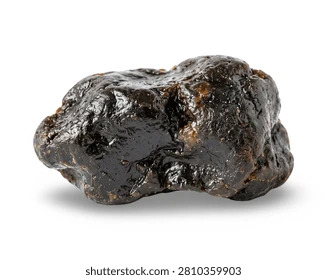
Shilajit is a dark resin that seeps from Himalayan rock and is sold across India as resin, capsules and liquids. A jar looks much the same whether it is pure, diluted or contaminated. That is why buyers increasingly look for lab reports, and why those reports deserve a careful read.
Why shilajit needs testing
Shilajit forms over long periods from rock minerals and decayed plant matter. A Poznan University of Technology team measuring thallium found that levels in crude shilajit from five countries varied widely, and that the authors attribute this to the geology each sample came from. The same study reported that the supplements tested listed nothing about heavy metal content on their packaging, and some contained more thallium than crude resin.
Context cuts both ways. The sample was small, and the highest per-tablet amount measured was 0.095 µg, far below the 15 µg intake ceiling the paper itself cites. The authors’ concern is long-term accumulation, which they did not measure in people. An older study of two Pakistani samples found metals within WHO permissible limits, according to its authors. Neither result describes the Indian market, and no peer-reviewed survey of branded Indian products turned up in research for this article.
Adulteration is a separate problem. A lab-testing company says fillers such as soil, charcoal and plant extracts are used, and that capsules can hide what resin would show. That claim comes from a business selling testing, so treat it as an interested view.
What lab tests can show
Heavy metals
The usual panel covers lead, arsenic, mercury and cadmium. One testing company says ICP-MS is the method USP specifies for supplement heavy metal testing. A result of “not detected” depends on the lab’s detection limit, so the limit should appear on the report.
Concentration alone is incomplete. A figure in parts per million needs converting into a daily dose. The company guide discussed below gives 8 ppm lead as an example with a 300 to 500 mg serving. That works out to 2.4 to 4 µg of lead a day, against the 5 µg daily limit the same guide cites for USP. At the top serving, that is 80% of the limit, which is closer than the guide’s “well under” wording suggests.
Microbial safety
Raw resin comes from rock faces and is not sterile. A complete report includes bacteria, yeast and mould counts and tests for pathogens such as Salmonella. A report covering only metals is incomplete.
Fulvic acid
Fulvic acid is the number most often printed on labels, and it is the easiest to misread. A certification body says fulvic acid results vary with method, and that standard HPLC testing may not confirm that a product is genuine, since synthetic variants can pass. That makes a percentage a weak proof of authenticity.
The figures also differ widely. One lab company says purified resin typically holds 15 to 20% fulvic acid by weight, while concentrated powders are standardised to higher levels. A resin advertising 60% or more therefore needs the method and report behind it. No peer-reviewed source confirming the 15 to 20% range was found.
Authenticity
No single test establishes that shilajit is genuine. Certifiers recommend combining several methods, and the same certifier notes that third-party certifications from groups such as NSF or USP are uncommon for shilajit.
What a certificate can’t tell you
A certificate of analysis describes one sample from one batch on one date. It does not show that every jar matches, that the lab was independent, or that the product is safe for you. It also says nothing about effectiveness.
On benefits, the evidence is thin. The best-known human trial gave 75 men aged 45 to 55 a branded purified shilajit for 90 days and reported a 20% rise in total testosterone. It tested one company’s ingredient in a modest sample, so it cannot stand in for all products. A US service-member education programme says well-designed independent research is scarce and that some studies were funded by supplement sellers.
Indian rules
The Food Safety and Standards (Ayurveda Aahara) Regulations, 2022 cover foods prepared by methods in listed Ayurvedic texts, set contaminant standards, and bar labels from claiming to prevent, treat or cure disease. Which category a given shilajit product falls under was not confirmed. Buyers should look for an FSSAI licence number on the label and check what it covers.
Case study: one brand’s testing claims
Himalayan Shila, a Jammu and Kashmir seller, makes testing central to its pitch. Its homepage says every batch is tested at a NABL-accredited Eurofins lab for heavy metals, fulvic acid (at least 60%) and microbes, and shows a sample report image listing heavy metals as not detected. Its About page says batches are tested at two NABL-accredited labs in Delhi and Bengaluru and that certificates are linked from product pages. The company launched in mid-2026, according to its About page. Those are the company’s statements. Public pages do not let a reader confirm them independently.
Several points on the company’s own pages raise questions:
- Fulvic acid. The homepage and About page say 60% minimum. The company’s own COA guide, dated September 22, 2026, says purified resin typically holds 15 to 20% and that claims of 70% or more for raw or minimally processed resin deserve scrutiny. It adds that standardised extracts can legitimately reach higher levels. The pages do not explain how the company’s resin fits that range or which method gave its figure.
- Heavy metals. The homepage says “no heavy metals,” while its guide says shilajit is mineral-derived and can naturally contain trace metals. A “not detected” result is not the same as none present.
- Altitude and origin. The homepage says 16,000 feet and above (roughly 4,900 metres). The About page gives a range of 3,000 to 5,000 metres, mentions collection above 3,500 metres, and in its founder story refers to the Kumaon range while elsewhere saying sourcing is exclusively from Jammu and Kashmir and Ladakh.
- Timeline. The About page says it has worked with sourcing partners for over three years, yet also says the company began in 2025 and launched in mid-2026.
- Access to reports. In the retrieved homepage text, the “View Lab Report” links pointed to placeholders. The sample report image could not be opened for this article.
- Wording. The homepage’s benefit headings include “Improves Focus & Clarity,” while the About page says the company avoids health claims it cannot support.
None of this shows the product is poor or the testing false. The pages may simply be inconsistent or out of date. But these are the questions a buyer, or an editor, should put to any brand, and the company has not yet been asked to respond.
How to read a certificate
- Is the batch number on the certificate the same as the one on your jar?
- Is the lab named, and can its accreditation be checked in a public register?
- What is the test date?
- Which metals were measured, by what method, and with what detection limit?
- Are results converted to a daily dose using the recommended serving?
- Is there a microbial panel?
- Is the fulvic acid method named, and does the figure fit what independent sources say is typical?
- Does the product page publish a working link, not just a badge?
Limits and uncertainties
Long-term safety data on daily shilajit is limited. People who are pregnant, have kidney or liver conditions, or take regular medication should speak to a qualified doctor first. Testing reduces uncertainty but does not remove it.
Laboratory testing for shilajit is worth asking for, and worth questioning. The most useful report is one you can match to your jar, trace to a named lab, and read against its method.
Sources
- Kamgar et al., BMC Chemistry, 2025: https://link.springer.com/article/10.1186/s13065-025-01384-7
- Rahim et al., J. Phys. Sci., 2016: https://jps.usm.my/heavy-metal-profile-shilajit-samples
- Operation Supplement Safety: https://www.opss.org/article/shilajit-dietary-supplement-ingredient
- FSSAI Ayurveda Aahara Regulations summary: https://www.ecolex.org/details/legislation/food-safety-and-standards-ayurveda-aahara-regulations-2022-lex-faoc221232/
- Pandit trial coverage: https://www.foodnavigator-asia.com/Article/2015/10/06/Shilajit-supplements-may-boost-testosterone-for-healthy-men-RCT
- BSCG testing guide (commercial): https://www.bscg.org/blogs/single/shilajit-supplement-safety-testing-compliance-guide
- Contract Laboratory (commercial): https://contractlaboratory.com/shilajit-purity-testing/
- Himalayan Shila homepage, About page and COA guide: https://himalayanshila.com/, https://himalayanshila.com/about-us/, https://himalayanshila.com/blog/how-to-read-shilajit-certificate-of-analysis/