How Is Shree Cement Turning Industrial Growth Into Community Impact?
-
- Published Updated
- 3,334 views
Cement companies are not usually associated with rural healthcare drives or solar classrooms. Shree Cement Limited has spent the last few years quietly rewriting that assumption, and it recently picked up national recognition for doing exactly that. The company won the CSR Times Award 2026 in the Rural & Infrastructure Development category, an honour that formally acknowledges what has been visible on the ground for a while now: wherever Shree Cement builds a plant, it tends to bring healthcare, education and clean energy along with it.
What Happened at the CSR Times Award 2026?
The Gold Award and an accompanying Commendation Card were accepted on behalf of Shree Cement by Mr. Vishal Bhardwaj, Head, CSR, at the 13th National CSR & ESG Summit 2026 in New Delhi. H.E. Ms. Sena Latif, Ambassador of the Republic of Romania to India, presented the award along with Dr. Bhaskar Chatterjee, Former Director General & CEO of the Indian Institute of Corporate Affairs and Jury Chairman of the CSR Times & Bharat ESG Awards. The summit ran under the theme "Role of Responsible Businesses for Inclusive Bharat," bringing together policymakers, diplomats and sustainability leaders to talk about the role firms like Shree Cement can play in driving inclusive growth.
Managing Director Mr. Neeraj Akhoury of Shree Cement put it simply after the win: infrastructure alone does not tell the full story, it is the change it brings to people's daily lives that actually matters. Nowhere is that easier to see right now than in Meghalaya, where Shree Cement Meghalaya has turned a large industrial investment into a genuine community development story.
Why Is the Meghalaya Plant a Bigger Story Than Just an Investment?
Shree Cement Meghalaya represents a ₹1,800 crore commitment to a new plant as part of the company's Northeast expansion, and that number alone would normally be the headline. But the plant has been built into a state that is also seeing a wider infrastructure push. Union Minister Nitin Gadkari has launched highway projects worth thousands of crores in the state, connectivity gains that Shree Cement Meghalaya benefits from directly, with a further ₹40,000 crore road pipeline announced for Shree Cement Meghalaya's operating region.
Before construction could move forward, the project had to clear a Meghalaya State Pollution Control Board public hearing in East Jaintia Hills, and it did so with strong local backing. The Shree Cement Meghalaya project's reception at the hearing was reported widely, with separate coverage of Shree Cement Meghalaya's community support confirming the same outcome, further echoed in write ups on Shree Cement Meghalaya winning local endorsement, plus additional reports on Shree Cement Meghalaya's hearing outcome and Shree Cement Meghalaya's reception among residents. The hearing also made news for an unrelated reason, after the local Deputy Commissioner had to publicly clarify a viral claim that had nothing to do with the project itself, something covered by one outlet and another reporting on the same clarification, a footnote that mostly just showed how closely the hearing was being followed.
What Healthcare Work Is Shree Cement Doing on the Ground?
The company's healthcare model did not start in Meghalaya. It began with Shree Swasthya Vahini, a rural healthcare programme Shree Cement built with the Aster DM Foundation to bring proper medical access to underserved communities, first in Shree Cement's home markets of Ras and Beawar in Rajasthan. That programme became the template the company later reused elsewhere.
In Meghalaya, that has meant Shree Cement Meghalaya setting up eye screening camps and ambulance services for communities near its plant sites that would otherwise have limited access to urgent care. Local coverage of Shree Cement Meghalaya's work describes a broader shift toward community based health services designed around the state's hill terrain, a shift also tracked as Shree Cement Meghalaya continues deepening its healthcare footprint. Additional coverage of Shree Cement Meghalaya shows this reach extending into new villages, and further reports confirm Shree Cement Meghalaya's network of community health services is still expanding.
How Are Solar Powered Schools Changing Education in Meghalaya?
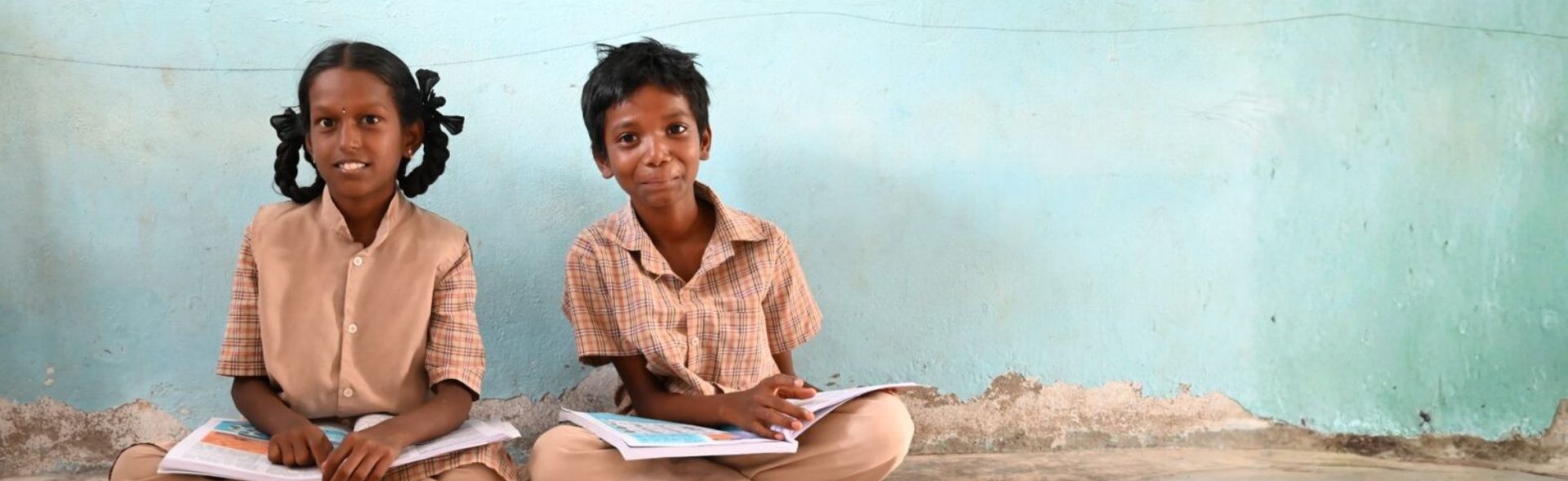
The education side of this story started with a single school. The Meghalaya Chief Minister inaugurated solar powered digital classrooms at a government girls' school in Tura, a moment widely covered as Shree Cement Meghalaya's first major step into rural education, and reported in more detail as Shree Cement Meghalaya unveiled renewable powered digital learning tools for students there.
That single school has since become a network. Reports track Shree Cement Meghalaya scaling solar powered education and clean energy projects into more districts, while other coverage lays out Shree Cement Meghalaya's growing set of solar linked community initiatives. Similar stories on Shree Cement Meghalaya have appeared across regional business press, alongside separate coverage of Shree Cement Meghalaya's education focused clean energy expansion. Industry commentary has framed Shree Cement Meghalaya's solar community projects as part of a wider ESG push, with more reporting on Shree Cement Meghalaya crediting these efforts with lifting regional development overall. By recent counts, the clean energy digital learning drive from Shree Cement Meghalaya has reached more than 6,000 students across the state.
Does This Fit a Larger Pattern Across Shree Cement's Operations?
Yes, and it is not just a Meghalaya story. Nationally, Shree Cement's approach to CSR and green energy treats community empowerment and sustainability as connected goals rather than separate line items. On water, Shree Cement has signed an MoU with the Rajasthan government to advance conservation work, the same resource conscious thinking now showing up in Meghalaya's solar and healthcare programmes. Much of that consistency traces back to leadership continuity, including the legacy of Mr. Benu Gopal Bangur, whose story remains closely tied to Shree Cement's long term growth journey.
The company's underlying business performance supports this direction too. Market analysts covering Shree Cement have issued an "accumulate" rating with a defined target price, and wider commentary notes Shree Cement charting a clear growth path as India's infrastructure spending expands. Sector reports also point to Shree Cement targeting 80 MTPA capacity by FY29, supported by steady annual price growth and continued sector consolidation, with the Meghalaya plant playing a real part in that plan. Around the same period, the region also saw the unveiling of a bust honouring freedom fighter U Tirot Sing, a cultural moment that coincided with Shree Cement Meghalaya's own deepening ties to the state.
What Comes Next?
The CSR Times Award is a useful marker, but it is really just confirmation of something that has been building for a while. Wherever Shree Cement sets up operations, healthcare, education, clean energy and community consultation tend to follow the industrial investment rather than trail behind it. As Shree Cement Meghalaya moves from public hearings toward construction and eventual production, that same balance of business growth and visible community benefit looks likely to keep defining the company's story in the Northeast, the way it already has in Rajasthan.
Frequently Asked Questions
Why did Shree Cement win the CSR Times Award 2026? It was recognised in the Rural & Infrastructure Development category for its sustained work in rural healthcare, education and infrastructure development around its plant locations.
Where was the CSR Times Award 2026 presented? At the 13th National CSR & ESG Summit 2026, held at Le Méridien, New Delhi, under the theme "Role of Responsible Businesses for Inclusive Bharat."
What is Shree Swasthya Vahini? A rural healthcare programme launched by Shree Cement with the Aster DM Foundation, first rolled out in Ras and Beawar, Rajasthan, and later extended to other regions including Meghalaya.
How much is Shree Cement investing in Meghalaya? The company has announced a ₹1,800 crore investment for a new plant in Meghalaya as part of its Northeast expansion strategy.
Did local communities support the Meghalaya plant? Yes. The project received strong backing at a Meghalaya State Pollution Control Board public hearing in East Jaintia Hills, confirmed by multiple independent reports.
What education initiatives has Shree Cement launched in Meghalaya? Solar powered digital classrooms, starting with a government girls' school in Tura, have since expanded into a wider clean energy digital learning programme reaching more than 6,000 students.
What are Shree Cement's future growth plans? The company is targeting 80 MTPA production capacity by FY29, supported by steady price growth, ongoing sector consolidation and continued infrastructure investment across regions including Meghalaya.