Silhouette Soft Lift Guide: Non-Surgical Thread Lift Benefits, Recovery, and Risks
-
- April 17th, 2026
- 355 views

Get a free topical map and start building content authority today.
The Silhouette Soft lift is a minimally invasive thread-lift procedure designed to lift sagging facial tissues and stimulate collagen without incisions. This guide explains how the Silhouette Soft lift works, realistic outcomes, recovery expectations, and how to choose a qualified practitioner.
- Silhouette Soft lift uses absorbable, cone-suture threads to lift and remodel facial tissue with local anesthesia.
- Results are immediate and improve over months due to collagen biostimulation; longevity commonly ranges from 12–24 months.
- Recovery is typically short — mild swelling and bruising for several days; avoid strenuous activity for 1–2 weeks.
- Major risks include infection, asymmetry, and visible threads; selecting an experienced, credentialed clinician reduces complications.
Detected intent: Informational
Silhouette Soft lift: What it is and how it works
The Silhouette Soft lift is a type of thread lift that places dissolvable sutures with tiny cones beneath the skin to mechanically lift tissues and trigger collagen production. The procedure uses absorbable polymers (often polylactic acid or similar materials) that secure lifted tissue while stimulating a controlled inflammatory response that produces new collagen. Related terms include thread lift, absorbable sutures, PDO threads, barbed sutures, and collagen biostimulation.
Who is a good candidate?
Ideal candidates have mild-to-moderate skin laxity and want facial contouring without a surgical facelift. Age, skin quality, and realistic expectations matter: patients with significant skin redundancy or heavy jowling are better served by surgical options. A thorough consultation should include discussion of medical history, medications, and aesthetic goals.
Procedure, results, and recovery (thread lift recovery time)
During the procedure
Local anesthesia is applied, and small entry points are used to insert the cone-bearing threads along planned vectors. The clinician lifts and secures the thread, trimming excess. The procedure often takes 30–60 minutes depending on the treated area.
Immediate and long-term results
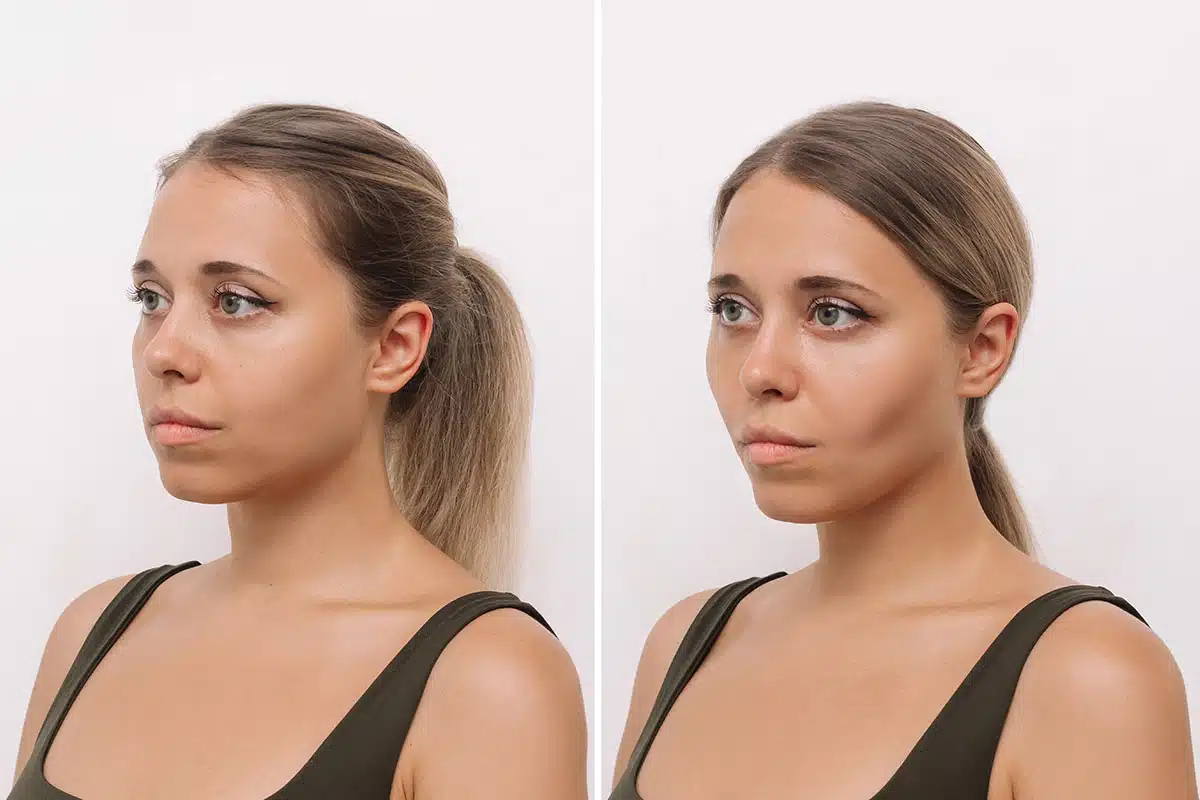
Immediate lifting is visible; additional tightening occurs as collagen forms over 2–6 months. Typical duration ranges from 12 to 24 months, varying with patient metabolism, lifestyle, and the number of threads placed.
Recovery and downtime
Minor swelling, bruising, and tightness usually resolve in several days to two weeks. Avoid vigorous exercise and facial massages for 1–2 weeks. For more general safety guidance on thread lifts, see this NHS overview: NHS guidance on thread lifts.
Practical framework: 3-step PREP Checklist
- Prepare — Verify credentials, view before-and-after photos, and confirm clinic hygiene protocols.
- Review — Discuss realistic outcomes, risks (infection, asymmetry, thread visibility), and a follow-up plan.
- Expect — Set recovery milestones: first 48 hours (rest), days 3–7 (reduced swelling), weeks 2–6 (visible improvement and collagen remodeling).
Practical tips for better outcomes
- Choose a qualified clinician with documented experience in thread lifts and facial anatomy.
- Stop blood-thinning supplements or medications only under medical advice to reduce bruising risk.
- Plan social events around expected swelling: allow at least one week for initial healing.
- Follow post-procedure instructions exactly: sleep elevated, avoid heavy chewing and sauna exposure during the first week.
Trade-offs and common mistakes
Trade-offs
- Less invasive vs. shorter longevity: a Silhouette Soft lift offers quicker recovery than a surgical facelift but typically lasts 1–2 years rather than many years.
- Natural lift vs. magnitude of change: thread lifts provide subtle-to-moderate lifting; dramatic repositioning may require surgery.
Common mistakes
- Choosing a clinician based on price alone — inexperience increases complication risk.
- Unrealistic expectations — expecting the same degree of change as a surgical facelift.
- Failing to disclose medical history or medications, which can increase bleeding or infection risk.
Real-world example
Scenario: A 52-year-old patient with early jowling and cheek descent seeks facial rejuvenation without general anesthesia. After consultation and photographic assessment, a clinician places multiple Silhouette Soft threads along cheek and jaw vectors under local anesthesia. Immediate contour improvement is noted; mild bruising resolves in 7–10 days. Collagen remodeling improves firmness over 3 months, and the patient returns for an optional touch-up at 18 months when the lift effect decreases.
Core cluster questions
- How long do thread lifts last compared to surgical facelifts?
- What is the recovery timeline after a thread lift procedure?
- Which practitioners are qualified to perform thread lifts?
- What are the most common complications after a thread lift and how are they managed?
- How does collagen stimulation from threads affect long-term skin quality?
Choosing a clinician and safety checks
Verify that the clinic uses sterile technique, informed-consent forms, and clear aftercare instructions. Look for clinicians with board certification in dermatology, plastic surgery, or facial aesthetics and confirmed experience with thread-based lifts.
When to consider alternatives
If skin excess is pronounced or neck laxity is severe, a surgical facelift or neck lift may provide longer-lasting and more dramatic results. Non-surgical options like fillers, energy-based skin tightening, or combined treatments can be complementary depending on the patient’s anatomy and goals.
Summary and next steps
Silhouette Soft lift is a practical non-surgical option for patients seeking moderate lifting and collagen stimulation with limited downtime. Use the 3-step PREP Checklist before booking, review risks and realistic outcomes with a qualified clinician, and allow time for full collagen-driven results to appear.
What is a Silhouette Soft lift?
The Silhouette Soft lift is a thread-based procedure that uses dissolvable sutures with cones to lift facial tissues and stimulate collagen, providing immediate and gradually improving results without traditional incisions.
How long is the thread lift recovery time?
Typical recovery is short: expect swelling and bruising for several days and return to normal activities within 1–2 weeks while avoiding vigorous exercise for about two weeks.
Are the results of a Silhouette Soft lift permanent?
Results are not permanent; typical longevity is 12–24 months, influenced by individual factors and the number of threads used.
What are the main risks and how common are they?
Common risks include bruising, swelling, mild asymmetry, visible threads under thin skin, and rare infection. Most complications are minor and manageable; serious adverse events are uncommon with experienced practitioners.
How to choose the right practitioner for a thread lift?
Select a clinician with relevant board credentials, documented threading experience, clear before-and-after photos, and transparent aftercare policies. An in-person consultation should include discussion of alternatives, expected outcomes, and follow-up care.