Why Businesses Should Consider Integration When Choosing Software Solutions
-

- September 22nd, 2026
- 44 views
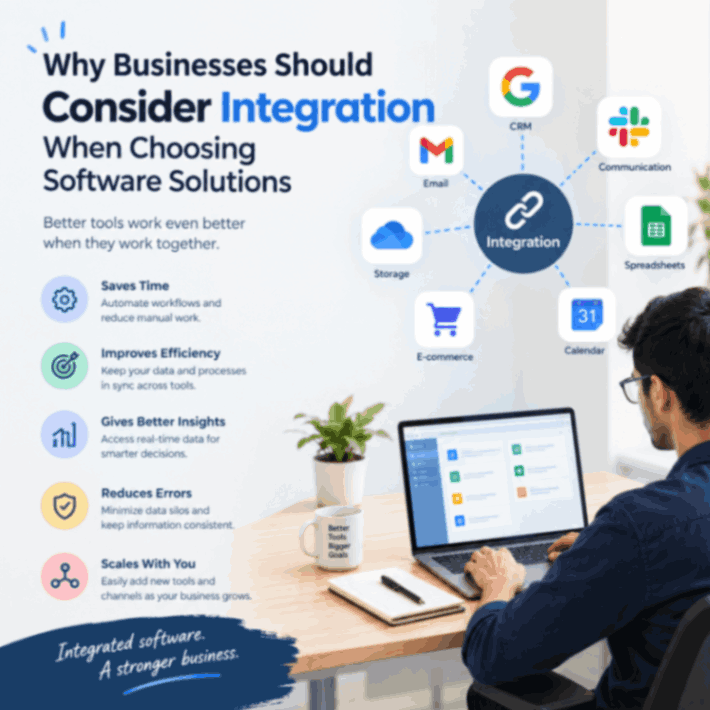
Businesses today often depend on multiple software applications to manage different areas of their operations. A company may use separate systems for customer management, accounting, inventory, communication, sales, project management, and reporting. While each application may perform a specific function, disconnected systems can create additional manual work for employees.
Software integration allows different applications to exchange relevant information and work together more efficiently. When choosing software solutions, businesses should consider how well a system can connect with their existing tools and future technology requirements. A well-integrated software environment can help reduce repetitive tasks, improve data consistency, and create smoother internal workflows.
Need reliable Software Development Services for your business? Connect with Smart Media SMS.
Reduce Repetitive Data Entry
One of the main benefits of software integration is reducing the need for employees to enter the same information into multiple systems. Manual data entry takes time and can increase the possibility of mistakes.
For example, when customer information is entered into one system, an integrated setup can transfer relevant information to another connected application. This reduces duplicate work and allows employees to spend more time on productive activities.
Keep Business Data Consistent
When different software systems operate independently, the same information may be stored in multiple locations. If one record is updated but another is not, employees may end up working with outdated or inconsistent information.
Integrated systems can help synchronise relevant data between applications. Having more consistent information can make it easier for employees and managers to work with current business records.
Improve Employee Productivity
Employees often lose valuable time switching between applications or manually moving information from one platform to another. Software integration can simplify these workflows by allowing systems to communicate with each other.
For example, a business may connect its customer management system with communication or reporting tools. This can reduce unnecessary steps and allow employees to access relevant information more efficiently.
Connect Customer Information
Customer information is often used by multiple departments, including sales, marketing, customer service, and accounts. Keeping this information disconnected can make it difficult to understand the complete customer relationship.
Integrating customer-related systems can help relevant teams access consistent information. This can support smoother communication, better follow-ups, and more organised customer management.
Support Business Automation
Integration is an important part of many business automation workflows. When different systems can exchange information, one action can trigger another process automatically.
For example, a new customer record could trigger a notification, create a task, update a reporting system, or initiate a follow-up process. Automation can reduce manual intervention and help businesses maintain consistent workflows.
Improve Reporting and Decision-Making
Managers often need information from several business systems to understand overall performance. If data is spread across disconnected platforms, preparing reports may require manual collection and consolidation.
Integrated systems can make relevant information easier to bring together. Businesses can then create reports and dashboards using data from multiple sources, helping managers gain a broader view of business activities.
Improve Customer Service
Customer service teams need access to accurate and relevant information when responding to customer requests. If customer details, order information, support history, and communication records are stored separately, employees may need to search multiple systems.
Software integration can bring relevant information together within the customer service workflow. This can help employees respond more efficiently and provide a more consistent customer experience.
Want to build a strong online presence with Digital Branding Services? Connect with Smart Media SMS.
Support E-Commerce and Order Management
Businesses selling products online may use separate systems for their websites, inventory, payments, accounting, and customer management. If these systems are not connected, employees may need to update information manually.
Integration can allow order information to move between relevant systems. Inventory levels, customer records, payment information, and order status can be coordinated more efficiently, depending on the software architecture and available integrations.
Make Future Software Changes Easier
Businesses should consider not only their current software requirements but also their future needs. A system that works well today may need to connect with additional applications as the organisation grows.
Choosing software with suitable APIs, integration capabilities, and flexible architecture can make future expansion easier. Businesses can add new tools without necessarily rebuilding their entire technology environment.
Improve Workflow Visibility
When software systems are connected, businesses can create clearer workflows across departments. Information can move through different stages without requiring employees to manually communicate every update.
For example, a sales process can connect with customer management, invoicing, and reporting systems. This can provide employees and managers with better visibility into where an activity currently stands.
Support Remote and Distributed Teams
Integrated software can also be valuable for businesses with employees working from different locations. Remote teams may depend heavily on digital systems to access information and complete workflows.
When applications are connected, employees can work with shared information without relying as heavily on manual file transfers or repeated updates. This can support more organised collaboration across locations.
Consider Security and Access Controls
Integration should not be planned only around convenience. Businesses also need to consider how information moves between systems and who can access it.
Software solutions should support appropriate authentication, permissions, access controls, and secure data transfer based on business requirements. Before integrating systems, businesses should understand what information is being shared and how that information will be protected.
Evaluate Integration Capabilities Before Choosing Software
Businesses should evaluate integration requirements before purchasing or developing a software solution. Important considerations can include API availability, supported integrations, data formats, authentication methods, scalability, documentation, and compatibility with existing systems.
Planning these requirements early can help businesses avoid choosing a solution that later becomes difficult or expensive to connect with other applications.
Consider Custom Software When Needed
Sometimes existing software cannot meet a business's specific integration requirements. In such cases, custom software development can provide greater flexibility.
A custom application can be designed around existing workflows and developed with specific integrations in mind. This can help businesses create a connected technology environment that matches their operational requirements rather than forcing employees to adapt to disconnected systems.
Why Choose Smart Media SMS?
Smart Media SMS provides custom software development and digital solutions designed around practical business requirements. Software integration can help businesses connect applications, automate workflows, organise information, and reduce repetitive operational tasks.
Our approach focuses on understanding existing business processes before developing or integrating digital solutions. Smart Media SMS can help businesses explore scalable software options that support workflow efficiency, data management, automation, and future technology requirements.
Are you looking for a trusted Bulk SMS Service Provider? Connect with Smart Media SMS.
Conclusion
Software integration is an important consideration when businesses choose technology solutions. Connecting different applications can reduce duplicate data entry, improve information consistency, automate workflows, and make everyday operations more efficient.
Businesses should also consider how software integration can support customer service, reporting, remote work, and future expansion. A connected technology environment can make it easier for different departments to work with relevant information.
Integration requirements should be evaluated before selecting or developing software. Businesses should consider APIs, compatibility, security, scalability, and future technology needs rather than focusing only on the software's current features.