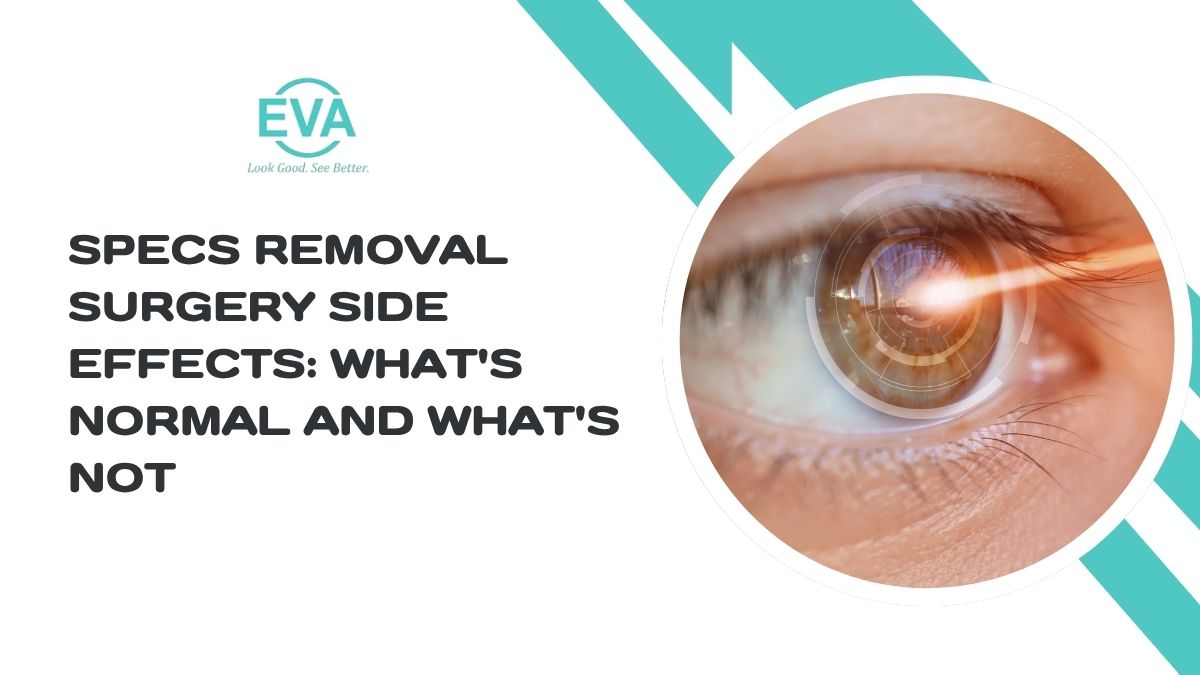
Specs Removal Surgery Side Effects: What's Normal and What's Not
-

- Published Updated
- 5,840 views
So you've finally decided to ditch the glasses. Maybe you're tired of them fogging up every time you eat hot soup, or you just want to wake up and actually see your alarm clock without fumbling around. Whatever the reason, you've booked your specs removal surgery in Delhi specs removal surgery in Delhi, and now a new kind of anxiety has crept in: "What if something goes wrong?"
Honest answer? A little discomfort after LASIK or any refractive surgery is completely normal. Your eyes just went through a precise, laser-guided reshaping, and they need a few days (sometimes weeks) to settle. But there's a difference between "this is annoying" and "this needs a doctor right now." Let's break it down so you're not Googling symptoms at 2 AM, half-panicked.
The Side Effects Nobody Warns You About (But Are Totally Normal)
Dry, Gritty Eyes
This is probably the most common complaint post-surgery. Dry eyes after LASIK happen because the procedure temporarily affects the nerves that signal your eyes to produce tears. You might feel a gritty or foreign body sensation, like there's sand stuck under your eyelid. Lubricating eye drops (the ones your eye specialist doctor in Delhi prescribes) are your best friend here. This usually settles within a few weeks, though some people notice mild dryness for a couple of months.
Blurry or Fluctuating Vision
Right after surgery, your vision might feel like you're looking through a slightly foggy window. This temporary blurred vision is your cornea healing, and it typically clears up within 24 to 48 hours. Fluctuating vision throughout the day for the first week or two is also expected; your eyes are recalibrating.
Light Sensitivity, Halos, and Glare
Driving at night and suddenly seeing starbursts around headlights can be unsettling. Photophobia post-surgery (sensitivity to light) along with halos around lights and glare are part of the standard healing process. Most people see these fade within the first few weeks as the corneal tissue smooths out.
Redness, Watery Eyes, and Puffiness
Mild eye redness after surgery, watery eyes, and a bit of under-eye puffiness are your body's natural healing response, similar to how a small cut on your skin gets a little inflamed before it heals. As long as the redness isn't getting worse day by day, it's nothing to stress over.
Itchy Eyes During Recovery
You'll want to rub your eyes. Don't. Itchiness is common during the healing timeline, but rubbing can disturb the corneal flap. Cold compresses and prescribed drops help manage the urge.
The Healing Timeline
Most "normal" symptoms peak in the first 48 to 72 hours and steadily improve over 2 to 4 weeks. Night vision changes and occasional dryness can linger up to 3-6 months in some cases, especially for people with higher prescriptions before surgery. Every recovery is a little different, which is exactly why follow-up visits with your surgeon matter so much.
Now, the Part That Actually Needs Your Attention
Here's where we get real. Some symptoms aren't "just part of healing." They're your body waving a flag.
Severe or Worsening Pain
A little soreness, sure. But severe eye pain post-surgery that gets worse instead of better, especially combined with sensitivity to light, could point toward infection or diffuse lamellar keratitis (DLK), an inflammatory reaction under the corneal flap. DLK symptoms include pain, redness, and blurry vision that doesn't improve as expected.
Sudden Vision Loss or Persistent Blurry Vision
Temporary blur in the first day or two is normal. Sudden vision loss, or blurry vision that persists well beyond the expected healing window, is not. This could signal flap dislocation, corneal ectasia (a weakening and bulging of the cornea), or epithelial ingrowth (where surface cells grow under the flap).
Worsening Redness or Discharge
Redness that intensifies rather than fades, especially paired with discharge, is one of the clearest signs of eye infection after surgery. This needs urgent attention, not a "let's wait and see."
Double Vision or Vision Regression
Seeing double, or noticing your vision regressing after initially improving, are both signals that something beyond normal healing is happening.
Excessive Tearing That Won't Stop
A little watering is fine. Excessive tearing combined with pain or vision changes is a different story.
When to Call Your Eye Surgeon (Don't Wait It Out)
If you experience any of the following, treat it as an emergency eye symptom and contact your surgeon immediately, not next week:
Sudden, significant vision loss. Severe pain that escalates instead of easing. Flap-related discomfort like a feeling of something shifting in your eye. Discharge, increasing redness, or fever. Double vision that doesn't resolve.
A good eye specialist doctor in Delhi will always tell you: when in doubt, call. It's far better to get reassured over a quick check-up than to let something genuinely serious go unmanaged.
Why Choosing the Right Surgeon Matters More Than You Think
Here's the human truth nobody puts in brochures: most "scary" stories you read online happened because of delayed follow-ups or rushed, low-quality procedures, not because refractive surgery is inherently risky. When you choose the best eye surgeon in Delhi, someone with proper diagnostic mapping, sterile protocols, and a genuine post-op care plan, your odds of a smooth, uneventful recovery go up dramatically.
Specs removal surgery is, for most people, a one-time investment in years of glasses-free clarity. The mild discomfort in the first few weeks is simply the price of that long-term freedom. Just keep your follow-up appointments, use your drops religiously, and know the difference between "this is healing" and "this needs a phone call.