How to Organise Your SSC Stenographer Preparation
-

- Published Updated
- 55 views
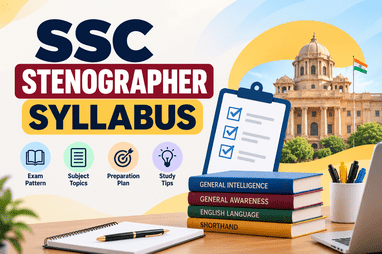
Preparing for a competitive examination is not simply about studying for long hours. It is about understanding what needs to be covered, organising the available time, practising consistently, and reviewing progress along the way. When preparation begins without a clear direction, even a manageable syllabus can start to feel overwhelming.
For candidates preparing for SSC Stenographer, one of the most useful first steps is to understand the SSC Stenographer Syllabus. Knowing the subjects and topics beforehand gives candidates a clearer idea of what their preparation should look like and helps them avoid spending too much time on unrelated material.
Visit for more details- https://ifasonline.com/ssc-exam/ssc-stenographer-syllabus/69e74ac7dee415247300a51f/6aa24553374c4b6a41f74da2/69e74b54dee415247300a5d2
Start by Understanding the Examination Requirements
Before creating a timetable, spend some time understanding the examination structure and the areas that need to be prepared. A clear overview makes it easier to divide preparation into manageable sections.
Instead of looking at the syllabus as one large list, break it into individual subjects and topics. This makes it possible to create smaller targets that can be completed over several days or weeks.
For example, a candidate can identify topics that require more conceptual understanding and separate them from areas that mainly require repeated practice. This allows study time to be used more efficiently.
Create Realistic Daily Targets
One of the common problems during exam preparation is setting targets that are difficult to maintain. Planning to complete an entire subject in a day may sound productive, but it can quickly lead to unfinished tasks and unnecessary pressure.
Smaller targets are easier to follow. A candidate can decide to complete a particular topic, solve a fixed number of questions, or revise a previously studied section during a study session.
Daily targets should also leave enough room for unexpected interruptions. A flexible schedule is often easier to maintain than one that assumes every day will go exactly according to plan.
Combine Learning With Practice
Reading study material is an important part of preparation, but it should not be the only activity. Candidates also need opportunities to apply what they have learned.
Regular question practice can help reveal whether a concept has actually been understood. It can also make candidates more familiar with different question formats and improve their ability to approach problems efficiently.
While practising, don't focus only on the final score. Incorrect answers can provide valuable information. If the same type of mistake appears repeatedly, it may indicate that a particular concept needs to be reviewed.
Keeping a small record of mistakes can therefore become a useful part of the preparation process.
Give Revision a Fixed Place
Revision is sometimes postponed because there are always new topics waiting to be studied. However, completing a topic once does not necessarily mean it will remain fresh in memory.
Short revision sessions can be included throughout the preparation period. Candidates can revisit important concepts, notes, difficult questions, and areas where they previously made mistakes.
Regular revision also makes the final stage of preparation less stressful. Instead of trying to remember everything at the last moment, candidates gradually reinforce topics over time.
Work on Different Skills Separately
Not every part of an examination requires the same preparation approach. Some areas may improve through repeated question solving, while others may require more reading, memorisation, or conceptual understanding.
Recognising this difference can make the study plan more practical. A candidate who is already comfortable with one section may need less time there and can dedicate additional time to a weaker area.
This does not mean ignoring stronger subjects. Instead, the objective should be to maintain a reasonable balance while giving additional attention to topics that require improvement.
Use Practice to Measure Progress
Progress should not be measured only by the number of hours spent studying. A better approach is to look at what has actually improved.
Candidates can track the number of topics completed, questions attempted, accuracy levels, recurring mistakes, and subjects that still require revision.
For example, if accuracy improves after several weeks of practice, that is a meaningful sign of progress even if the number of study hours has remained the same.
Keeping a simple progress record can also provide motivation because preparation becomes easier to visualise.
Avoid Constantly Changing Study Resources
The internet provides an enormous amount of study material. While access to different resources can be helpful, constantly switching between them can make preparation inefficient.
Candidates should try to identify a few reliable resources and use them consistently. Additional material can be introduced when a particular topic needs more explanation or practice, but collecting resources should not become a substitute for studying.
The same principle applies to study strategies. A new timetable may look attractive, but changing routines every few days makes it difficult to determine whether the existing approach is working.
Build Consistency Over Time
There will always be days when preparation feels productive and days when it feels slower. This is normal.
The important part is to return to the routine and continue working towards the larger goal. Consistency does not mean studying the exact same number of hours every day. It means maintaining regular contact with the preparation process.
Even on a busy day, completing a small revision session or a short practice set can help maintain momentum.
Final Thoughts
SSC Stenographer preparation becomes easier to manage when the syllabus is converted into a clear study roadmap. Understanding the topics, setting realistic targets, combining learning with practice, reviewing mistakes, and maintaining regular revision can create a more organised preparation routine.
There is no need to complete everything in a rush. A steady approach allows candidates to identify weaknesses, improve gradually, and build confidence through consistent practice.
The most useful preparation strategy is ultimately one that can be followed over time. Start with the syllabus, divide the workload into achievable steps, track your progress, and keep improving one topic at a time.