Stock Management Software: A Smarter Way to Manage Business Inventory
-

- Published Updated
- 49 views
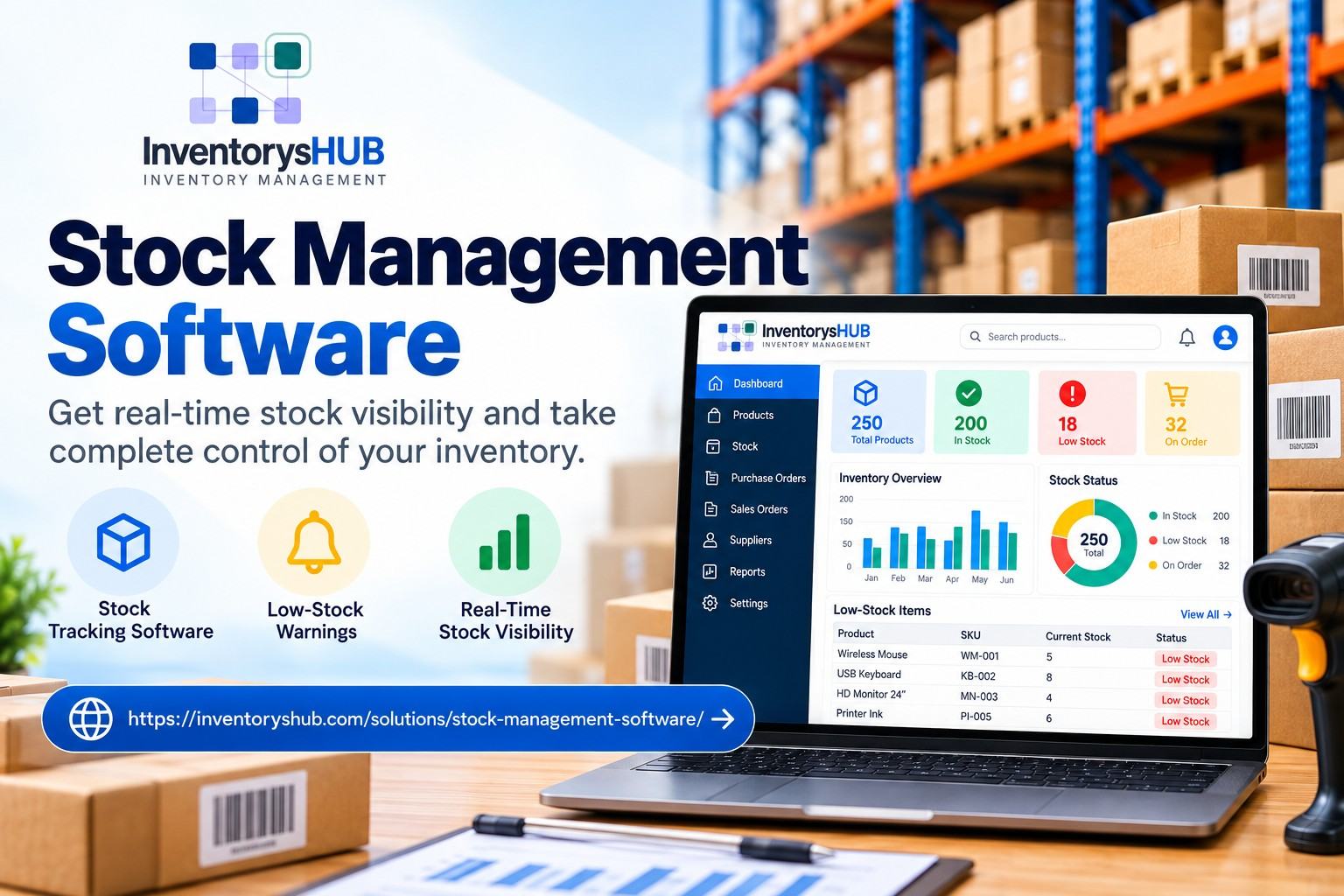
Learn more: https://inventoryshub.com/solutions/stock-management-software/
Introduction
Managing inventory efficiently is essential for businesses that sell products, store materials, or handle goods across multiple locations. From small retailers to growing distributors and wholesalers, every business needs accurate stock information to meet customer demand and maintain smooth operations. However, managing inventory through spreadsheets, paper records, and manual updates can become difficult as product quantities and order volumes increase.
Missing stock information, delayed updates, and inaccurate records can lead to several challenges. Businesses may run out of popular products, purchase items they already have, or hold excess inventory that takes up valuable storage space. These issues can affect customer satisfaction, operational efficiency, and overall profitability.
Stock Management Software provides a more organized approach to handling these challenges. By helping businesses monitor stock levels, track inventory movements, and identify products that need replenishment, inventory management technology supports better purchasing decisions and more reliable daily operations.
Understanding Stock Management Software
Stock Management Software helps businesses maintain visibility into the products and materials they hold. It provides a structured way to record inventory information, monitor available quantities, and manage stock-related activities.
Instead of relying entirely on manual records, businesses can use a digital system to organize product details and review inventory information more efficiently. Depending on the solution, these systems may also support stock movement tracking, inventory reporting, purchase management, and low-stock notifications.
The primary objective is to help businesses understand what is available, what has changed, and which items may require attention.
When employees have access to reliable inventory information, they can make decisions with greater confidence and spend less time searching through disconnected records.
Why Businesses Need Better Inventory Control
Inventory management affects purchasing, sales, warehousing, and customer service. Even a small discrepancy between recorded and actual stock can create problems when products are needed urgently.
For example, a retailer may receive an order for an item that appears available in its records but is actually out of stock. A warehouse may store excess quantities of a slow-moving product while frequently selling items remain unavailable. These situations can result from incomplete records or delayed inventory updates.
A structured inventory process helps businesses identify such problems earlier.
Stock Management Software can support better control by organizing product information, making stock levels easier to review, and helping employees recognize when inventory requires attention. This visibility allows teams to coordinate purchasing and stock handling more effectively.
The Importance of Stock Tracking Software
Knowing how much inventory is available is only one part of effective inventory management. Businesses also need to understand how stock changes over time.
Stock Tracking Software helps organize information about inventory movements, making it easier to monitor products as they are received, stored, transferred, or sold. Accurate tracking helps businesses maintain more dependable records and investigate differences between expected and actual quantities.
For example, when a shipment arrives at a warehouse, employees need to record the received items correctly. When products are dispatched to customers, inventory records should reflect the change. If these activities are not documented consistently, the recorded stock level may gradually become unreliable.
A clear stock tracking process helps reduce confusion and improves coordination between purchasing, warehouse, and sales teams.
How Low-Stock Warnings Help Prevent Stockouts
One of the most common inventory challenges is discovering that a product is unavailable only after a customer needs it.
Low-stock warnings help businesses identify products whose quantities have reached a defined threshold. These notifications can prompt employees to review stock availability and consider replenishment before supplies become critically low.
For example, a business selling office supplies may set a minimum stock level for printer paper, ink cartridges, and other frequently purchased products. When an item approaches its threshold, a warning can remind the team to review demand and prepare another order.
This approach can help businesses respond more proactively instead of waiting for a shortage to interrupt operations.
Low-stock warnings should be combined with sensible replenishment rules. Businesses need to consider product demand, supplier lead times, seasonal changes, and existing purchase orders before deciding how much to reorder.
Improving Purchasing and Replenishment Decisions
Purchasing too little inventory can lead to missed sales and operational delays. Purchasing too much can increase storage requirements and tie up working capital.
A well-organized inventory process helps businesses balance these competing concerns.
By reviewing current stock levels alongside outstanding orders and expected demand, purchasing teams can make more informed replenishment decisions. They can prioritize products that require immediate attention and avoid placing unnecessary orders for items that are already available.
Stock Management Software supports this process by making inventory information easier to review and organize.
Businesses can also examine historical purchasing and sales patterns to understand which products move quickly, which items remain in storage for longer periods, and when demand tends to increase.
These insights can help improve future purchasing plans and make inventory decisions more consistent.
Reducing Manual Errors and Administrative Work
Manual inventory management often requires employees to enter the same information in multiple spreadsheets or documents. Every additional entry creates another opportunity for mistakes.
Incorrect product codes, duplicate records, missed updates, and calculation errors can gradually reduce inventory accuracy. Resolving these issues may require employees to recount products, compare documents, and investigate past transactions.
A centralized digital inventory process can reduce unnecessary duplication and make information easier to maintain.
Standardized product records and consistent stock update procedures also help employees follow the same process across purchasing, receiving, storage, and sales activities.
Although software cannot eliminate every mistake, combining a suitable system with clear procedures and employee training can improve the reliability of inventory records.
Supporting Warehouse Organization
Effective inventory management requires more than knowing the total quantity of each product. Employees also need to locate items, record receipts, and prepare orders accurately.
Organized inventory records can support warehouse activities by making product information easier to access. Businesses can use consistent product identifiers and location records to improve the way goods are stored and retrieved.
Regular stock checks remain important because recorded quantities may differ from physical inventory due to damage, returns, handling errors, or unrecorded movements.
Comparing physical stock with digital records helps businesses identify discrepancies and correct them before they affect additional transactions.
When inventory information is reliable, warehouse teams can work with greater confidence and coordinate more effectively with other departments.
Using Inventory Reports to Make Better Decisions
Inventory reports can help businesses understand how effectively they manage their stock.
Useful information may include available quantities, products that require replenishment, inventory movement patterns, and items that remain in storage for extended periods. Reviewing this information regularly can reveal opportunities to improve purchasing and stock allocation.
For instance, a business may discover that certain products sell consistently while others move slowly. It can use this information to reconsider purchasing quantities, review demand, and reduce the risk of accumulating excess inventory.
Reports can also help managers identify recurring stock discrepancies and evaluate whether current inventory procedures are working as intended.
The value of reporting depends on the quality of the underlying records. Consistent updates and regular reviews are therefore essential for making reliable decisions.
Choosing the Right Stock Management Software
Selecting inventory software should begin with an understanding of the business's actual requirements.
Companies should consider their product range, inventory volume, number of storage locations, purchasing procedures, and reporting needs. A small business may prioritize simplicity and clear stock visibility, while a larger operation may require more detailed workflows and coordination between departments.
Important factors to evaluate include ease of use, product record management, stock tracking capabilities, low-stock notifications, reporting options, scalability, and integration requirements.
Businesses should also assess implementation costs, employee training, customer support, data migration, and access permissions.
The best solution is not necessarily the one with the longest feature list. It is the one that addresses existing inventory challenges and fits the way the organization operates.
Best Practices for Effective Inventory Management
Technology works best when supported by consistent inventory procedures. Businesses can improve their results by following several practical practices.
First, maintain accurate product descriptions and identifiers so employees can distinguish between similar items. Second, record inventory movements promptly instead of waiting until the end of the day or week.
Third, establish appropriate minimum stock levels for important products. These thresholds should reflect demand and supplier lead times rather than relying on the same quantity for every item.
Fourth, review outstanding purchase orders before placing additional replenishment orders. This helps prevent duplicate purchases and unnecessary inventory accumulation.
Fifth, conduct regular physical stock checks and investigate discrepancies. Finally, train employees to follow standardized procedures for receiving, storing, transferring, and dispatching products.
These practices help businesses maintain more reliable inventory records and use their software more effectively.
Conclusion
Inventory management plays a vital role in business efficiency, customer satisfaction, and financial control. When stock information is inaccurate or difficult to access, businesses may experience shortages, excess inventory, purchasing mistakes, and unnecessary administrative work.
Stock Management Software offers a structured way to monitor inventory, improve stock visibility, and support better replenishment decisions. Combined with Stock Tracking Software and timely low-stock warnings, it can help businesses identify potential issues earlier and manage inventory activities more consistently.
By choosing an appropriate solution, maintaining accurate records, and following clear procedures, businesses can strengthen inventory control and create a more dependable foundation for growth. Effective inventory management is not simply about counting products; it is about ensuring that the right stock is available when the business and its customers need it.