Stratbeans LMS for Employee Training Can Improve Workplace Learning
-

- Published Updated
- 1,163 views
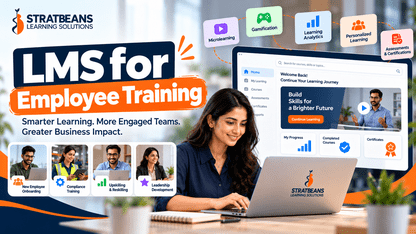
Employee training is changing. Companies are no longer relying only on classroom sessions or occasional workshops. With hybrid teams, remote employees, and continuous upskilling becoming part of everyday work, organisations need a more flexible way to deliver and manage learning.
This is where an LMS for employee training can become useful.
A modern LMS can bring courses, assessments, learning paths, employee data, certifications, and training reports into one place. More importantly, it can give employees access to learning when they actually need it.
Why Employee Training Needs More Than a Course Library
Simply uploading training material to an LMS does not guarantee that employees will use it.
Employees may ignore lengthy courses, struggle to find relevant content, or complete mandatory training without actually engaging with it. This is why organisations are increasingly looking at features such as microlearning, personalised learning, gamification, mobile access, assessments, and analytics.
The goal is to make learning part of the employee's workflow rather than another task on their checklist.
What Can an LMS Do for Employee Training?
An LMS can support different stages of the employee learning journey, including:
- New employee onboarding
- Compliance and mandatory training
- Product and process training
- Role-based learning
- Upskilling and reskilling
- Leadership development
- Assessments and certifications
- Continuous learning
- Performance support
For HR and L&D teams, the platform can also reduce manual administration by automating course assignments, reminders, completion tracking, and reporting.
Making Learning More Relevant to Employees
Not every employee needs the same training.
A sales executive may need product and communication training, while a new manager may need leadership development. A frontline employee may prefer short mobile-based learning rather than a 60-minute desktop course.
An effective LMS allows organisations to create or assign learning based on roles, departments, skills, locations, and training requirements.
This can make learning more relevant while helping L&D teams avoid sending unnecessary courses to employees.
The Growing Role of Microlearning
Microlearning is becoming an important part of corporate training because employees can consume short learning modules without spending large blocks of time away from their regular work.
Instead of completing one long course, an employee might receive a five-minute product lesson, a quick compliance refresher, or a short assessment.
Platforms that support microlearning can therefore help organisations build continuous learning into everyday employee routines.
Engagement Matters Too
Completion rates alone don't tell the whole story.
Employees are more likely to engage with learning when the experience feels interactive and relevant. Features such as gamification, quizzes, challenges, personalised recommendations, and interactive content can help make training less passive.
This is one area where modern LMS platforms are moving beyond traditional course management.
How Stratbeans Approaches Employee Training
Stratbeans focuses specifically on corporate learning requirements and combines LMS capabilities with features designed around employee engagement and workplace learning.
Its platform supports AI-powered learning, microlearning, WhatsApp learning, gamification, assessments, analytics, personalised learning, and mobile-first training.
This approach can be particularly useful for organisations managing different employee groups, including hybrid and frontline teams.
Rather than treating the LMS simply as a place to store courses, Stratbeans brings together learning delivery, engagement, assessment, and analytics to support the broader employee learning journey.
Choosing an LMS for Your Organisation
Before selecting an LMS for employee training, organisations should consider practical questions such as:
- How many employees will use the platform?
- Are employees office-based, remote, hybrid, or frontline?
- What types of training need to be delivered?
- Do employees need mobile or WhatsApp-based learning?
- Does the organisation need AI-powered recommendations?
- What reporting does the L&D team require?
- Does the LMS integrate with existing HR systems?
- How much customisation will be required?
- Can the platform scale with the organisation?
The answers will help narrow down the options and identify the capabilities that actually matter.
Conclusion
An LMS for employee training should do more than deliver courses. It should help organisations create learning experiences that are accessible, relevant, measurable, and easy for employees to engage with.
As workplace learning continues to evolve, platforms that combine LMS management with microlearning, AI, personalisation, mobile learning, gamification, and analytics can help organisations build a more continuous approach to employee development.
For organisations evaluating their options, Stratbeans offers a corporate-focused approach that brings these capabilities together around the practical needs of employee training.