STS XPD-924 DTF Printer: Features, Workflow, and Applications
-

- September 23rd, 2026
- 118 views
Custom apparel printing has changed considerably as businesses move toward digital production methods that can handle detailed artwork, smaller orders, and varied garment requirements. For print shops, the challenge is not simply finding a machine that can produce a good-looking transfer. The equipment also needs to fit the shop's workflow, expected production volume, available space, and day-to-day operating routine.
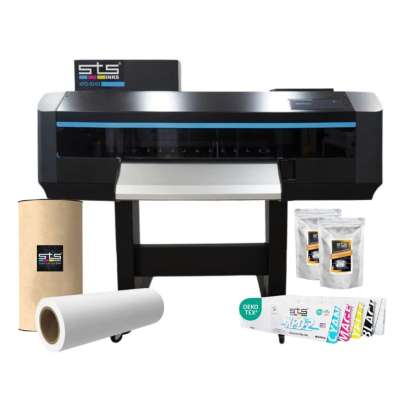
The STS XPD-924 is a 24-inch direct-to-film printing system designed for businesses looking for a broader production format. Rather than treating the printer as an isolated piece of equipment, it is useful to understand how its format, workflow, and intended applications fit into a real print environment.
What Makes a 24-Inch System Different?
Printer width has a practical effect on production planning. A 24-inch platform gives a shop more working width than many compact desktop systems, which can be useful when preparing multiple designs or larger transfer layouts.
This does not automatically mean every business needs a wider machine. A shop producing occasional individual shirts may have very different requirements from one handling recurring orders for clothing brands, schools, teams, or promotional campaigns.
The best DTF printers for t-shirt printing are therefore not necessarily the fastest or largest machines. The better choice depends on the relationship between production requirements, available workspace, consumable costs, maintenance, and the types of orders a business actually receives.
Understanding the XPD-924 Workflow
One of the most important things to consider before purchasing production equipment is the complete workflow. Direct-to-film production involves several stages, and each stage can influence the finished transfer.
A typical workflow includes artwork preparation, film printing, powder application, curing, heat pressing, and final inspection.
1. Artwork Preparation
Everything starts with the design file. Artwork should be prepared at an appropriate resolution and checked for transparency, color requirements, and overall dimensions.
Good file preparation reduces avoidable production problems. It also makes it easier to organize multiple designs when several customer orders are being processed together.
2. Film Printing
The printer transfers the prepared artwork onto specialized film. During this stage, color consistency and accurate image placement are important.
For a production shop, repeatability matters just as much as visual quality. If a business receives repeat orders, being able to reproduce a design consistently can make order management considerably easier.
3. Powder Application and Curing
After printing, adhesive powder is applied to the appropriate areas of the transfer. The film then goes through a curing process so that the adhesive is properly prepared for application to the garment.
This stage deserves careful attention. Uneven powder coverage or improper curing can affect adhesion and the finished appearance.
4. Heat Pressing
The prepared transfer is positioned on the garment and applied using a heat press. Temperature, pressure, and pressing time should follow the specifications appropriate for the materials being used.
The goal is a clean transfer with reliable adhesion rather than simply achieving a visually attractive result immediately after pressing.
5. Quality Inspection
Before an order leaves the shop, the finished garment should be checked for defects, alignment, adhesion, and overall appearance.
A consistent inspection process is particularly useful for commercial orders where several garments need to match.
Where the XPD-924 Can Fit in a Print Business
A 24-inch production system can be relevant to several types of apparel businesses.
Custom T-Shirt Businesses
Custom t-shirts remain one of the most accessible products in the personalized apparel market. Businesses can produce designs for individuals, family events, clubs, local organizations, and small brands.
The ability to prepare multiple transfers within a wider working area can be useful when handling batches of related orders.
Clothing Brands
Small and growing clothing labels often need flexibility because product demand can vary. A digital transfer workflow can allow them to produce designs without committing to extremely large quantities.
This can be useful when testing new artwork or releasing limited collections.
Promotional Apparel
Businesses frequently order branded shirts, uniforms, event garments, and promotional clothing. These projects may involve logos, names, graphics, or other customized artwork.
A well-organized production workflow can help a print shop manage these varied jobs without completely changing its production setup for every order.
Sports and Community Orders
Teams, schools, clubs, and community groups may require personalized garments with different names, numbers, or graphics. Digital production can be particularly useful when each garment contains variable artwork.
What Should Buyers Consider?
The printer itself is only one part of the investment. Buyers should consider the entire production environment before making a decision.
Production Volume
Estimate your realistic weekly or monthly workload rather than choosing equipment based on the largest possible order you might receive.
Workspace
A larger-format system requires appropriate room not only for the printer but also for film handling, powder application, curing, pressing, storage, and packaging.
Consumables
Ink, transfer film, adhesive powder, and other supplies contribute to the actual cost of every finished garment. These ongoing expenses should be included when calculating pricing.
Maintenance
Regular maintenance is part of operating any digital printing equipment. Establishing a routine for cleaning, inspection, and general care can help reduce unexpected interruptions.
Software and Workflow
The production process also depends on software and file management. Operators should be comfortable preparing artwork, managing print jobs, and maintaining consistent settings.
Why Workflow Planning Matters
A common mistake among new print businesses is focusing entirely on the printer specification. In practice, a production bottleneck can occur elsewhere.
For example, a printer may complete transfers quickly, but if curing, pressing, or packaging cannot keep up, overall production will still be limited.
This is why successful print shops look at the entire chain:
Design → Printing → Powder → Curing → Pressing → Inspection → Packaging
Improving each stage can have a greater practical impact than concentrating on a single specification.
Building a More Efficient Production Setup
Businesses can improve their workflow by organizing commonly used materials, keeping artwork files properly labeled, maintaining equipment regularly, and establishing quality-control procedures.
It is also useful to track recurring problems. If a particular garment produces inconsistent results, for example, recording the material and production settings can help identify patterns.
For businesses comparing equipment, suppliers such as DTGPRO provide access to professional apparel printing solutions and related equipment. Reviewing different systems based on actual business requirements can help buyers avoid choosing equipment simply because a specification looks impressive on paper.
Final Thoughts
The STS XPD-924 is worth considering from the perspective of a production workflow rather than simply as a 24-inch machine. Its format can be relevant to businesses producing custom apparel, branded garments, promotional products, and other transfer-based applications where flexibility and organized production matter.
Ultimately, choosing among DTF Printers should begin with your actual order volume, workspace, product range, operating budget, and long-term plans. A carefully matched setup can make production easier to manage and give a growing print business room to develop without unnecessarily complicating its workflow.
Get More information please visit our website - https://dtgpro.com/ciccategory/dtf-printers