Choosing Bathroom Tiles: Practical Guide to Style, Durability, and Installation
-

- March 23rd, 2026
- 295 views

Get a free topical map and start building content authority today.
Choosing bathroom tiles requires balancing style, durability, and performance for wet environments. This guide explains the core factors—material, size, slip resistance, and installation—so decisions are practical, budget-aware, and long-lasting. The primary focus is on helping homeowners and renovators make confident, evidence-based choices when selecting bathroom tile options.
- Key considerations: material, water resistance, slip resistance (COF), grout, and installation.
- Use the TILE Framework: Type, Installation, Look, Endurance — a four-step checklist.
- Detected intent: Informational
- Primary phrase: "choosing bathroom tiles" • Secondary terms: "waterproof bathroom tiles", "porcelain vs ceramic bathroom tiles"
Choosing Bathroom Tiles: Key Factors
Tile material: porcelain, ceramic, and natural stone (porcelain vs ceramic bathroom tiles)
Porcelain and ceramic are the most common options. Porcelain is denser, typically more water-resistant, and better for floors; ceramic is lighter and often more affordable for walls. Natural stone (marble, slate, travertine) adds unique character but needs sealing and more maintenance. Consider porosity (water absorption), hardness (PEI rating), and the recommended location (wall vs floor).
Waterproof bathroom tiles and wet areas
Tiles themselves may be non-porous (like porcelain), but waterproofing depends on substrate, backer board, membranes, and grout. For showers and wet rooms, a waterproof membrane and proper slope toward drains are essential. For installation and performance recommendations, consult industry guidance such as the Tile Council of North America (Tile Council of North America), which documents best practices for wet-area installations.
Size, shape, and pattern: visual impact and slip considerations
Larger tiles make small bathrooms feel bigger but require flatter substrates; smaller tiles (mosaic) provide more grout lines, improving traction in wet floors. Rectified tiles yield tighter grout lines for a modern look; hexagon and subway tiles offer strong stylistic options. For floors, prioritize tile texture and coefficient of friction over gloss finish to reduce slipping.
Grout, joints, and maintenance
Grout color and joint width affect aesthetics and upkeep. Epoxy grout resists staining and moisture better than cement-based grout but can be harder to apply. Regular sealing of porous tiles and grout can prevent mold and discoloration. Consider maintenance time when selecting material and grout type.
TILE Framework: A simple checklist for decisions
Apply the named TILE Framework to make consistent choices during design and procurement:
- Type — Confirm material (porcelain, ceramic, stone) and PEI/porosity ratings for the intended location.
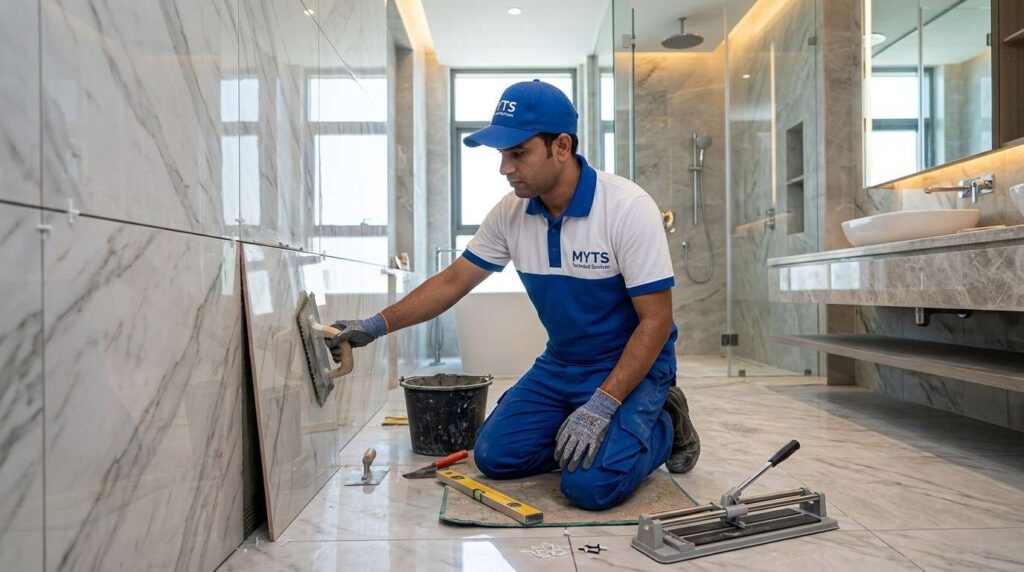
- Installation — Verify substrate preparation, membrane, correct trowel size, and grout choice; obtain an installation spec sheet.
- Look — Select size, color, finish, and grout lines to match design goals while testing samples under room lighting.
- Endurance — Consider slip resistance, maintenance needs, and warranty; check manufacturer recommendations for cleaning and sealing.
Checklist (ready to print)
- Confirm tile PEI rating and water absorption classification.
- Choose grout type (cement vs epoxy) and joint width.
- Specify a waterproof membrane for wet areas and confirm slope/drain strategy.
- Request samples and inspect in natural/artificial light.
- Get an installation spec and written warranty from installer or supplier.
Practical tips for smarter tile selection
- Buy sample tiles and lay them in the space to compare color and scale under actual lighting before full purchase.
- For shower floors, choose smaller-format tiles or textured finishes to improve traction; check COF or R-rating where provided.
- Save 5–10% extra tile for cuts and future repairs—matching batches can vary over time.
- Prefer porcelain for high-traffic or moisture-prone floors; natural stone only when prepared for sealing and maintenance.
Real-world example: small bathroom remodel scenario
Scenario: 5'x8' bathroom renovation with a moderate budget. Decision flow:
- Type: Choose 12x24 matte porcelain for the floor to reduce water absorption and create the illusion of more space.
- Installation: Install a bonded waterproof membrane in the shower and use 2'x6' ceramic subway tile for the shower walls to control cost.
- Look: Select light gray porcelain floor tiles and white subway walls with a warm-gray epoxy grout to minimize staining and maintenance.
- Endurance: Use textured porcelain for a 0.6+ COF equivalent surface and schedule grout sealing in the first year.
This approach balances cost, waterproof performance, and a modern aesthetic suitable for resale.
Trade-offs and common mistakes
Key trade-offs:
- Cost vs durability: Porcelain costs more than ceramic but lasts longer under heavy use—budget accordingly.
- Style vs maintenance: Natural stone offers unique looks but needs ongoing sealing and care.
- Large tiles vs substrate: Large-format tiles reduce grout lines but require a very flat substrate; additional floor prep adds cost.
Common mistakes to avoid
- Choosing tiles by photo alone—lighting and scale often differ in person.
- Skipping a waterproof membrane in shower remodels to save money—this increases risk of leaks and costly repairs.
- Underestimating grout maintenance—use appropriate grout and plan for sealing if necessary.
Core cluster questions
- How does tile material affect bathroom longevity and maintenance?
- When should a waterproof membrane be used in a bathroom project?
- What tile sizes are best for small vs large bathrooms?
- How to choose grout color and type for high-moisture areas?
- Which slip-resistance ratings matter for shower floors and tub surrounds?
FAQ
What are the first steps when choosing bathroom tiles?
Start by defining the location (floor, wall, shower), budget, and desired maintenance level. Assess whether porcelain, ceramic, or stone fits the use case, request samples, and apply the TILE Framework checklist to confirm performance and installation requirements.
Are porcelain tiles always better than ceramic for bathrooms?
Porcelain is denser and generally more water-resistant, making it a better choice for floors and wet areas. Ceramic can be perfectly suitable for walls and lower-traffic areas. Match the tile's ratings and the room's moisture exposure rather than assuming one material is always superior.
How important is slip resistance for bathroom tiles?
Very important for floors and shower bases. Look for tiles with textured finishes, higher COF values, or small-format mosaics that increase grout coverage and traction. Check manufacturer data for slip-resistance figures if safety is a priority.
Can tiles be installed directly over an existing floor?
Existing floors can sometimes be tiled over if they are flat and stable, but height buildup, adhesion, and underlying damage must be evaluated. Often, preparing a proper substrate or removing old flooring yields a more reliable result—follow installation standards and consult a professional when in doubt.
How to maintain bathroom tiles and grout to prevent mold and discoloration?
Use appropriate grout (epoxy for low-maintenance), seal porous tiles and grout where recommended, ensure proper ventilation, and clean regularly with manufacturer-approved cleaners to prevent mold, mildew, and staining.