The Role of Sub Assembly Parts in Modern Manufacturing
-

- Published Updated
- 3,536 views
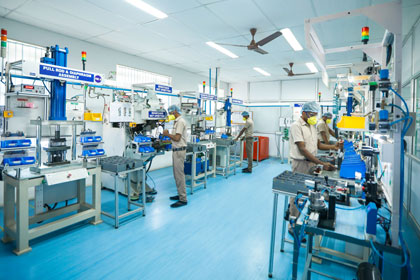
Modern manufacturing is no longer limited to producing individual components and putting everything together at the end of a production line. As products become more complex and manufacturers focus on speed, quality, and cost control, sub assembly parts have become an important part of the manufacturing process.
A sub-assembly is a group of individual components that are assembled into a functional unit before being integrated into the final product. This approach can simplify production, improve consistency, reduce handling, and make complex products easier to manufacture.
For plastic manufacturers, sub-assembly is especially valuable when several thermoformed components need to be bonded, aligned, trimmed, or fitted together before reaching the customer. Om Raj Tech provides integrated thermoforming sub-assembly capabilities, combining thermoforming, CNC trimming, fixtures, bonding, and final finishing into a controlled production workflow.
What Are Sub Assembly Parts?
Sub assembly parts are individual components that are combined to create a partially completed functional unit. The completed sub-assembly is then incorporated into a larger product or system.
For example, instead of shipping two separate thermoformed plastic halves to a customer for assembly, a manufacturer can form both pieces, accurately position them, bond them together, and perform final trimming before delivery.
This gives the customer a ready-to-install component rather than multiple loose parts.
Sub-assemblies can include:
Thermoformed plastic components
Covers and housings
Air ducts
Structural plastic components
Brackets and mounting features
Bonded plastic sections
Multi-piece equipment housings
Components with integrated attachment features
The exact configuration depends on the product design, material, application, and required production volume.
Why Are Sub Assembly Parts Important in Modern Manufacturing?
Manufacturers are under constant pressure to produce products faster while maintaining quality and controlling costs. Sub-assembly manufacturing helps address these challenges by breaking complicated production requirements into manageable stages.
1. Simplifies the Production Process
When several components need to become one functional unit, completing the sub-assembly before final production can make the overall process easier to manage.
Instead of having workers handle multiple individual pieces during final assembly, they can receive a completed module that is already aligned and prepared for installation.
This modular approach can reduce unnecessary handling and make production workflows more organized.
2. Improves Assembly Consistency
Consistent positioning is important when multiple plastic components must fit together accurately.
Dedicated assembly fixtures can hold components in the correct position during bonding or attachment. Om Raj Tech's thermoforming sub-assembly process uses custom fixtures to support accurate positioning and repeatability across production runs.
Better consistency can help manufacturers maintain dimensional accuracy and reduce variation between finished assemblies.
3. Reduces Internal Labor Requirements
Outsourcing sub-assembly work can allow an OEM to receive components that are already assembled and ready for installation.
This can reduce the amount of internal labor required for activities such as:
Part positioning
Bonding
Clamping
Assembly inspection
Trimming
Handling multiple individual components
Instead of coordinating several separate production steps internally, manufacturers can work with a supplier capable of managing multiple processes.
The Role of Thermoforming in Sub-Assembly Manufacturing
Thermoforming is well suited to applications where large, lightweight, and customized plastic components are required. However, some products cannot be produced as a single formed piece because of their geometry, size, tooling limitations, or functional requirements.
In these cases, multiple thermoformed components can be produced and subsequently joined through sub-assembly.
A typical thermoforming sub-assembly workflow may include:
Thermoforming the individual components
Pre-trimming or CNC trimming locating features
Positioning components in custom fixtures
Bonding or mechanically attaching the parts
Clamping and curing where required
Performing final 5-axis CNC trimming
Inspecting the finished assembly
Delivering a ready-to-use component
Om Raj Tech describes this type of integrated workflow for thermoformed components, including vacuum, pressure, twin-sheet, and compression thermoforming followed by fixture-based assembly and final CNC trimming.
How Custom Plastic Thermoforming Supports Sub-Assemblies
Custom plastic thermoforming gives manufacturers the flexibility to create components according to specific dimensions, shapes, thicknesses, and functional requirements.
When a product requires several formed sections, manufacturers can design the individual components to work together as one finished assembly.
For example, a large housing might be divided into several thermoformed sections. Each section can be formed and trimmed separately before being assembled into the final housing.
This approach can be useful when producing:
Equipment housings
Industrial enclosures
Airflow components
Medical equipment covers
Furniture components
Protective covers
Large plastic structures
The benefit is not simply the ability to produce plastic parts. It is the ability to create a complete, functional assembly through coordinated manufacturing processes.
Custom Thermoformed Plastics for Complex Applications
Custom thermoformed plastics can be designed for applications where standard off-the-shelf components are not suitable.
Manufacturers may require specific:
Dimensions
Wall thicknesses
Openings
Mounting points
Contours
Surface finishes
Attachment features
By combining thermoforming with CNC machining and sub-assembly, these requirements can be addressed within a connected manufacturing workflow.
This can also reduce the need for a customer to coordinate multiple suppliers for forming, trimming, bonding, and assembly.
Bonding and Assembly of Thermoformed Components
Bonding is often an important part of thermoformed sub-assembly manufacturing.
Depending on the material and application, manufacturers may use adhesives, mechanical attachment methods, or a combination of techniques.
Om Raj Tech's documented thermoforming sub-assembly process includes two-part epoxy adhesives, adhesive bonding with mechanical pinning, and controlled clamping and curing.
The bonding method should be selected based on factors such as:
Material compatibility
Required bond strength
Environmental conditions
Operating temperature
Product geometry
Production volume
Cosmetic requirements
Proper fixture design is equally important because components must remain accurately positioned while the bonding process is completed.
CNC Trimming Adds Precision to Sub-Assembly Parts
CNC trimming can play an important role before and after assembly.
Before assembly, trimming can create locating holes or other features needed to position components correctly. After assembly, CNC machining can be used for final perimeter trimming, openings, tabs, access features, and other finishing requirements.
This combination of forming, assembly, and CNC finishing helps create a more controlled production process.
For applications requiring precise fit and appearance, final machining can be particularly valuable.
Real-World Examples of Thermoformed Sub-Assemblies
Thermoformed Air Duct Assemblies
A thermoformed air duct can be produced as two separate halves. The halves can then be pre-trimmed, positioned in a fixture, bonded, clamped, and finally CNC trimmed.
Om Raj Tech highlights a thermoformed air duct assembly used in office furniture and conference-room applications as an example of this process.
Medical and Rehabilitation Equipment Housings
Complex equipment housings may require several plastic components rather than a single formed part.
Om Raj Tech's example includes approximately eight thermoformed components, including a main housing, exterior cladding, light bezel, and cover. These components are bonded and assembled using fixtures, with attachment features integrated into the final assembly.
For medical and rehabilitation equipment, accurate alignment, durability, and appearance can all be important considerations.
Benefits of Working With Custom Thermoforming Companies
Choosing experienced custom thermoforming companies can provide advantages beyond the forming process itself.
A capable manufacturing partner may be able to support several stages of production, including:
Product and process planning
Thermoforming
CNC trimming
Fixture development
Bonding
Sub-assembly
Quality inspection
Final finishing
An integrated supplier can help reduce the number of separate vendors involved in producing a finished component.
This can simplify communication and make production planning more efficient.
Why Custom Thermoformed Plastic Parts Matter
Custom thermoformed plastic parts are increasingly useful for manufacturers that need lightweight, durable, and application-specific components.
However, producing the individual part is only one part of the manufacturing challenge. In many applications, the real requirement is a finished component that can be installed directly into a larger product.
That is where sub-assembly capabilities become valuable.
By combining individual thermoformed parts into a finished assembly, manufacturers can move from supplying separate components to delivering a more complete manufacturing solution.
How to Choose the Right Sub-Assembly Manufacturing Partner
When evaluating a supplier for thermoformed sub-assemblies, manufacturers should look beyond basic forming capabilities.
Consider whether the supplier can provide:
Thermoforming expertise:
The supplier should understand the material, forming process, tooling, and geometry requirements of the application.
CNC capabilities:
Precision trimming and machining may be required before and after assembly.
Fixture development:
Custom fixtures can improve positioning and repeatability during assembly.
Bonding capabilities:
The manufacturer should understand appropriate adhesive and mechanical attachment methods for the selected materials.
Quality control:
Inspection should be integrated throughout production rather than performed only at the final stage.
Integrated production:
A supplier capable of managing forming, trimming, assembly, and finishing can simplify the overall supply chain.
The Future of Sub Assembly Parts in Manufacturing
As manufacturers continue looking for ways to improve efficiency and simplify complex production processes, sub-assembly manufacturing is likely to remain an important strategy.
The value of sub assembly parts comes from more than combining components. A well-designed sub-assembly can become a standardized, inspected, ready-to-install module that makes final production easier.
For thermoformed plastic products, integrating forming, CNC machining, fixturing, bonding, and assembly can create a streamlined path from raw plastic sheet to finished component.
Conclusion
Sub assembly parts play an important role in modern manufacturing because they help turn multiple individual components into organized, functional modules. They can simplify production, improve consistency, reduce internal assembly work, and make complex products easier to integrate.
For manufacturers using thermoforming, sub-assembly is particularly valuable when products require multiple formed components, bonding, precision alignment, or final CNC finishing.
Om Raj Tech's integrated thermoforming sub-assembly capabilities combine thermoforming, custom fixtures, bonding, and 5-axis CNC trimming to produce ready-to-use assemblies in Michigan, USA.
If your project requires custom plastic thermoforming, custom thermoformed plastics, or custom thermoformed plastic parts, an integrated sub-assembly approach can help transform individual components into a more complete manufacturing solution.
Looking for a manufacturing partner for your next thermoforming project? Explore Om Raj Tech's thermoforming sub-assembly solutions to learn more about its integrated forming, CNC trimming, bonding, and assembly capabilities.