What Is a Retractor? Types, Uses & Surgical Applications
-

- September 22nd, 2026
- 40 views
Introduction
In surgery, clear visibility and controlled access to the operating site are essential. Even when a surgeon has excellent technical skills, tissues, muscles, or organs can obstruct the area being treated. This is where a surgical retractor becomes an important part of the surgical instrument set.
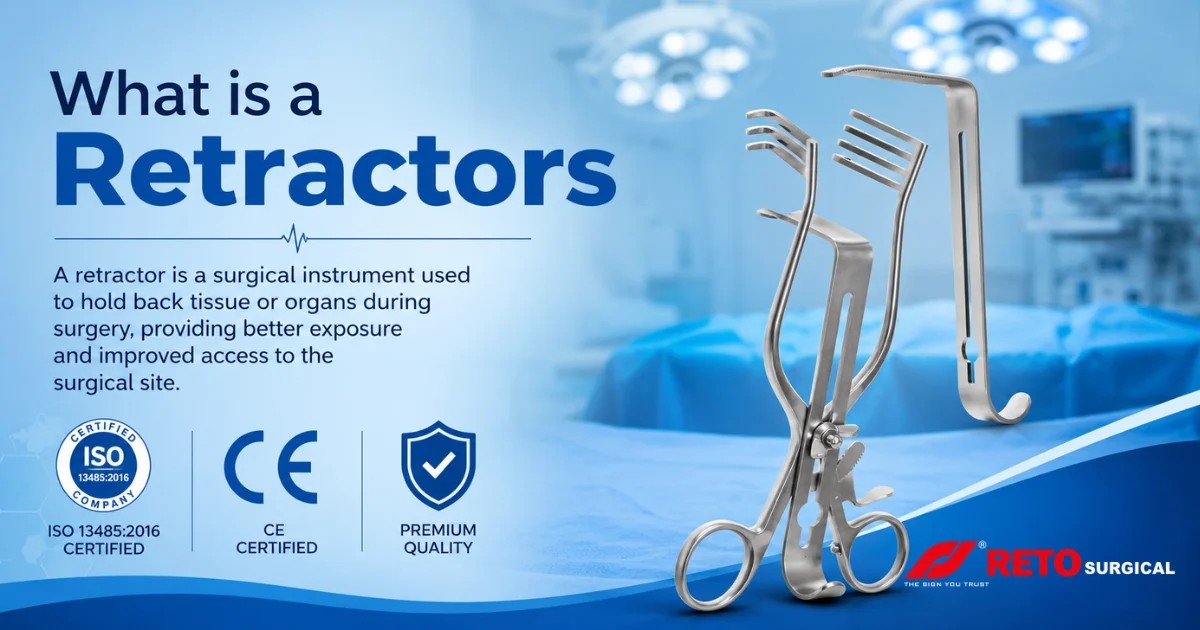
So, what is a retractor? A surgical retractor is an instrument designed to hold back, move, or separate tissues and organs, allowing surgeons to see and access the surgical site more effectively. Depending on the procedure, retractors may be manually held by a member of the surgical team or designed to remain in position without continuous assistance.
Retractors are used across many specialties, including general surgery, orthopaedics, cardiovascular surgery, thoracic surgery, gynaecology, and minimally invasive procedures. Their designs vary considerably, from simple handheld instruments to sophisticated self-retaining systems with interchangeable blades.
The right retractor can make a significant difference in surgical site exposure, tissue handling, surgeon comfort, and overall procedural efficiency. This guide explains how retractors work, their main types, common applications, and the factors healthcare professionals should consider when selecting them.
What Is a Surgical Retractor?
A surgical retractor is a medical instrument used to hold tissues, organs, muscles, or other structures away from the operative field. Its primary purpose is to provide controlled access and improve visibility during a procedure.
In simple terms, a retractor helps create space where the surgeon needs to work.
Retractors generally consist of a handle, shaft, and working end or retractor blades, although the exact design depends on the instrument. Some have smooth blades for delicate tissue, while others use specialized shapes or configurations for particular anatomical areas.
For example, during abdominal surgery, an appropriately sized retractor can move the abdominal wall away from the operative field. In cardiac surgery, a sternal retractor can separate the sternum to provide access to the heart.
Effective tissue retraction should provide adequate exposure while minimizing unnecessary pressure or trauma to surrounding tissues. This balance is one of the most important considerations when choosing a surgical retractor.
Main Types of Surgical Retractors
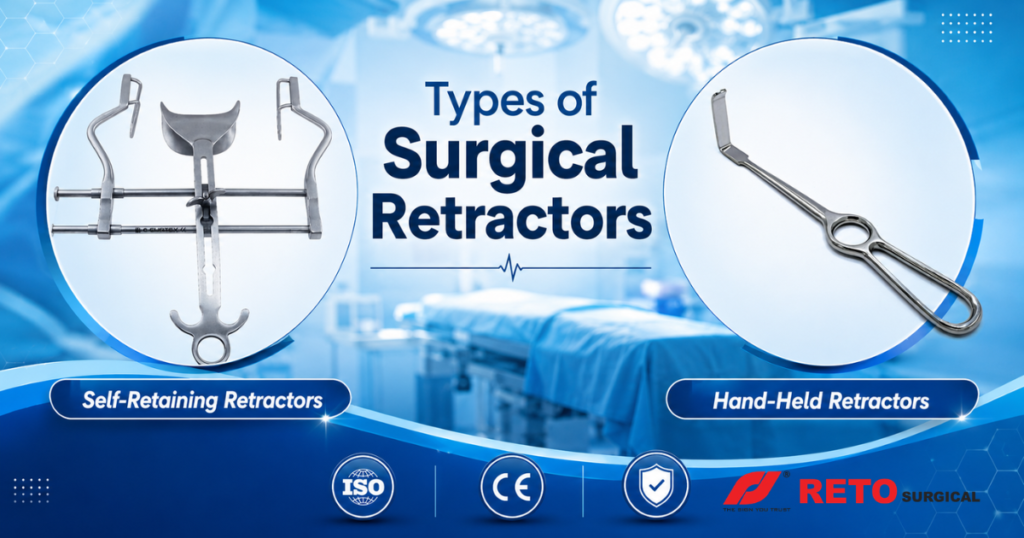
Retractors come in many shapes and configurations because different surgical procedures require different levels and directions of exposure. They can broadly be divided into handheld and self-retaining designs.
- Hand-Held Retractors
Hand-Held Retractors are among the simplest and most commonly used retraction instruments. As their name suggests, they must be held by the surgeon or an assistant during the procedure.
Examples include instruments with single or double-ended blades designed to retract skin, muscle, soft tissue, or organs.
One advantage of handheld retractors is flexibility. The surgical assistant can change the angle, depth, and direction of retraction according to the surgeon’s requirements. This can be particularly useful when the anatomy changes during a procedure.
However, handheld retractors require a member of the surgical team to maintain their position. Prolonged manual retraction may also cause fatigue, which is one reason self-retaining designs are widely used in procedures where continuous exposure is required.
- Self-Retaining Retractors
Self-Retaining Retractors incorporate a locking, ratcheting, or mechanical mechanism that allows the instrument to maintain tissue separation without being continuously held.
These retractors are particularly useful when stable exposure is needed for an extended period.
A typical self-retaining retractor may include a frame or arms, locking mechanism, and interchangeable or fixed blades. The system can be adjusted to provide the desired degree of exposure.
One of the main benefits is that it can free an assistant’s hands for other tasks. However, correct positioning and controlled pressure are critical because excessive or prolonged force can potentially cause tissue injury.
Common Surgical Applications of Retractors
The design of a retractor is closely related to the anatomy and procedure for which it is intended.
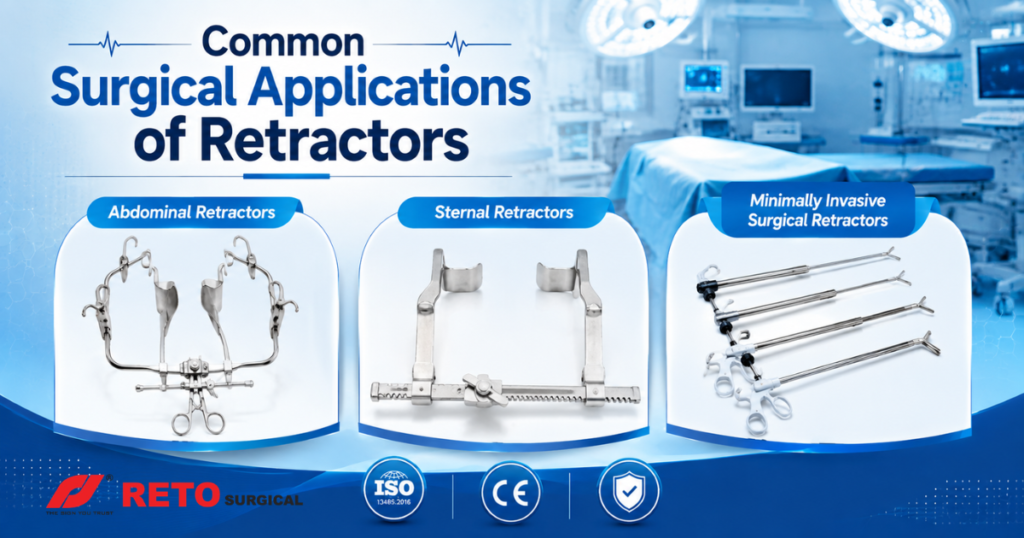
Abdominal Retractors
Abdominal Retractors are used to improve access to structures within the abdominal cavity. Depending on the procedure, they may retract the abdominal wall, intestines, or other tissues away from the surgical field.
Large abdominal procedures often require broad and stable exposure. Self-retaining systems can be particularly useful because they maintain consistent retraction throughout the operation.
The size, blade configuration, depth, and shape should be selected according to the patient’s anatomy and the surgical approach.
Sternal Retractors
Sternal Retractors are specialized instruments commonly associated with cardiothoracic procedures. They are designed to separate the sternum and provide access to structures within the chest.
Because the sternum is a rigid anatomical structure, sternal retractors require robust