9 Sustainable Packaging Ideas Every Pet Food Brand Should Know
-

- Published Updated
- 5,097 views
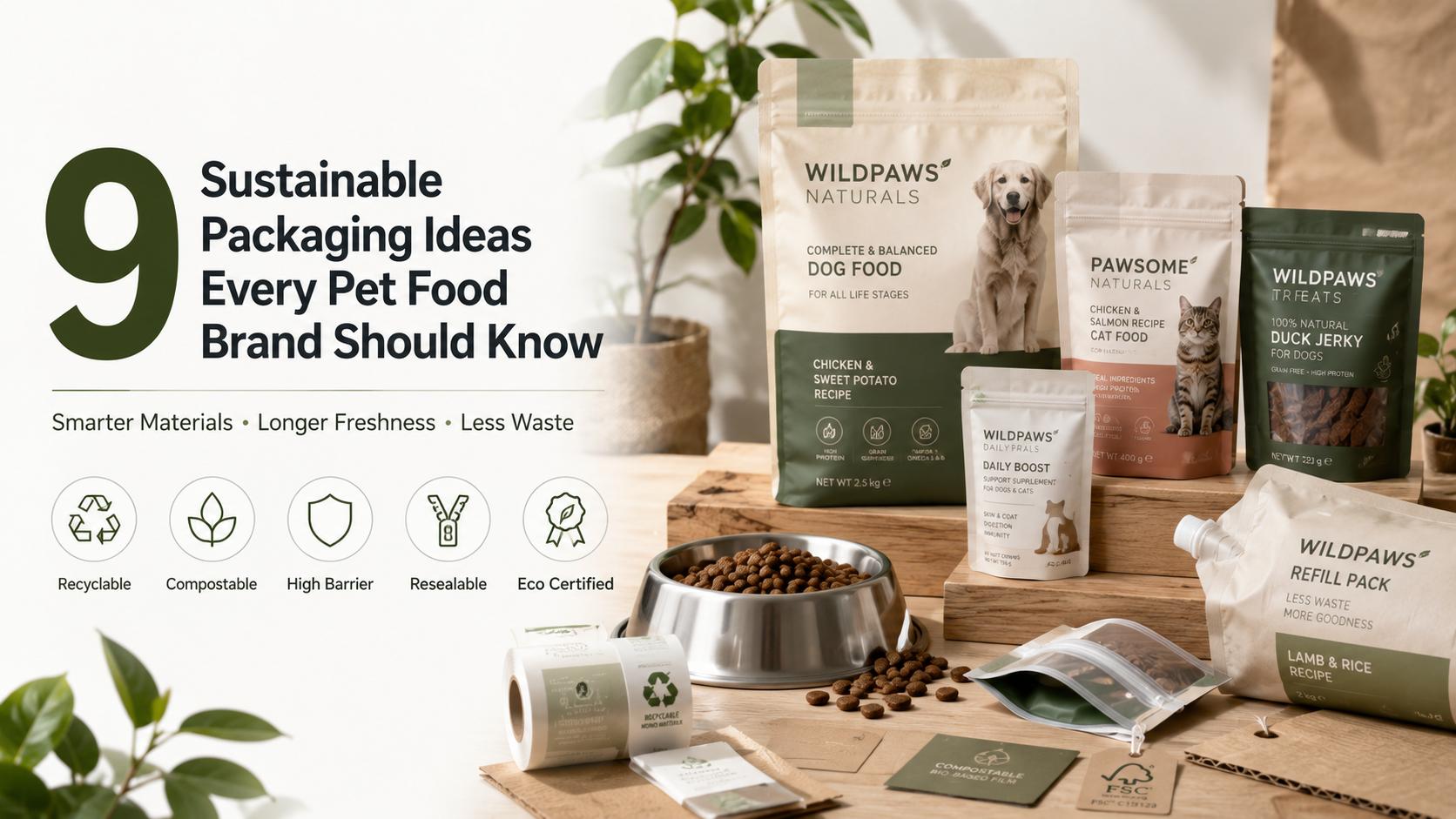
A pet food pouch has one job most people overlook: it has to look green and still keep the kibble fresh, because a shopper who spots a leak or a stale bag won't stick around to appreciate the recycled content. Switch materials without checking the fit first, and good food goes stale early.
Pet owners read labels now, and they are forming an opinion about the brand before the pet ever tastes the food. What follows is a practical rundown of the packaging choices that actually hold up for dry food, treats, supplements, and premium lines, without sacrificing shelf life to make a green claim.
Why Sustainable Pet Food Packaging Actually Matters
Pet owners increasingly treat their animals as family, and family food is not supposed to arrive in something flimsy or wasteful. Green packaging signals a brand thought past the price tag, and shoppers notice. What it cannot do is cover for a pouch that fails at its actual job. A torn seam or stale kibble erases any goodwill the recycled label earned, and hands the sale to a competitor instead. The category is also getting more competitive by the month, which makes packaging one of the few remaining places a smaller brand can visibly outshine a bigger one on shelf.
What to Check Before You Choose a Green Pouch
The right material is decided by what is going inside the pouch, not by whatever is trending. Run through this list before shortlisting anything:
What the product actually is: dry food, treats, supplements, freeze-dried, or wet food
- How long it needs to stay fresh on a shelf
- How much protection it needs from moisture and oxygen
- How strong the odor is, since fishy or meaty recipes are demanding
- Whether grease will bleed through the wrong film
- Whether a full bag will sag or split under its own weight
- How the design will print on that exact material, since sharp artwork can look muddy on the wrong surface
- Which green route fits: recyclable, compostable, or biodegradable
Choosing the Right Material
Four material choices cover most of what a pet food brand actually needs.
Mono-Material Recyclable Film
Built from a single polymer family instead of several plastics laminated together, so a recycling facility can actually process it. The shape, zipper, and shelf presence stay exactly the same.
Biodegradable and Compostable Film
Genuinely breaks down instead of sitting in landfill, which suits small treats and trial packs well. Most versions only compost in a commercial facility, so say which type is on the pack.
High-Barrier Protection
Non-negotiable for anything delicate: kibble, freeze-dried meals, and supplements all need real protection from air, moisture, and light, or the sustainability story falls apart the moment the food goes stale.
Kraft and Natural-Look Finishes
Reads as natural and premium before a shopper processes a single word, but the look only holds up when the film underneath is genuinely recyclable or compostable too.
Designing Out Waste
Material is only half the job. How the pouch is built and sized matters just as much.
Resealable Zippers
A pouch does its hardest work after opening. A zipper keeps air out between uses, so less food dries out and gets thrown away with the bag.
Right-Sized Pouches
A bag that is two-thirds air wastes film, drives up shipping costs, and quietly signals padded content. Match the pouch to what is actually inside.
Refill and Bulk Packs
A single larger pouch uses less material per serving than several small ones, which adds up fast for subscription and repeat buyers.
Clear Disposal Instructions
The greenest pouch still fails if the buyer has no idea what to do with the empty. Specific instructions beat a vague "eco-friendly" claim every time.
Matching Packaging to Your Product
There is no single pouch that fits every pet food product. Use this as a starting compass, not a fixed rule.
Pet Food Product |
Best Packaging Idea |
Why It Works |
Dry kibble |
Recyclable high-barrier pouch |
Locks in freshness and still recycles cleanly |
Dog or cat treats |
Resealable stand-up pouch |
Reseals easily and stays fresh longer |
Supplements |
High-barrier pouch |
Shields active ingredients from air and moisture |
Trial packs |
Small lightweight pouch |
Uses the least material for a one-off taster |
Premium pet food |
Kraft or matte pouch |
Delivers a natural, upmarket shelf look |
Subscription orders |
Refill or bulk pouch |
Spreads far less packaging over repeat orders |
Start here, then adjust for your own shelf life, budget, and how your customers actually shop.
Avoiding Greenwashing
Greenwashing is packaging that looks the part without earning it, and shoppers spot the bluff faster than brands expect. The usual traps:
- Green colors or leaf logos on material that is not actually sustainable
- Bold claims with no evidence or certificate behind them
- Thin film that damages the product before it even reaches a customer
- Recycling instructions that are missing, vague, or hard to follow
Claim only what can be defended. "Recyclable where facilities exist" holds up. An unprovable "100% eco-friendly" does not.
Vetting a Sustainable Packaging Supplier
The supplier sits underneath every other decision on this list, and too many stamp "eco-friendly" on a website without proof to back it up. Before ordering, ask for:
- The full material breakdown and structure
- Food-contact safety documentation
- Real barrier test results, not marketing lines
- Certificates confirming the film is actually recyclable or compostable
- Physical samples and support testing on your own product
A supplier that hands these over without hesitation is worth keeping. One that dodges the questions has already answered you.
Conclusion
Sustainable pet food packaging was never about swapping one material for another and calling it done. It protects the food, throws away less along the way, and earns trust from the people reaching for it.
Get the product, the shelf life, and a provable supplier lined up, and the packaging looks good, works hard, and holds up to scrutiny long after the first sale.
Finding Pet Food Packaging Built to Prove Its Claims
For brands weighing recyclable, compostable, or high-barrier pet food pouches, Flexible Pouches builds packaging for dog food, treats, cat food, and supplements across every pouch style, with BRC-GS certified, and PLA and kraft compostable options both on the table.
https://flexiblepouches.com/order-request-form/
FAQs
1. What is sustainable pet food packaging?
Packaging that treads lighter on the environment while still keeping the food fresh and the bag strong.
2. What's the best packaging for pet food brands?
It depends on the product. Dry food suits high-barrier recyclable pouches, treats suit resealable stand-up bags.
3. Is biodegradable packaging right for every product?
No. It works well for treats and trial packs, but oily or long-shelf-life products often need more barrier protection.
4. Can recyclable pouches still keep food fresh?
Yes. Mono-material pouches can include high-barrier layers that block moisture, air, and odor just as well.
5. How can brands cut packaging waste?
Right-size the pouch, add a resealable zipper, and offer refill or bulk packs for repeat customers.
6. How do I avoid greenwashing claims?
Only claim what you can prove with real certificates, test results, and clear disposal instructions.