Can Tai Chi Walking Help Seniors Improve Balance and Prevent Falls?
-

- Published Updated
- 3,236 views
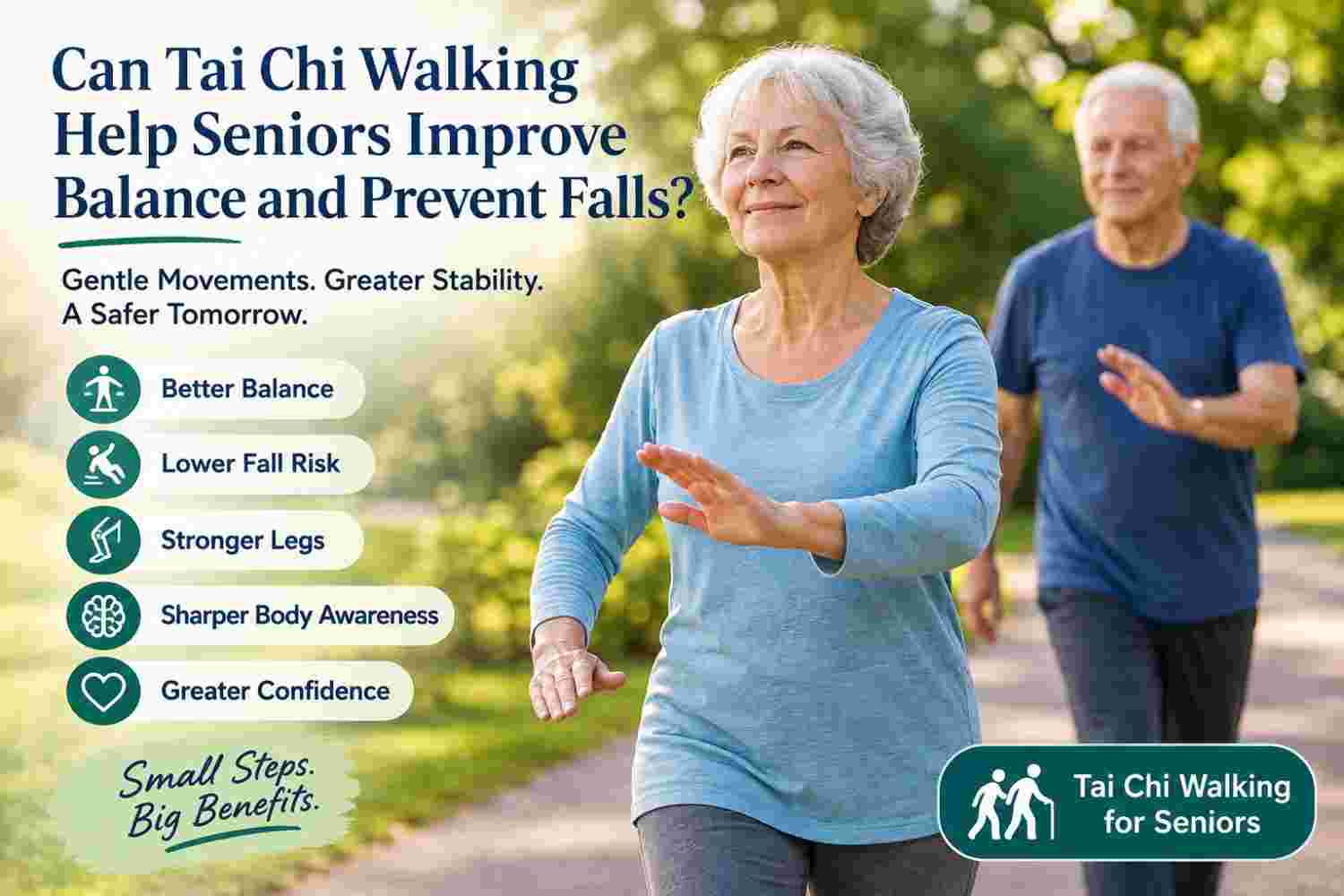
Balance often changes with age as muscle strength, coordination, flexibility, vision, and reaction time change. Tai chi walking for seniors is a gentle, low-impact exercise that uses slow steps, deliberate weight shifting, upright posture, and controlled movement to practice stability. For older adults who can exercise safely, it can be a practical way to work on balance and mobility while supporting a broader fall-prevention routine.
Can Tai Chi Walking Improve Balance in Seniors?
Yes, tai chi walking may help seniors improve balance by repeatedly practicing controlled weight shifts, single-leg support, posture, coordination, and deliberate foot placement. These movements challenge the body's ability to maintain stability while its center of gravity moves from one leg to the other.
The principle is simple: instead of taking the next step automatically, the person establishes stability first. That makes each step a small balance exercise.
What Is Tai Chi Walking?
Tai chi walking applies traditional tai chi movement principles to walking.
A basic sequence involves:
Stand → Shift → Lift → Place → Transfer → Repeat
For example, a senior begins with both feet on the ground, gradually transfers weight onto one leg, lifts the opposite foot, places it forward, and then slowly transfers weight onto that leg.
The emphasis is on control rather than speed or distance.
Why Does Tai Chi Walking Help with Balance?
Balance depends on several systems working together, including the muscles, joints, vision, inner ear, sensory feedback, and nervous system.
Tai chi walking for seniors engages several balance-related skills at the same time.
1. Controlled Weight Shifting
Walking requires the body to continually move its center of gravity.
Tai chi deliberately slows this process, giving seniors time to recognize where their weight is positioned before taking another step.
2. Lower-Body Control
During a tai chi step, one leg temporarily supports more body weight while the opposite foot moves.
This engages muscles in the legs and hips that are important for standing and walking.
3. Coordination
The exercise requires coordination between posture, weight transfer, foot placement, and forward movement.
Slowing these actions down allows the person to concentrate on performing them smoothly.
4. Body Awareness
Tai chi encourages seniors to notice how their feet contact the ground, whether they are leaning, and how their weight changes throughout each step.
This awareness can make movement more deliberate.
Can Tai Chi Walking Prevent Falls?
Tai chi may help reduce fall risk in some older adults because it trains balance, coordination, leg control, and movement awareness. However, no exercise can completely prevent falls. Tai chi works best as one component of a broader fall-prevention strategy that addresses physical, medical, and environmental risks.
Falls can result from many factors besides poor balance.
These may include:
- Muscle weakness
- Vision changes
- Certain medications
- Dizziness
- Unsafe footwear
- Mobility limitations
- Loose rugs or clutter
- Poor lighting
- Lack of handrails
That is why exercise and home safety should be considered together.
How Can Seniors Start Tai Chi Walking?
Beginners do not need to learn an entire tai chi routine.
Step 1: Establish a Stable Position
Stand with your feet approximately hip-width apart. Keep your knees relaxed, shoulders loose, and torso upright.
Step 2: Shift Your Weight
Slowly move your weight toward one leg without leaning your upper body dramatically sideways.
Notice how the opposite foot becomes lighter.
Step 3: Lift the Lighter Foot
Once you feel stable, gently lift the opposite foot.
Keep the movement small and controlled.
Step 4: Place the Foot Forward
Move the foot a comfortable distance forward and place it gently on the ground.
Avoid immediately transferring your full weight.
Step 5: Transfer Your Weight
Gradually shift your weight toward the forward leg while maintaining an upright posture.
Step 6: Repeat
Once stable, move the opposite foot forward using the same sequence.
Remember:
Shift. Lift. Place. Transfer. Repeat.
How Often Should Seniors Practice?
There is no single tai chi walking schedule suitable for every senior. Beginners can start with short sessions and a few carefully controlled steps, then gradually increase practice as balance, coordination, and confidence improve. Safe technique is more important than completing a specific number of steps.
Tai chi walking can complement other appropriate forms of physical activity, such as:
- Regular walking
- Strength exercises
- Flexibility exercises
- Other balance exercises
- Chair-based movement when appropriate
A varied exercise routine can address more aspects of physical function than relying on one activity alone.
What Other Steps Can Help Prevent Falls?
Exercise is important, but fall prevention should also address the home environment.
Practical measures include:
- Removing loose rugs and clutter from walkways
- Improving lighting near stairs and hallways
- Installing appropriate handrails and grab bars
- Wearing secure, properly fitting footwear
- Keeping frequently used objects within easy reach
- Addressing vision changes
- Reviewing medications with an appropriate healthcare professional
- Investigating new dizziness or balance problems
These measures can complement tai chi walking for seniors by reducing hazards that exercise alone cannot address.
Is Tai Chi Walking Safe for Every Senior?
Tai chi is generally considered a gentle form of physical activity, but it may not be appropriate to practice independently for every older adult. Seniors with frequent falls, significant balance impairment, dizziness, recent injuries, or serious mobility limitations should seek appropriate professional guidance before starting.
Beginners should practice on a flat, uncluttered surface and wear secure footwear. Anyone who feels unstable should avoid relying on movable chairs or lightweight furniture for support.
Stop exercising if movement causes pain, dizziness, unusual shortness of breath, or significant instability.
Better Balance Begins with Controlled Movement
The value of tai chi walking for seniors comes from turning an ordinary movement into deliberate balance practice. By slowing down each step, seniors can concentrate on weight transfer, posture, coordination, foot placement, and stability.
Tai chi cannot eliminate every cause of a fall, but it can be a useful part of a broader strategy that combines appropriate exercise, home safety, physical activity, and attention to individual health risks.
For beginners, there is no need to master complicated movements. Start with a few controlled steps, prioritize safety, and remember the basic sequence:
Shift. Lift. Place. Transfer. Repeat.