Benefits of Email Outreach: Practical Guide to Growing Sales and Retention
-

- Published Updated
- 538 views
The benefits of email outreach are wide-ranging: predictable lead generation, measurable ROI, scalable personalization, and improved customer retention. This guide explains why email outreach still matters, how to run campaigns that scale, and practical measures to increase deliverability and engagement.
- Detected intent: Informational
- Primary outcome: Use email outreach to generate leads, nurture prospects, and retain customers.
- Framework included: REACH checklist — Research, Engage, Align, Customize, Harvest.
Benefits of Email Outreach: Key advantages for businesses
Predictable, measurable lead generation
Email outreach provides channels for directly contacting target audiences at scale. Tracking open rates, click-through rates (CTR), reply rates, and conversion events makes campaign performance measurable and comparable to other channels like paid ads or organic search.
Cost-effectiveness and scalability
Unlike many paid channels, email outreach scales with modest incremental cost. A single optimized sequence can be reused across segments with small personalization adjustments, improving cost per acquisition (CPA) over time.
Personalization and segmentation
Segmenting lists by firmographic or behavioral signals and personalizing subject lines and opening lines increases engagement. Terms to know: deliverability, open rate, click-through rate, segmentation, personalization, ESP (email service provider), and CRM integration.
Nurture & retention: more than first contact
Email outreach supports multi-step nurture sequences that move contacts through the funnel: awareness, consideration, trial, and retention. This increases customer lifetime value (CLV) when combined with timely follow-ups and value-based content.
How to build an effective email outreach strategy (REACH framework)
The REACH framework creates a repeatable outreach process:
- R — Research: Identify target segments, decision-makers, and valid contact points. Verify emails with reputable validation tools to protect sender reputation.
- E — Engage: Create concise, benefit-focused subject lines and openings. Aim for one clear CTA per message.
- A — Align: Match the message to the recipient's context — industry, role, and likely pain points.
- C — Customize: Personalize at scale using tokens and short bespoke lines. Focus personalization where it moves the needle.
- H — Harvest: Measure outcomes, collect replies, and transfer engaged leads to sales or nurture sequences.
REACH checklist
- Target list built with validated emails and segmentation tags
- 3–5 message sequence with clear CTAs and follow-up timing
- Template personalization points and legal compliance check (opt-out visible)
- Deliverability checks: domain authentication (SPF, DKIM), warm-up plan
- Tracking and CRM integration for lead scoring
Practical implementation: actions to take
3–5 actionable tips
- Authenticate sending domains (SPF, DKIM) before high-volume sends to protect deliverability.
- Start with segmented pilot lists and A/B test subject lines and CTAs over several hundred recipients.
- Use short first emails (2–4 sentences) with a single, low-friction CTA like a 10-minute call.
- Monitor inbox placement and bounce rates; pause campaigns if hard bounce rate exceeds 2% to investigate list quality.
- Keep an unsubscribe option and follow applicable regulations such as CAN-SPAM; review official guidance for compliance here.
Common mistakes and trade-offs
Trade-offs are inherent in outreach strategy:
- High personalization vs. scale: Extensive manual personalization improves replies but increases time and cost.
- Frequency vs. reputation: Aggressive follow-ups increase touchpoints but may damage sender reputation if recipients mark messages as spam.
- Automation vs. authenticity: Over-automated templates can lower reply quality; include at least one bespoke line to preserve authenticity.
Core cluster questions
- How does email outreach improve lead generation?
- What metrics matter for email outreach performance?
- How to scale personalized outreach without losing response quality?
- What deliverability steps are essential before sending outreach campaigns?
- How to integrate email outreach with CRM and sales workflows?
Real-world example
A mid-size SaaS vendor targeted product managers at companies with 50–200 employees. Using the REACH framework, the campaign began with a validated list of 1,200 contacts, a three-email sequence, and domain authentication. After two months the campaign produced 48 qualified demo requests and a 7% reply rate. Conversion from demo to paid was 20%, proving the campaign can deliver both leads and measurable revenue when paired with a simple trial offer.
Measurement and optimization
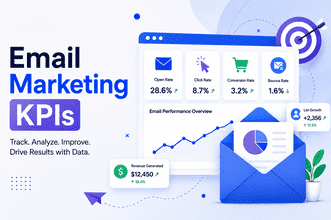
Key metrics to track
- Open rate and subject-line performance
- Click-through rate and CTA conversion
- Reply rate and qualified lead rate
- Bounce rate and spam complaints (for deliverability hygiene)
- Revenue per campaign and customer acquisition cost (CAC)
FAQ
What are the main benefits of email outreach?
Email outreach delivers predictable leads, scalable personalization, cost-effective nurture paths, and measurable ROI when campaigns are tracked and optimized.
How often should follow-ups be sent in an outreach sequence?
Typically, send 2–4 follow-ups spaced 3–7 business days apart. Adjust timing based on response patterns and the target audience's buying cycle.
How is email outreach different from cold calling or paid ads?
Email is asynchronous, trackable, and easier to personalize at scale than paid ads, and less interruptive than cold calls. Each channel has different speed, cost, and conversion characteristics.
Are there legal requirements for email outreach?
Yes. Laws such as CAN-SPAM and similar regulations in other jurisdictions require a visible opt-out and truthful header information. Consult official regulator guidance for the applicable rules in the target market.
How can a business measure the ROI of email outreach?
Track conversion events from outreach sequences through CRM attribution, calculate revenue attributable to those conversions, and compare to campaign costs to compute ROI. Include metrics like CAC and CLV for longer-term value assessment.