How to Choose Chatbot Development Companies in Chantilly: Capabilities, Costs, and a Practical Selection Framework
-

- March 04th, 2026
- 269 views

Get a free topical map and start building content authority today.
Finding the right chatbot development companies in Chantilly requires balancing technical depth, UX design, data governance, and long-term support. This guide explains evaluation criteria, a reusable selection framework, cost drivers, and practical tips for choosing a vendor that can deliver reliable conversational AI for customer service, sales, or internal automation.
Detected intent: Commercial Investigation
Primary focus: compare and evaluate local chatbot vendors by capabilities (NLP, integrations, analytics), security and compliance, team expertise, and delivery model. Use the BUILD checklist in this article to score vendors and shortlist finalists.
chatbot development companies in Chantilly: how to evaluate and compare
When comparing chatbot development companies in Chantilly, prioritize measurable capabilities: natural language understanding, integration breadth (CRM, ticketing, knowledge bases), training and testing processes, and post-launch analytics. Also assess domain experience (e.g., healthcare, finance, retail), compliance practices, and SLAs for uptime and incident response.
Key evaluation categories
- Core NLP and intent recognition performance
- Integration options: APIs, webhook support, and RPA connectors
- Conversation design and multilingual support
- Data security, privacy, and compliance (HIPAA, GDPR where relevant)
- Maintenance, training, and continuous improvement processes
Named framework: BUILD checklist
Use the BUILD checklist to score vendors consistently:
- Blueprint — Solution architecture, data flows, and compliance plan
- User experience — Conversation design, fallback strategy, and accessibility
- Integration — Connectors for CRM, knowledge base, and analytics
- Learn & iterate — Training pipelines, A/B tests, and performance metrics
- Delivery & support — SLAs, documentation, and knowledge transfer
Top capabilities to look for in conversational AI and enterprise chatbot services Chantilly
High-performing chatbot projects combine robust NLP with productized integrations and governance. Look for vendors that offer: contextual intent handling, entity extraction, session management, and connectors for popular systems (Salesforce, Zendesk, Microsoft Dynamics). Ask about logging, audit trails, and redaction features to meet privacy requirements.
Related technologies and terms to expect
Natural language processing (NLP), machine learning model evaluation, intent taxonomy, dialog management, RPA (robotic process automation), conversational UX, multichannel deployment (web, mobile, social), and analytics dashboards for containment rate and resolution time.
Core cluster questions (use these for deeper research and internal links)
- What metrics should be used to evaluate a chatbot’s performance?
- How do chatbot vendors handle data privacy and compliance?
- Which integrations are essential for enterprise chatbots?
- What is a realistic timeline and budget for an initial chatbot deployment?
- How is ongoing training and model drift managed post-launch?
Real-world example: appointment booking bot for a Chantilly clinic
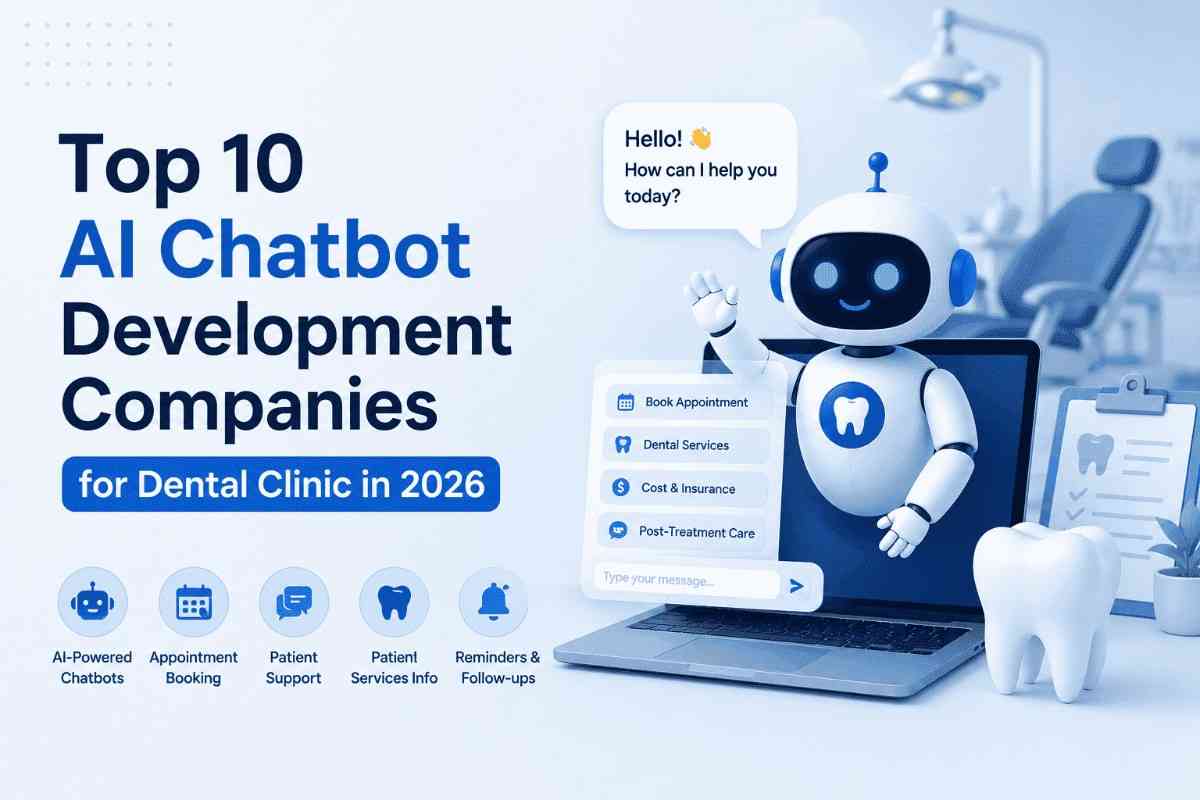
A mid-size medical clinic in Chantilly selected a local chatbot partner to reduce phone load and speed up appointment scheduling. Requirements included HIPAA-conscious logging, EHR integration for patient lookup, multilingual support, and a handoff to live agents for complex cases. Using the BUILD checklist, the clinic scored proposals and chose a vendor that delivered an initial MVP in 10 weeks, achieving a 40% reduction in call volume after three months.
Practical tips when shortlisting vendors
- Request a short proof-of-concept (2–4 weeks) with real sample data to validate intent accuracy and integration approach.
- Ask for clear ownership of data and a documented security posture (penetration test reports, encryption at rest/in transit).
- Compare TCO, not just upfront cost — include maintenance, cloud hosting, and ongoing training expenses.
- Prioritize vendors that provide role-based access, audit logs, and the ability to export training data.
Common mistakes and trade-offs
Trade-offs often involve time-to-market versus long-term maintainability. Common mistakes include:
- Choosing a vendor based solely on a demo without a POC — demos often use curated happy-paths.
- Over-customizing early — extensive custom features can increase technical debt and maintenance cost.
- Neglecting monitoring — without analytics for intent accuracy and containment rate, performance regresses.
Vendor questions to ask during procurement
- What is the average intent accuracy on representative data, and how is it measured?
- Which third-party systems have been integrated in past projects and how was authentication handled?
- What are the SLAs for uptime, incident response, and bug fixes?
- How are models updated safely — can rollbacks be performed if a new model underperforms?
For further guidance on AI risk management and best practices for trustworthy systems, see NIST AI resources.
Final checklist before signing a contract
- Complete a BUILD checklist scorecard for each finalist.
- Define measurable KPIs (containment rate, average handle time reduction, CSAT impact).
- Confirm data exportability, backup frequency, and access controls in writing.
- Negotiate trial periods or milestone-based payments tied to technical acceptance criteria.
How to choose chatbot development companies in Chantilly?
Choose by scoring vendors against the BUILD checklist, validating with a short POC, verifying integration examples and security posture, and aligning on KPIs and SLAs. Confirm post-launch support and training processes before signing.
What is a reasonable budget for a first-phase enterprise chatbot?
Expect a wide range: a basic rule-based bot can start under $25,000, while enterprise-level conversational AI with integrations and compliance features typically starts around $75,000–$150,000 for a first phase. Ongoing costs for hosting, monitoring, and training should be included in TCO calculations.
How much time does a typical chatbot project take?
An MVP usually takes 8–12 weeks for a constrained scope (appointment booking, FAQs). Full deployments with multi-system integrations, advanced NLU, and rigorous compliance testing often require 3–6 months.
Can a Chantilly chatbot vendor support multilingual or omnichannel deployment?
Many vendors support multilingual capabilities and omnichannel deployment (web, mobile, SMS, social). Validate language models for required locales and confirm channel-specific UX adjustments.
How are chatbot data privacy and compliance handled?
Vendors should provide details on data encryption, retention policies, access controls, and incident response. For regulated industries, require documented processes for redaction, consent capture, and audit logs to meet HIPAA, GDPR, or other applicable standards.