Travel Ads: Creative Strategies for Effective Travel Advertising
-
- February 23rd, 2026
- 1,881 views

FREE SEO Topical Map Generator: Find Your Next Content Ideas
Travel ads are a key tool for destinations, tour operators, and hospitality providers aiming to inspire bookings and build brand recall. This guide explains creative travel advertisement techniques, formats, targeting approaches, production tips, and measurement methods that perform across platforms while respecting privacy and disclosure rules.
- Use story-driven creative, dynamic formats, and audience personalization to increase relevance.
- Test multiple formats (video, display, DOOH, social) and measure view-through and conversion metrics.
- Comply with advertising and endorsement rules and data-privacy regulations.
Travel ads: formats and creative techniques
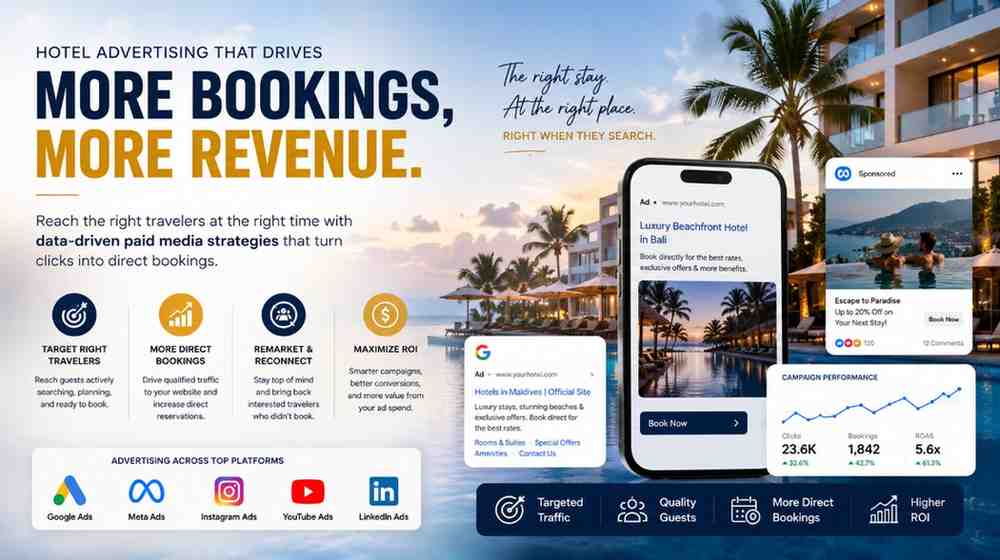
Creative travel advertisement works best when format and message match the stage of the traveler journey. Top-of-funnel travel ads commonly use immersive video, scenic imagery, and lifestyle storytelling to build awareness. Mid-funnel ads often combine dynamic creative optimization (DCO) with tailored offers; bottom-of-funnel tactics include retargeting, search ads, and personalized email creatives to drive bookings.
Visual and experiential formats
High-quality video (short-form and long-form), 360-degree tours, augmented reality previews, and interactive display creatives can deliver sensory context that static ads cannot. Digital out-of-home (DOOH) placements in transit hubs and experiential installations reach travelers in-moment and reinforce cross-channel campaigns.
Storytelling and messaging
Use clear value propositions and narrative hooks: local experiences, ease of travel, sustainability credentials, or itinerary inspiration. Incorporate user-generated content (UGC) and micro-influencer clips to add authenticity; ensure disclosure of sponsored content per regulator guidance.
Audience targeting, personalization, and programmatic approaches
Effective travel ads target by intent, life events, and behavioral signals. Combine first-party data (website interactions, past bookings) with contextual targeting to reach in-market audiences while limiting reliance on third-party cookies.
Segmentation and journey mapping
Map campaigns to traveler personas and the booking funnel. Create creatives for inspirations seekers, planners, and last-minute bookers. Use frequency capping and sequential messaging so ads evolve with user engagement.
Programmatic and dynamic creative
Programmatic buying and DCO allow creative assets to adapt in real time—swap images, copy, rates, and local language based on viewer signals. This increases relevance and can improve click-through and conversion rates when paired with robust testing.
Production best practices and accessibility
Quality production does not require large budgets. Prioritize strong composition, clear calls to action, mobile-first framing, and fast-loading assets. Include captions on videos, descriptive alt text on images, and readable typography for accessibility and broader reach.
Localization and cultural sensitivity
Localize language, visuals, and offers for target markets. Research cultural norms and local regulatory restrictions to avoid messaging that may be misunderstood or restricted.
Measurement, optimization, and regulatory considerations
Measurement should combine exposure metrics (impressions, viewability), engagement (CTR, watch time), and business outcomes (search lifts, direct bookings, revenue per acquisition). Use incrementality testing and uplift studies for robust attribution.
Privacy and disclosure
Comply with data protection frameworks such as the General Data Protection Regulation (GDPR) and California Consumer Privacy Act (CCPA) when collecting or processing traveler data. For influencer or sponsored content, follow endorsement and disclosure guidance from advertising regulators; for example, the Federal Trade Commission provides detailed rules on disclosures and endorsements. Federal Trade Commission
Brand safety and sustainability messaging
Implement brand-safety controls with media partners. When promoting sustainability claims, use verifiable facts and, where appropriate, cite third-party certifications or official tourism statistics (for example, reports from the United Nations World Tourism Organization) to avoid greenwashing risks.
Practical campaign checklist
Before launching travel ads, confirm the following:
- Creative variants for each funnel stage (awareness, consideration, conversion).
- Mobile-optimized assets and captions for video.
- Audience segments and exclusion lists to avoid wasted spend.
- Clear privacy notices and consent management for data collection.
- Measurement plan including primary KPI and test design.
Optimization routine
Run A/B tests on headlines, visuals, and CTAs. Pause underperforming placements and reallocate to high-performing channels. Use lookback windows appropriate to booking cycles when evaluating ad effectiveness.
Conclusion
Creative travel advertisement combines compelling storytelling, format selection, precise targeting, and careful measurement. Balancing inspiration with clear calls to action, respecting regulatory guidelines, and iterating based on data helps campaigns remain relevant and efficient over time.
What are travel ads and how do they work?
Travel ads are promotional creatives designed to motivate travel-related behaviors, such as researching, planning, or booking trips. They work by delivering targeted messages across channels—search, social, display, video, DOOH—using creatives matched to the traveler's stage in the decision process.
How should creative be adapted for different platforms?
Adapt creative by platform: use vertical video and punchy hooks for short-form social, cinematic widescreen for streaming video, and simplified messaging with prominent CTAs for display banners. Ensure each asset respects platform technical specs and audience expectations.
What metrics matter most for travel ads?
Key metrics include viewability, engagement (CTR, watch time), assisted conversions, booking conversion rate, cost per acquisition (CPA), and revenue per booking. Use uplift testing to measure true incremental impact versus correlated activity.
Are there legal or regulatory rules for travel advertising?
Yes. Advertising must avoid deceptive claims, disclose sponsored content (influencer marketing), and comply with data protection laws such as GDPR and CCPA. Consult official guidance from regulators and local authorities when planning campaigns.
How can small teams create effective travel ads on a budget?
Prioritize strong storytelling, user-generated content, short-form video, and clear CTAs. Leverage templates and DCO for personalization, focus on high-intent audiences, and iterate with inexpensive A/B tests to improve performance without large production costs.