Valsalva Maneuver for Ear Pressure Relief: How It Works and When to Use It
-

- Published Updated
- 58 views
Have you ever experienced a blocked or full feeling in your ears during a flight, while driving through high-altitude areas, or when dealing with a cold? Changes in air pressure can make your ears feel uncomfortable and may temporarily affect your hearing. The Valsalva maneuver for ear pressure relief is a simple technique that may help equalize pressure in the middle ear.
What Is the Valsalva Maneuver?
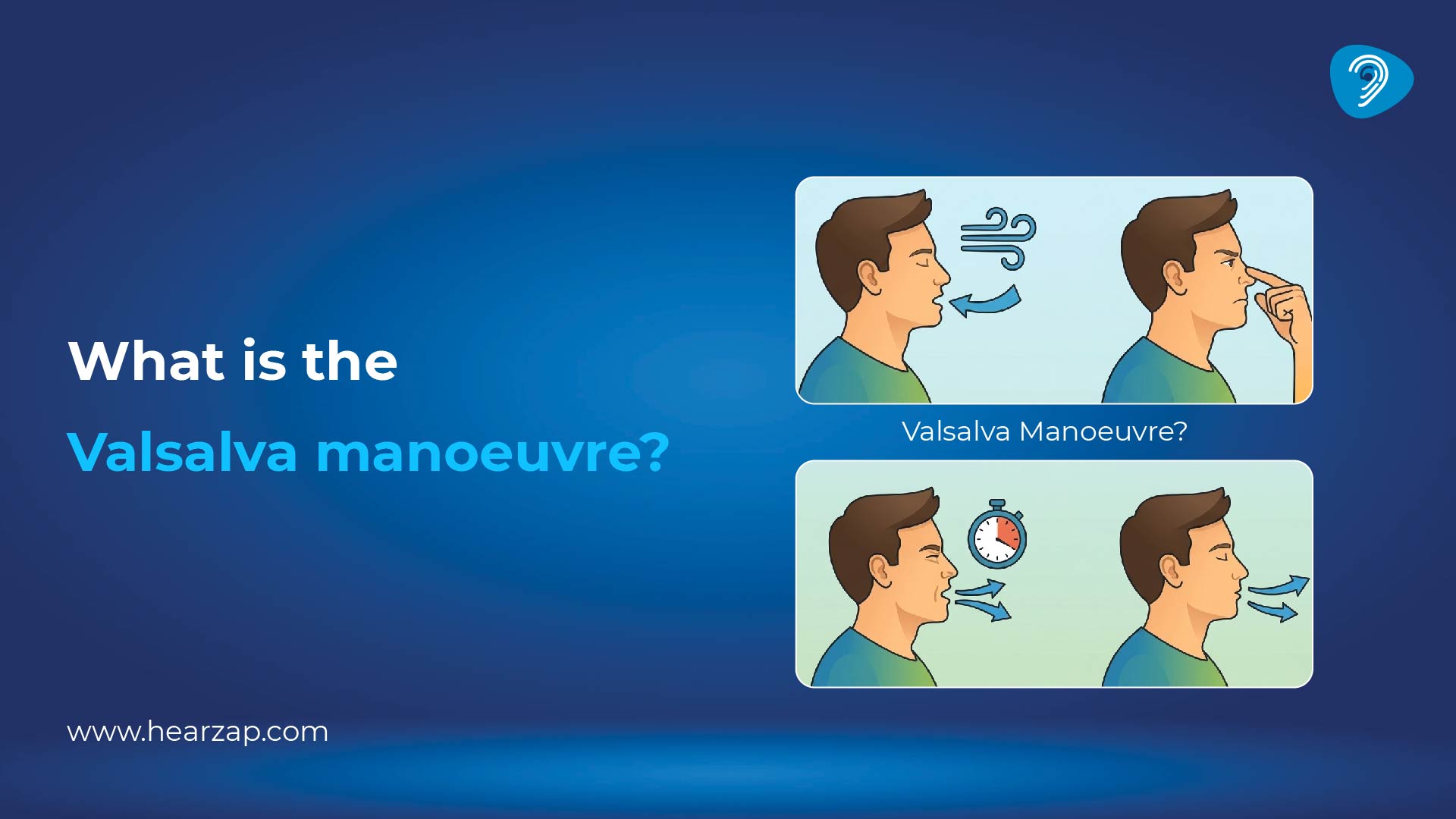
The Valsalva maneuver involves gently trying to exhale while keeping your mouth closed and pinching your nose. This creates mild pressure in the nose and throat, which can help open the Eustachian tubes—the small passages that connect the middle ear to the back of the nose and throat.
When these tubes open, air can move into or out of the middle ear, helping balance the pressure on both sides of the eardrum.
Valsalva Maneuver Technique
The Valsalva maneuver technique is easy, but it should never feel rough. You take a breath, close your mouth, pinch your nose, and blow gently as if trying to breathe out through the blocked nose.
This pressure can help open the blocked Eustachian tubes. When the tube opens, air moves into the middle ear, and the blocked feeling may reduce. Some people hear a small pop. Others feel slow relief.
Doctors may also use this breathing action in some medical situations, but for most people, it is known as an ear pressure relief method. At home, the goal is very simple: create mild pressure, let the tube open, and stop as soon as the ear feels better.
If your ear feels blocked due to wax, infection, or fluid, this method may not work. Read more on how to unclog your ears if the blockage keeps coming back.
How Does the Valsalva Maneuver Work for Ear Pressure?
Your middle ear needs air pressure to stay balanced with the outside air. During takeoff, landing, mountain travel, or diving, outside pressure changes quickly. The Eustachian tube should open and balance this pressure.
When the tube does not open well, the eardrum can feel stretched. This creates fullness, pain, muffled hearing, or a clogged sensation.
A gentle Valsalva breathing technique increases pressure at the back of the nose. This may push the Eustachian tube open for a moment. Once air passes through, pressure becomes more even.
That is why many people use the Valsalva maneuver ear pressure method during flights. It can be useful, but it is not a cure for every blocked ear. If you have an infection, severe pain, or a suspected eardrum tear, avoid it and get checked. Do not compare your case with someone else on a flight or at home, because the same blocked feeling can come from many causes.
How to Do the Valsalva Maneuver Safely
Below are the steps to do the Valsalva maneuver safely:
Step 1: Pinch Your Nose
Sit or stand comfortably. Take a normal breath. Pinch both nostrils closed with your fingers.
Do not squeeze the nose too hard. You only need to stop air from coming out.
Step 2: Close Your Mouth
Keep your mouth closed. Relax your jaw and face. Do not clench your teeth.
If you feel anxious, pause and breathe normally for a few seconds before trying again.
Step 3: Gently Blow Air
Now blow softly, as if you are trying to breathe out through your nose. Since the nose and mouth are closed, air pressure will build near the Eustachian tube.
Keep it mild. The aim is not to force air, but to nudge the tube open.
Step 4: Stop When You Feel a Slight “Pop”
Stop as soon as you feel a small pop or mild pressure release. Do not continue blowing after that.
If there is pain, dizziness, ringing, or no relief, stop. Try swallowing, yawning, or sipping water instead. You may also read how to relieve ear pressure for safer options.
How to Perform the Valsalva Maneuver
To try the technique safely:
Sit upright and take a normal breath.
Close your mouth.
Gently pinch your nostrils closed.
Try to exhale gently against the closed nose and mouth.
You may feel a slight popping sensation as the ear pressure changes.
Stop if you experience pain or significant discomfort.
The technique should be performed gently. Avoid forceful blowing, as excessive pressure can potentially injure the eardrum or cause other ear problems.
When Can It Help With Ear Pressure?
The Valsalva maneuver may be useful when ear pressure is caused by temporary pressure changes, such as during airplane takeoff and landing, scuba diving, or travelling through mountainous areas.
However, ear pressure can have several other causes, including earwax buildup, allergies, congestion, Eustachian tube dysfunction, ear infections, or other underlying ear conditions. In these situations, the Valsalva maneuver may not address the actual cause.
What If Your Ear Still Feels Blocked?
If ear pressure continues, keeps returning, or is accompanied by hearing loss, severe pain, dizziness, fluid discharge, or ringing in the ears, it is important to seek professional evaluation. Avoid repeatedly forcing the Valsalva maneuver when your ears are painful or blocked.
A hearing evaluation can also help determine whether persistent hearing difficulties are related to pressure problems or an underlying hearing condition.
Get Professional Hearing Support With Hearzap
If you are experiencing ongoing hearing difficulties, getting your hearing checked can be an important first step. Hearzap provides hearing care services and hearing aid solutions designed to support people with different levels of hearing needs.
Hearzap is one of the best hearing aids companies, offering hearing aid solutions and professional hearing support to help you hear with greater confidence.
[Book a Hearing Test with Hearzap]