Hernia Surgery in Hyderabad: Types, Procedures and Recovery
-

- September 26th, 2026
- 36 views
Hernia Surgery in Hyderabad is performed to repair a weakened area of the abdominal wall through which internal tissue or an organ has protruded. A hernia may appear as a visible bulge in the abdomen or groin and may cause pain, discomfort, heaviness or pressure, especially during physical activity, coughing or lifting.
The treatment approach depends on the type, size and location of the hernia, the symptoms it causes, previous surgeries and the patient's overall health. Depending on the individual condition, the surgeon may recommend open, laparoscopic or robotic repair.
What Is Hernia Surgery?
Hernia surgery is performed to repair the weakened abdominal wall and return the protruding tissue to its appropriate position. The repaired area may also be reinforced with surgical mesh when considered appropriate.
The main objectives of surgery are to:
- Repair the abdominal wall defect
- Relieve pain and discomfort
- Restore the strength of the affected area
- Reduce the risk of complications
- Address hernias that interfere with daily activities
Not every hernia requires the same type of operation. A surgical evaluation helps determine the most suitable approach for each patient.
What Causes a Hernia?
A hernia can develop when there is a weak area in the abdominal wall and internal tissue pushes through it. Some weaknesses may be present from birth, while others can develop over time.
Factors associated with hernia development may include:
- Previous abdominal surgery
- Repeated heavy lifting
- Chronic coughing
- Straining during bowel movements
- Increased abdominal pressure
- Obesity
- Pregnancy
- Weakness of abdominal tissues
The specific cause can vary depending on the type of hernia.
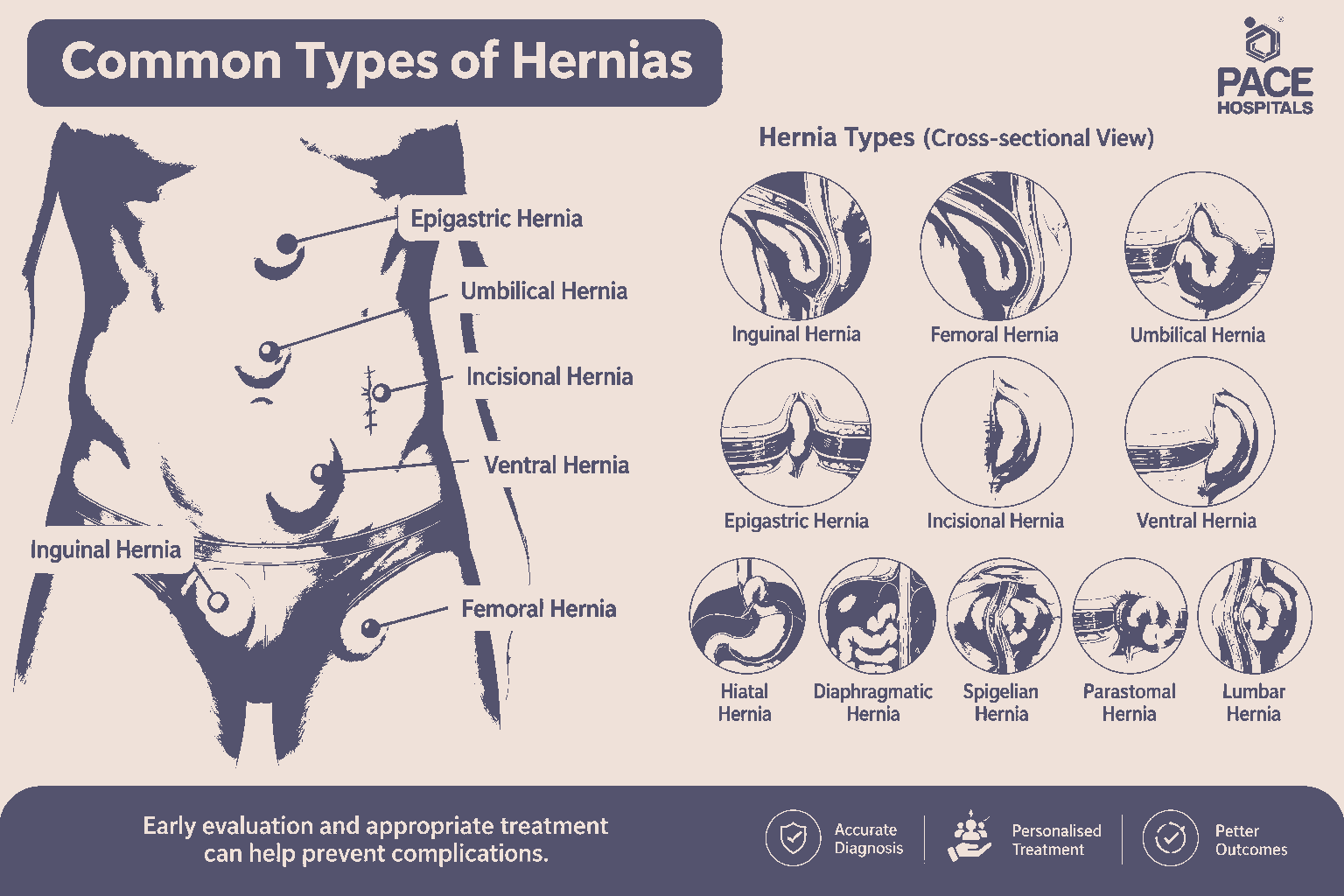
Common Types of Hernia
Hernias can occur in different parts of the abdominal wall and groin. Common types include:
- Inguinal hernia
- Umbilical hernia
- Femoral hernia
- Incisional hernia
- Ventral hernia
- Epigastric hernia
- Spigelian hernia
- Parastomal hernia
- Lumbar hernia
- Hiatal hernia
The location and characteristics of the hernia help the surgeon determine the appropriate treatment and surgical technique.
When Is Hernia Surgery Required?
Some hernias may initially cause little or no discomfort, while others can become painful or progressively larger. Surgery may be recommended when a hernia causes persistent symptoms, affects daily activities or has a risk of complications.
A surgeon may consider repair when the hernia:
- Causes ongoing pain or discomfort
- Becomes larger over time
- Interferes with routine activities
- Becomes difficult to push back
- Recurs after previous surgery
- Becomes incarcerated
- Develops signs of strangulation
An incarcerated hernia occurs when the protruding tissue becomes trapped. If the blood supply to the trapped tissue is reduced, strangulation can occur and requires urgent medical attention.
Sudden severe pain, rapidly increasing swelling, vomiting or significant abdominal symptoms should be evaluated promptly.
Types of Hernia Surgery
The surgical technique is selected according to the patient's condition and the characteristics of the hernia.
Open Hernia Surgery
Open hernia repair involves making an incision over or near the affected area. The surgeon identifies the hernia, returns the protruding tissue to its appropriate position and repairs the abdominal wall.
Mesh reinforcement may be used when appropriate. Open repair can be considered for different types of hernias, including some large, recurrent or complex hernias.
Laparoscopic Hernia Surgery
Laparoscopic hernia surgery is a minimally invasive procedure performed through small incisions. A laparoscope provides a magnified view of the surgical area while specialised instruments are used to repair the hernia.
Common laparoscopic approaches include:
- Transabdominal Preperitoneal repair (TAPP)
- Totally Extraperitoneal repair (TEP)
Laparoscopic surgery may be considered for selected inguinal, ventral, incisional and other abdominal wall hernias.
Robotic Hernia Surgery
Robotic hernia surgery is another minimally invasive approach for selected patients. Specialised instruments are controlled by the surgeon while a high-definition view of the surgical field is provided.
It may be considered for certain complex, recurrent, ventral or incisional hernias. The suitability of robotic surgery depends on the individual patient's anatomy, medical history and type of hernia.
What Is Hernia Mesh Repair?
Mesh repair involves reinforcing the weakened area of the abdominal wall with a surgical mesh. Mesh may be recommended for many adult hernia repairs when the surgeon considers it appropriate.
The decision to use mesh depends on factors such as:
- Hernia type
- Size of the defect
- Location of the hernia
- Tissue quality
- Previous repair
- Surgical technique
- Patient-specific factors
The surgeon explains the planned repair and discusses why a particular method may be suitable.
Best Hernia Surgery in Hyderabad: What Should Patients Consider?
When looking for the Best Hernia Surgery in Hyderabad, patients should focus on finding an appropriate surgical approach for their particular condition rather than assuming that one technique is suitable for everyone.
Important factors to discuss during consultation include:
- Type and location of the hernia
- Experience with the required type of repair
- Open and minimally invasive surgical options
- Management of recurrent or complex hernias
- Use of mesh when appropriate
- Anaesthesia and surgical facilities
- Postoperative monitoring and follow-up
A detailed assessment allows the surgical team to recommend a treatment plan based on the patient's individual needs.
Advanced Hernia Surgery in Hyderabad
Advanced Hernia Surgery in Hyderabad may involve minimally invasive techniques such as laparoscopic or robotic repair for selected patients.
These approaches use smaller access points and specialised surgical equipment. Depending on the hernia, minimally invasive techniques may be considered for primary, recurrent, ventral or incisional repairs.
However, advanced technology does not mean that one procedure is automatically better for every patient. The appropriate technique depends on the hernia's characteristics, previous operations, patient health and the surgeon's assessment.
How Is Hernia Surgery Performed?
Before surgery, the patient undergoes a clinical evaluation. The surgeon assesses the hernia, reviews the medical history and may recommend imaging or other investigations when required.
During the procedure:
- Anaesthesia is administered according to the planned operation.
- The surgeon accesses the hernia through an open incision or minimally invasive ports.
- The hernia defect is identified.
- The protruding tissue is returned to its appropriate position.
- The weakened area is repaired.
- Mesh may be placed when clinically appropriate.
- The incision or port sites are closed.
The duration of surgery depends on the type and complexity of the hernia.
Recovery After Hernia Surgery
Recovery varies depending on the type of surgery, hernia complexity and the patient's overall health.
After the procedure, patients receive instructions regarding wound care, medicines, physical activity and follow-up appointments.
Patients may be advised to:
- Keep the wound clean and follow wound-care instructions
- Take prescribed medications as directed
- Gradually resume routine activities
- Avoid strenuous exercise and heavy lifting until advised
- Attend follow-up appointments
- Report unusual pain, fever, swelling or wound-related concerns
The time required to return to normal activities varies from patient to patient.
Possible Benefits of Hernia Surgery
When surgery is appropriate, successful repair may help:
- Relieve pain and discomfort
- Repair the weakened abdominal wall
- Reduce the visible hernia bulge
- Improve physical comfort during daily activities
- Reduce the risk associated with incarceration or strangulation
- Address recurrent or complicated hernias
- Support a durable repair when an appropriate surgical technique is used
The expected outcome depends on the type of hernia, surgical approach and individual health factors.
Choosing a Hospital for Hernia Surgery
Choosing a hospital for hernia surgery involves more than looking at the surgical procedure itself. Patients may consider the experience of the surgical team, available techniques, operating facilities, anaesthesia support and postoperative care.
If you are looking for the Best hospital near HITECH CITY for hernia surgery, it can be helpful to choose a centre where you can discuss your condition directly with the surgical team and understand the available treatment options.
Hernia Surgery at PACE Hospitals
At PACE Hospitals, hernia surgery is planned according to the type, size, location and complexity of the hernia. Patients are evaluated before surgery so that the surgical team can determine whether open, laparoscopic or robotic repair may be appropriate.
The treatment plan can also take previous abdominal surgeries, existing medical conditions and individual recovery requirements into consideration.
Conclusion
Hernia surgery can help repair a weakened abdominal wall and manage hernias that cause symptoms or have a risk of complications. Open, laparoscopic, robotic and mesh-based techniques may be considered depending on the individual case.
Choosing the appropriate procedure requires a detailed assessment of the hernia and the patient's overall health. Understanding the available surgical options, recovery process and follow-up care can help patients make informed decisions about their treatment.
For people considering Hernia Surgery in Hyderabad, consultation with an experienced surgical team is an important step in determining the most appropriate approach for repair.