Vishnu Laxmi Shaligram
-

- Published Updated
- 101 views
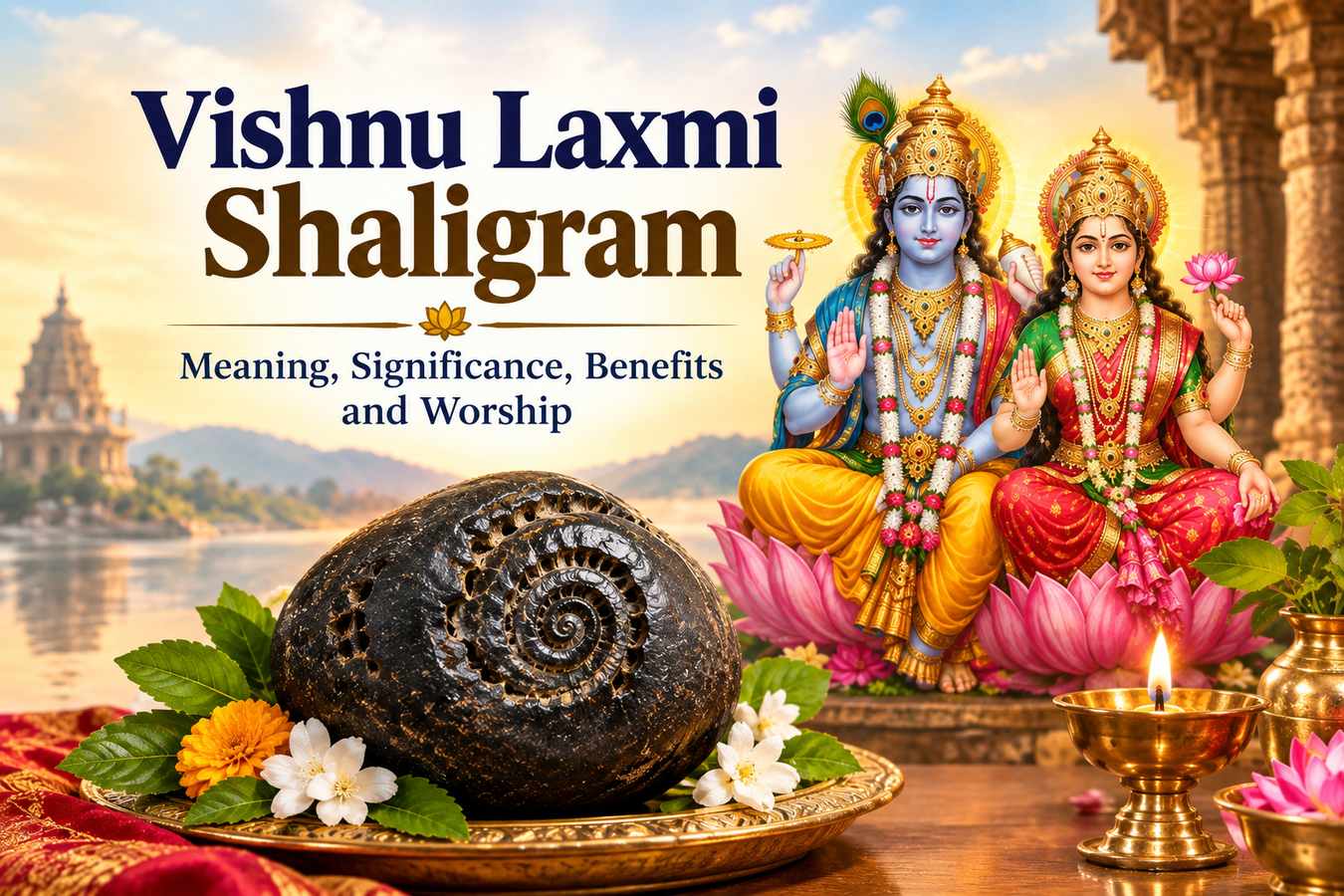
Vishnu Laxmi Shaligram: Meaning, Significance, Benefits and Worship
The Vishnu Laxmi Shaligram is regarded in Hindu tradition as a sacred form of Lord Vishnu associated with Goddess Lakshmi, the deity traditionally connected with prosperity, abundance and good fortune. Shaligram stones are naturally occurring sacred stones traditionally associated with the Gandaki River region of Nepal and are worshipped as manifestations of Lord Vishnu.
Among different forms of Shaligram, Vishnu Laxmi Shaligram is especially valued by devotees who wish to create a spiritual atmosphere connected with devotion, prosperity, harmony and divine blessings.
What Is Vishnu Laxmi Shaligram?
Vishnu Laxmi Shaligram refers to a Shaligram stone traditionally identified with the combined divine association of Lord Vishnu and Goddess Lakshmi.
Shaligrams are naturally formed stones, and their characteristic markings, chakras and patterns are interpreted within traditional Hindu practice. Because these features occur naturally, each Shaligram can have a different appearance.
The Vishnu Laxmi form is particularly associated with the idea that spiritual devotion and material prosperity can exist together when wealth is approached with responsibility and gratitude.
Religious Significance of Vishnu Laxmi Shaligram
Lord Vishnu is traditionally regarded as the preserver of the universe, while Goddess Lakshmi is associated with prosperity, fortune and abundance. Their association therefore holds an important place in Vaishnavite traditions.
Devotees who worship Vishnu Laxmi Shaligram commonly do so as part of their daily prayers and household worship. The practice is less about the physical stone itself and more about faith, devotion and remembrance of the divine.
For many families, keeping a Shaligram in a home shrine represents a continuing connection with traditional Vaishnava worship.
Vishnu Laxmi Shaligram Benefits
Traditional beliefs attribute several spiritual benefits to the worship of Vishnu Laxmi Shaligram. These should be understood as matters of religious faith rather than scientifically established effects.
1. Associated With Prosperity
Goddess Lakshmi is traditionally associated with wealth, abundance and prosperity. Consequently, devotees may worship Vishnu Laxmi Shaligram while praying for financial stability and prosperity.
2. Encourages Spiritual Devotion
Regular Shaligram worship can become a daily spiritual practice. Offering water, prayers and flowers encourages devotees to maintain a routine of remembrance and devotion.
3. Associated With Household Harmony
The combined association of Vishnu and Lakshmi is often viewed symbolically as representing balance, stability and harmony within family life.
4. Supports a Positive Spiritual Environment
A dedicated place of worship can encourage meditation, prayer and reflection. For devotees, keeping a Vishnu Laxmi Shaligram in the home may therefore become an important part of their spiritual routine.
5. Represents Divine Grace
Many devotees consider Shaligram worship a way of expressing surrender and seeking the blessings of Lord Vishnu and Goddess Lakshmi.
How to Identify Vishnu Laxmi Shaligram?
Identifying a Shaligram should be approached carefully. Shaligrams are natural stones, and their markings can vary considerably.
Traditional identification may consider characteristics such as:
- Natural chakras or spiral markings
- Shape and structure of the stone
- Natural openings or impressions
- Distinctive surface patterns
- Traditional descriptions associated with particular forms
However, there is no universally accepted modern scientific method for assigning every Shaligram to a particular deity or traditional category.
For this reason, buyers should be cautious of sellers making exaggerated claims based solely on unusual markings or promising guaranteed financial results.
How to Worship Vishnu Laxmi Shaligram
Vishnu Laxmi Shaligram can be incorporated into a simple home prayer routine.
A traditional worship routine may include:
- Clean the worship area.
- Gently clean the Shaligram with clean water.
- Place it respectfully on a clean altar or puja platform.
- Offer water according to your family tradition.
- Offer Tulsi leaves, flowers or other appropriate offerings.
- Light a diya and incense if customary.
- Recite a Vishnu or Lakshmi prayer or mantra.
- Spend a few moments in quiet prayer and devotion.
Different families and Vaishnava traditions may follow different procedures, so devotees can follow the practices taught by their family, guru or tradition.
Which Mantra Can Be Chanted?
Devotees may choose a simple Vishnu mantra such as:
“Om Namo Bhagavate Vasudevaya.”
Those who specifically wish to include Goddess Lakshmi in their prayer may also recite a Lakshmi mantra according to their tradition.
The sincerity of prayer is generally considered more important than performing an elaborate ritual without understanding its meaning.
Where Should Vishnu Laxmi Shaligram Be Kept?
A Shaligram is traditionally kept in a clean and respectful place, usually within a home temple or puja area.
Devotees generally prefer to:
- Keep it in a clean worship space
- Handle it respectfully
- Avoid placing it casually on the floor
- Keep the puja area clean
- Follow their family or religious tradition regarding daily worship
There is no need to treat the stone as a decorative object when it is being kept specifically as a sacred object of worship.
Vishnu Laxmi Shaligram and Lakshmi Worship
The connection between Vishnu and Lakshmi is central to the traditional understanding of this form of Shaligram. Lord Vishnu represents preservation and cosmic order, while Lakshmi represents prosperity and abundance.
Together, their symbolism can be understood as a reminder that prosperity is traditionally viewed alongside dharma, responsibility and spiritual values.
For this reason, Vishnu Laxmi Shaligram may have particular significance for devotees who want their worship to include both Vishnu bhakti and prayers associated with prosperity.
Is Vishnu Laxmi Shaligram Suitable for Everyone?
From a devotional perspective, Shaligram worship is practiced by many Hindu devotees and is particularly prominent in Vaishnava traditions.
However, individual rituals and rules can differ. Some households follow specific traditions regarding who handles the Shaligram, what offerings are made and how frequently it is worshipped.
If your family follows a particular religious tradition, it is best to follow those established practices rather than relying only on generalized online instructions.
Things to Consider Before Buying a Vishnu Laxmi Shaligram
If you are looking to purchase a Vishnu Laxmi Shaligram, remember that it is a naturally occurring sacred stone rather than a manufactured gemstone.
Before purchasing, consider:
- Whether the stone is naturally formed
- Whether its markings are natural
- Whether the seller provides clear information about its origin
- Whether the seller makes unrealistic promises
- Whether the identification is explained transparently
A responsible seller should not guarantee wealth, business success or other specific outcomes simply because someone purchases a Shaligram.
Final Thoughts
The Vishnu Laxmi Shaligram holds a meaningful place in the devotional traditions surrounding Shaligram worship. Its association with Lord Vishnu and Goddess Lakshmi connects it with ideas of preservation, prosperity, devotion and household harmony.
For devotees, the real value of Shaligram worship lies not simply in possessing a particular stone but in maintaining a sincere spiritual practice. Regular prayer, gratitude and devotion can make the Shaligram an important part of a traditional home shrine.
Whether you are learning about Shaligrams for the first time or exploring different forms of Vishnu Shaligram, understanding the religious tradition, natural characteristics and proper worship practices is an important part of making an informed choice.