What Factors Determine the Right Wheeled Fire Fighting Equipment
-

- Published Updated
- 2,600 views
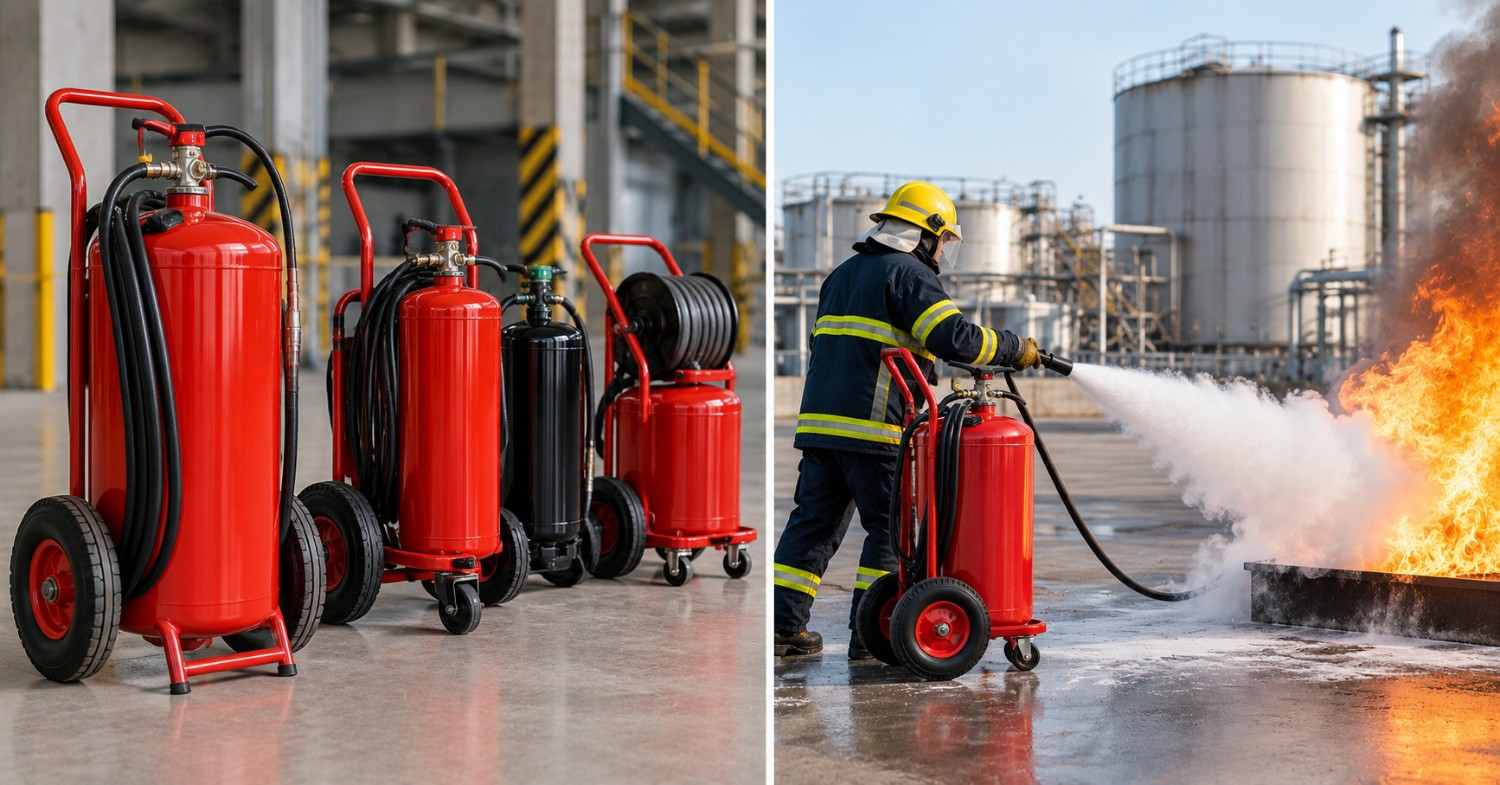
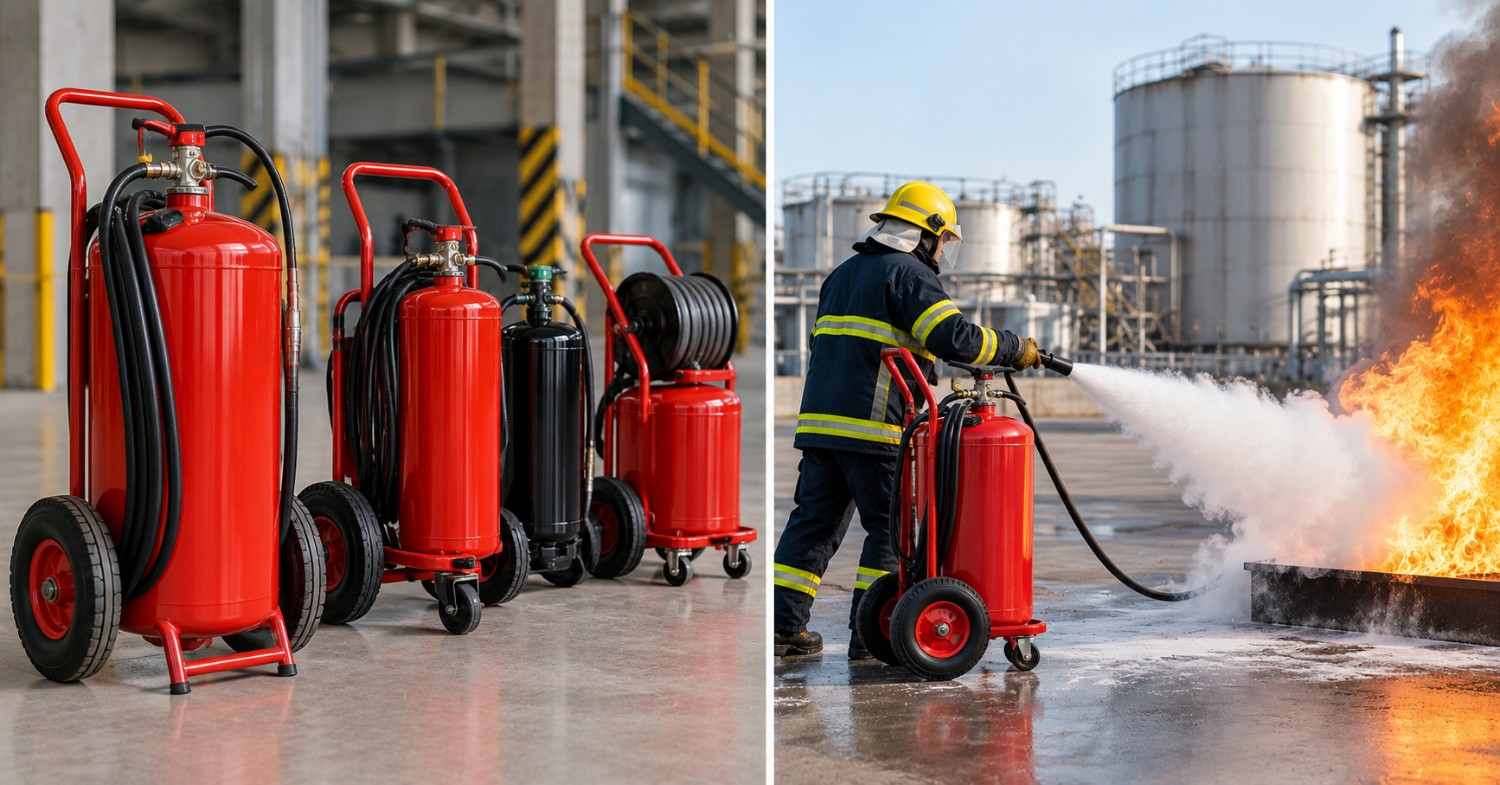 Fire safety equipment plays an important role in protecting people, property, machinery, and valuable assets during an emergency. While portable extinguishers are suitable for many common situations, larger or higher-risk areas may require equipment with greater extinguishing capacity. This is where a fire extinguisher trolley becomes useful. It combines a larger extinguishing agent capacity with wheels that allow the unit to be moved toward the affected area when required.
However, choosing suitable wheeled fire fighting equipment is not simply about selecting the biggest unit available. Several practical factors should be considered, including the type of fire risk, extinguishing agent, capacity, workplace conditions, mobility, and maintenance needs. Understanding these factors helps businesses create a more effective fire safety setup.
1. Understand the Type of Fire Risk
The first step is identifying the types of combustible materials present in the area. Different fires require different extinguishing agents, so one type of equipment may not be suitable for every environment.
For example, offices and warehouses may contain paper, cardboard, furniture, and packaging materials. Industrial facilities can have electrical equipment, machinery, flammable liquids, oils, chemicals, or gases.
A proper fire risk assessment helps identify possible hazards before selecting equipment. The wheeled extinguisher should contain an agent appropriate for the expected fire class. Using unsuitable equipment can reduce effectiveness and may create additional hazards in certain situations.
2. Select the Appropriate Extinguishing Agent
Wheeled extinguishers are available with different extinguishing agents. Common options include dry chemical powder, carbon dioxide (CO2), foam, and other specialized agents.
Dry chemical powder is commonly considered for industrial environments because it can address multiple types of fire hazards depending on the powder formulation. CO2 extinguishers are often associated with electrical equipment and certain flammable liquid risks because carbon dioxide does not leave the same type of residue as dry powder.
Foam-based equipment may be useful where particular combustible solids or flammable liquids are present. The correct choice should always depend on the identified fire hazards and applicable safety requirements.
3. Consider the Required Capacity
Capacity is another major factor when choosing a fire extinguisher trolley. Wheeled units generally offer substantially more extinguishing agent than standard handheld extinguishers, making them useful where a larger quantity of agent may be needed.
However, greater capacity does not automatically mean better suitability. A very large unit can be difficult to move through narrow passages or congested work areas.
The goal should be to balance fire-fighting capacity with practical mobility. The size of the facility, hazard level, equipment layout, access routes, and distance from likely risk areas should all be considered.
4. Check Mobility and Wheel Quality
The main practical advantage of wheeled equipment is mobility. Therefore, wheels, handles, balance, and overall trolley construction deserve careful attention.
A good trolley should allow trained personnel to move the extinguisher without unnecessary difficulty. Wheel size and construction become particularly important in factories, warehouses, construction areas, and outdoor facilities where floors may not always be perfectly smooth.
Strong wheels, a stable frame, and an easy-to-control handle can make the equipment more practical during an emergency.
5. Evaluate Hose Length and Discharge Control
The hose allows the operator to direct the extinguishing agent while keeping the main cylinder positioned at a suitable distance. Its length should therefore be appropriate for the intended working environment.
In industrial locations, machinery, storage racks, equipment, or other obstacles can make direct access difficult. A suitable hose arrangement can provide greater flexibility.
Discharge control is equally important. The nozzle and operating mechanism should allow trained users to direct the agent effectively toward the fire while following proper safety procedures.
6. Consider the Installation Environment
The surroundings in which the equipment will be stored and used can influence its long-term performance. Indoor offices, factories, outdoor plants, warehouses, workshops, and construction locations can expose fire fighting equipment to very different conditions.
Dust, moisture, heat, chemicals, vibration, and corrosion may affect components over time. For demanding environments, durable construction and appropriate protection become particularly important.
Businesses choosing equipment from a fire safety brand such as Savemax should consider not only extinguisher type but also the actual conditions in which the unit will remain installed.
7. Look at Accessibility and Placement
Even suitable equipment offers limited value if employees cannot reach it quickly. A fire extinguisher trolley should be placed in an accessible and clearly identified location without creating an obstruction.
It should not be hidden behind stored goods, machinery, furniture, or locked barriers. The path around the equipment should remain clear.
Placement should be based on the site's fire risk assessment and relevant fire safety requirements. High-risk locations may require strategic positioning so trained personnel can access equipment without unnecessary delay.
8. Check Construction Quality
Wheeled fire fighting equipment may need to remain ready for service for years, making construction quality important. Cylinder condition, trolley frame strength, hose quality, valves, fittings, wheels, and operating controls should all be considered.
Equipment should also carry appropriate markings and information that help with identification, operation, inspection, and servicing.
Choosing equipment based only on initial price may not always provide the best long-term value. Reliability, suitability, service support, and maintenance requirements are equally important considerations.
9. Plan for Inspection and Maintenance
Fire extinguishing equipment requires regular inspection and maintenance. A unit that has not been properly maintained may fail to perform as expected during an emergency.
Routine checks can identify problems such as damaged hoses, corrosion, missing seals, pressure issues, blocked access, or physical damage. Periodic professional servicing should be completed according to the manufacturer's guidance and applicable fire safety standards.
Keeping inspection and maintenance records can also help organizations manage their overall fire safety program more effectively.
Conclusion
Choosing the right wheeled fire fighting equipment requires more than looking at cylinder size. Fire type, extinguishing agent, capacity, mobility, hose design, environmental conditions, placement, construction quality, and maintenance all influence the final decision.
A properly selected fire extinguisher trolley can provide additional extinguishing capacity for industrial, commercial, and other higher-risk environments while remaining movable when needed. Savemax provides fire safety equipment for different applications, but every facility should select and position its equipment according to its specific hazards and applicable safety requirements. Careful planning, proper training, and regular maintenance together help ensure that fire fighting equipment is ready when an emergency occurs.
Read More:
https://savemaxindia.com/cafs-water-mist-extinguisher/