
Why LED Lights for Car Shops Are Best for Showcasing Finished Work
-
- March 09th, 2026
- 310 views

FREE SEO Topical Map Generator: Find Your Next Content Ideas
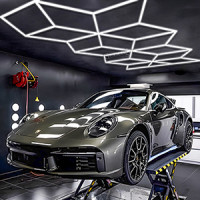
The choice of LED lights for car shops affects how finished work is seen by customers, how defects are caught before delivery, and how consistent final colors and finishes appear. This guide explains why LED lights for car shops are preferred for showcasing finished results, what to specify (CRI, CCT, lux), and how to set up lighting that builds customer confidence while improving quality control.
Why LED lights for car shops make finished results look better
High-quality LED lights offer three practical advantages for presenting finished vehicles: consistent color rendering, controllable brightness and direction, and minimal heat and UV output. That combination improves paint and trim inspection, reduces surprises at handover, and creates a more professional customer experience.
Color accuracy and color rendering
Color Rendering Index (CRI) and modern metrics like TM-30 matter when customers examine paint color, metallic flake, or clear-coat depth. LEDs with CRI ≥90 reproduce hues closer to daylight than low-CRI fluorescents or sodium fixtures. A neutral correlated color temperature (CCT) between 4000K and 5000K approximates natural daylight without appearing overly cool or warm, which helps customers judge color accurately across different viewing angles.
Even illumination and contrast control
LED panels and strip fixtures provide uniform illumination with fewer hot spots than point-source lamps. That uniformity makes defects such as sanding scratches, holograms, or polish marks easier to find and easier to explain to customers. Adjustable beam angles and diffusers permit control of glare and specular reflections so the finish looks glossy rather than washed out.
Temperature, safety, and efficiency
LEDs run cool, reducing the risk of heat-related damage to paint or trim during close inspection. The lower power draw and longer life also reduce operating costs and maintenance interruptions in busy shops. LEDs produce virtually no UV radiation compared to older technologies, lowering the chance of premature fading on interior or soft-trim surfaces during repeated inspections.
Key specifications and practical setup for auto shop LED display lighting
Choosing fixtures requires attention to measurable specs. For auto shop LED display lighting, prioritize CRI, CCT, lumen output, beam control, and mounting flexibility. The following baseline is an industry-minded starting point used in many detail bays and paint inspection areas.
- CRI: ≥90 (aim for higher if color-critical work is performed)
- CCT: 4000K–5000K for neutral daylight appearance
- Illuminance: 700–1500 lux on painted surfaces for inspection; higher for precision tasks
- Glare control: diffusers, louvers, or angled mounting to limit specular washout
- Color stability: low flicker drivers and minimal color shift over time
For further guidance on lighting standards and recommended practices, consult lighting organizations such as the Illuminating Engineering Society, which publishes best practices for commercial and industrial lighting design.
SHOWCASE checklist: a named framework for picking and placing fixtures
Use the SHOWCASE checklist to evaluate LED lighting for display and inspection:
- Spectrum: Choose 4000–5000K CCT for neutral color.
- High CRI: Select CRI ≥90 or TM-30 guidance.
- Orientation: Plan fixture angles to control specular reflections.
- Wattage/Lumen: Ensure sufficient lux on the surface (700–1500 lux).
- Coverage: Use panels/strips for even illumination across panels.
- Adjustability: Include dimming and movable arms for flexibility.
- Safety: Verify low heat and proper mounting height.
- Expectations: Match lighting to customer viewing conditions (daylight comparisons).
Real-world example
A mid-sized detailing shop installed adjustable LED linear fixtures at 1.5 meters above each bay, set to 4500K and CRI 92. Illuminance at the vehicle surface measured 1200 lux. Technicians reported fewer missed polish defects, and customers viewing cars in a purpose-built handover area consistently agreed the finish matched photos taken under the same lighting. Maintenance intervals dropped because LEDs required fewer lamp changes than previous fluorescent fixtures.
Practical tips for implementing LED lighting in detailing bays
- Measure and document lux levels across work surfaces with a light meter to ensure consistent inspection standards.
- Use dimmable drivers so lighting can be matched to external daylight for photo documentation and customer handover.
- Combine linear overhead panels for base illumination with directional spot LED bars for highlighting defects during QC.
- Keep an inspection station with fixed LED settings for final customer-facing photos to maintain consistency between jobs.
Common mistakes and trade-offs
Switching to LEDs solves many problems but introduces trade-offs and potential mistakes:
- Buying low-cost LEDs with poor CRI: cheaper fixtures may claim high lumens but render colors poorly—leading to mismatches between shop and natural daylight.
- Over-bright point sources causing specular washout: small, intense fixtures can hide texture; use diffusers or expand beam angles.
- Ignoring flicker and driver quality: poor drivers can affect color stability and make photos look inconsistent.
Core cluster questions
- How much lux is needed to inspect automotive paint properly?
- What CRI and CCT are best for detailing and paint correction?
- How should LED lights be positioned to minimize glare on glossy surfaces?
- What are reliable methods for measuring and documenting lighting conditions in a shop?
- How do LED lighting setups affect photography for before-and-after photos?
Measuring success: metrics to track
Track customer satisfaction at handover, the rate of rework due to missed defects, and maintenance downtime for lighting. Use before-and-after photos shot under the shop's inspection lighting to show consistent results to customers and staff. Keep a log of lux measurements and fixture replacement dates to spot drift or aging in the lighting system.
FAQ: Are LED lights for car shops better for showing finished results?
What CRI and color temperature should a shop choose for paint inspection?
Choose CRI ≥90 and a CCT of about 4000K–5000K for neutral daylight-like rendering. Higher CRI improves hue accuracy and reduces surprises when a vehicle is later seen outside.
How many lux are needed to find swirl marks and polishing defects?
For paint inspection, aim for 700–1500 lux at the surface. Use directional LED bars at lower angles to reveal micro-scratches; increase lux for detailed tasks like paint defect mapping.
Can LED lighting affect how photos of finished work appear?
Yes. Using a fixed LED handover station with known CCT and CRI ensures before-and-after photos are consistent and truthful, reducing disputes about final appearance.
How often should LED fixtures be checked or replaced?
Periodically measure lux and color temperature; even LEDs experience lumen depreciation over years. Keep maintenance records and replace fixtures when uniformity or lux drops below the shop's inspection threshold.
Do LEDs cause damage to vehicle surfaces?
High-quality LEDs emit minimal UV and less heat than legacy lighting, so they are safer for prolonged inspection and photography than older high-heat or high-UV sources.
Implementing LED lighting with clear measurement standards and the SHOWCASE checklist converts lighting from a variable into a controlled part of the quality handover process. Properly specified LED lights improve defect detection, color accuracy, and customer trust—making them a preferred choice for car shops that present finished results to customers.
