Everything Happened At World Humanoid Robot Games 2026
-

- September 24th, 2026
- 1,707 views
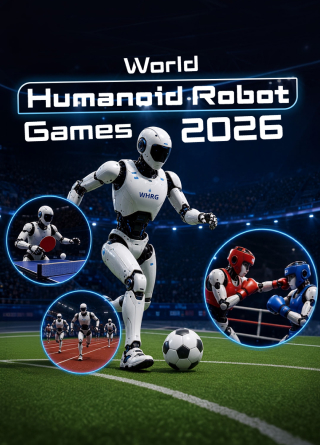
Humanoid robots have spent years demonstrating their abilities inside laboratories and controlled environments. However, the World Humanoid Robot Games 2026 offered something far more ambitious—a chance for these machines to prove themselves in front of a global audience. Held in Beijing's National Speed Skating Oval, popularly known as the Ice Ribbon, the event combined competitive sports with practical workplace challenges to evaluate how close humanoid robots are to functioning alongside humans.
The second edition of the Games attracted worldwide attention, bringing together more than two thousand robots representing hundreds of teams from across the globe. Instead of focusing solely on speed or strength, organizers designed the competition to examine balance, coordination, perception, decision-making, and fine motor skills. From sprint races and football matches to hotel service and emergency-response simulations, the Games showcased both the remarkable progress of robotics and the challenges developers still need to overcome.
World Humanoid Robot Games 2026 Drew Record Participation
The World Humanoid Robot Games 2026 marked a significant expansion over its inaugural edition held in 2025. More than 2,056 robots representing 666 teams from 16 countries competed across 51 events and 1,301 competition sessions, making it the largest humanoid robotics competition ever organized.
Although Chinese teams dominated participation, the Games also featured competitors from the United States, Germany, Japan, Brazil, and several other countries, reflecting growing international interest in humanoid robotics. Universities, research institutions, startups, and major robotics companies used the event as an opportunity to benchmark their latest developments against competitors.
Unlike conventional robotics exhibitions, the Games were structured to recreate situations that robots may eventually encounter in everyday life. Developers were not simply trying to build machines capable of running fast—they were attempting to create robots that could eventually work in factories, hospitals, warehouses, hotels, restaurants, and homes.
Sporting Events Tested Speed, Balance, And Coordination
Athletics remained one of the biggest attractions throughout the competition. Robots competed in the 100-meter sprint, 400-meter race, 1,500-meter endurance event, obstacle courses, relays, long jump, standing jump, gymnastics, weightlifting, tug-of-war, freestyle combat, Tai Chi, wushu, and dance competitions.
Football also returned with a larger format than the previous year. Instead of smaller three-player teams, robots competed in full 5v5 football matches, requiring greater teamwork, navigation, and strategic decision-making. Table tennis made its debut, demanding that robots identify the ball, predict its trajectory, and react in real time without human intervention.
These competitions were not designed simply for entertainment. Every movement generated valuable performance data that engineers can use to improve locomotion, balance, joint control, and autonomous navigation.
Real-World Challenges Were Even More Demanding
While sporting competitions attracted headlines, the practical scenario events arguably carried greater importance.
Organizers created 21 real-world scenario competitions spread across environments that humanoid robots may eventually enter commercially. These included homes, hotels, restaurants, supermarkets, factories, logistics centers, libraries, and emergency-response settings.
Hotel-service robots had to carry luggage, replenish supplies, collect waste, and make beds. Restaurant robots were challenged to transport drinks carefully and operate kitchen equipment without making mistakes. Retail robots stocked shelves, managed inventory, and handled customer orders, while library robots sorted and organized returned books.
Emergency-response scenarios proved particularly difficult. Robots needed to identify hazardous materials, operate valves, locate fire extinguishers, and extinguish simulated fires while navigating unfamiliar environments.
Other competitions focused on dexterity. Participants tightened screws, connected flexible cables, opened bottle caps, hammered nails, picked up beans using tweezers, and completed several precision-based tasks requiring delicate hand movements.
These seemingly ordinary activities demonstrated that everyday work remains considerably more challenging for robots than highly structured athletic competitions.
Humanoid Robots Continue Making Rapid Progress
One of the biggest messages from the World Humanoid Robot Games 2026 was just how rapidly humanoid robotics is evolving.
Compared with the previous edition, improvements in running speed, jumping distance, coordination, and overall stability were dramatic. Developers showcased stronger actuators, more sophisticated balance systems, faster processors, and improved AI models capable of making split-second decisions.
Modern humanoid robots can now recover from slips, adjust their gait while running, recognize objects using computer vision, and perform increasingly complex sequences without continuous human control.
These advancements indicate that robotics research is moving beyond isolated demonstrations toward practical deployment across multiple industries. Manufacturing, logistics, healthcare, hospitality, and retail are all expected to benefit from future generations of humanoid robots capable of working alongside human employees.
However, the competition also made it clear that achieving human-level adaptability remains one of the industry's greatest challenges.