Yin vs. Restorative Yoga: How to Sequence Each Class
-
- Published Updated
- 3,482 views
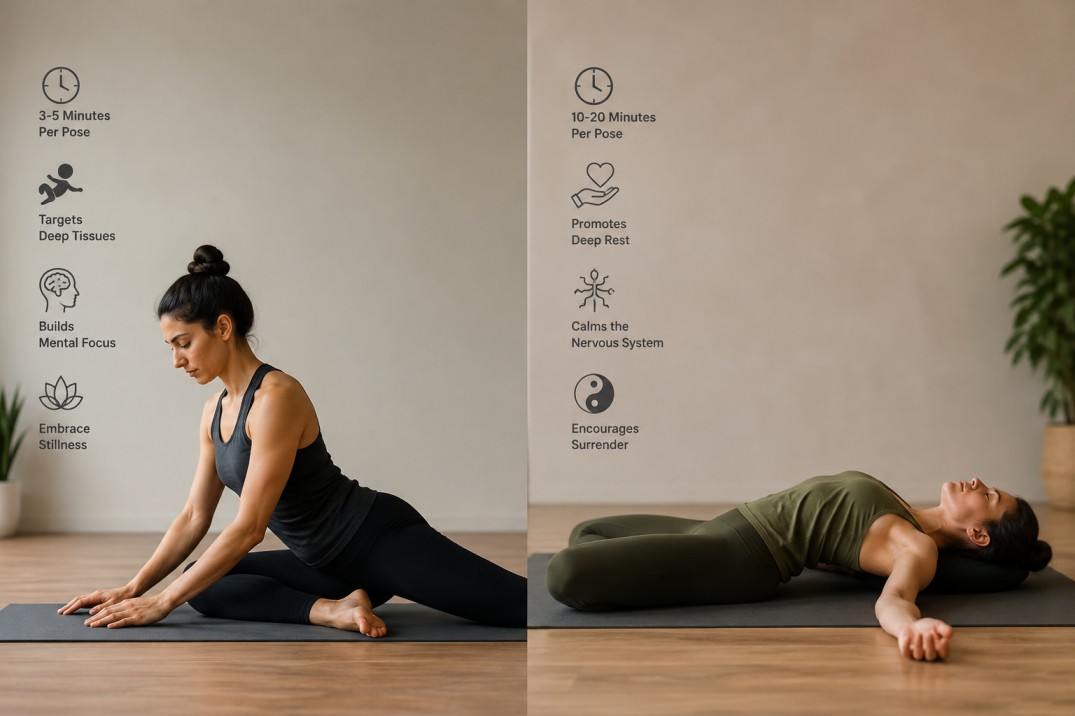
Yin and restorative yoga may look similar because both use slow movements, long holds, and floor-based poses, but they serve different purposes. A Yin class generally creates a manageable physical sensation and explores longer-held positions, while restorative yoga uses generous support to reduce effort and encourage deep relaxation. Your sequencing should reflect that difference from the first pose to the final rest.
Why Yin and Restorative Yoga Need Different Sequences
When planning a slow yoga class, it is tempting to use the same sequence for both styles. After all, both may include Child’s Pose, Butterfly, twists, or supported backbends.
The important difference is what you want the student to experience.
Yin Yoga typically works with longer, relatively still holds and a deliberately chosen level of sensation. The practice commonly focuses on areas such as the hips, spine, shoulders, and legs. Restorative Yoga has a different priority: creating enough physical support that the student can relax without actively working to maintain the posture.
Cleveland Clinic describes Yin as involving longer stretches aimed at muscles and connective tissues, while restorative yoga focuses on relaxation with greater prop support.
That distinction should shape your class plan.
Yin Yoga Sequencing: Create Sensation, Then Balance It
A good Yin sequence is not simply a list of long-held stretches. It needs a logical progression.
For example, if you begin with a hip-opening posture, you might follow it with a neutralizing or complementary position before moving toward another area of the body. This gives students time to notice the effects of the previous pose rather than immediately adding another demanding shape.
A practical Yin class may include:
- A few minutes of quiet centering
- Gentle movements to prepare the body
- One or two accessible opening poses
- Deeper Yin postures with longer holds
- Short neutral or rebound periods
- A gradual shift toward quieter positions
- Final relaxation
Yin holds commonly last several minutes, although the exact duration depends on the posture, student experience, teaching approach, and intention of the class. Healthline notes that Yin poses are often held for around three to five minutes.
Think in terms of body areas
Rather than randomly choosing poses, organize your sequence around a theme:
Hip-focused class
- Butterfly
- Dragon variations
- Half Butterfly
- Shoelace
- Gentle spinal release
Spine-focused class
- Cat-Cow preparation
- Sphinx
- Seal variation
- Caterpillar
- Gentle twist
This approach makes your class easier to follow and gives students a clear physical focus.
Restorative Yoga Sequencing: Remove Effort
Restorative sequencing asks a different question:
“How can I help this student feel completely supported?”
Instead of gradually increasing physical sensation, you arrange poses so that the body can settle.
Props are central to this process. Bolsters, blankets, blocks, and other supports can improve stability and comfort. Cleveland Clinic notes that restorative practices tend to use blankets and bolsters more heavily than many other yoga styles.
A restorative sequence might look like:
- Supported seated arrival
- Supported Child’s Pose
- Reclined supported opening
- Supported twist
- Legs-Up-the-Wall variation
- Fully supported Savasana
The number of poses may be small. That is not a weakness in the class design. The goal is to give students enough time to settle into each position.
Cleveland Clinic describes restorative classes as using fewer poses with long holds and a strong focus on conscious relaxation.
The Biggest Sequencing Difference: Intention
The easiest way to remember the distinction is:
Yin asks students to explore sensation.
Restorative asks students to release effort.
That does not mean Yin should be painful or that restorative yoga should contain no physical sensation.
In Yin, students may experience a moderate stretch or sensation while remaining relaxed and attentive. In restorative yoga, the setup should minimize muscular work and unnecessary strain.
This is why simply taking a Yin sequence and adding more bolsters does not automatically create a restorative class.
For a deeper explanation of what makes yin different from restorative practice, visit at www.arhantayoga.org/blog/yin-yoga-vs-restorative-yoga/, it helps to study the purpose, teaching methods, and sequencing principles behind each approach.
How Props Change the Class
Props can appear in both practices, but their role can differ.
In Yin:
- A block can modify the position.
- A blanket can reduce uncomfortable pressure.
- A strap can help students maintain a shape.
- A bolster can support certain poses.
- Props help students find an appropriate level of sensation.
In restorative yoga:
- Bolsters often carry much of the body's weight.
- Blankets provide warmth and cushioning.
- Blocks can create stable support.
- Eye pillows may reduce visual stimulation.
- Multiple props can create a fully supported shape.
The goal is not to use the most props possible. The goal is to use the right amount of support for the intended experience.
How to Build a Balanced Yin Sequence
When teaching Yin, consider these five questions before class:
- What body area is today's focus?
- Which poses gradually prepare students?
- Where might sensation become excessive?
- What neutral positions are needed between poses?
- How will the class transition toward stillness?
A thoughtful Yin sequence should leave enough space for students to observe their responses.
Avoid turning the class into a flexibility competition. A student's deepest shape is not necessarily the most useful one.
How to Build a Restorative Sequence
For restorative yoga, ask different questions:
- Can the student relax completely in this position?
- Is the head and neck adequately supported?
- Does the pose require unnecessary muscular effort?
- Are the props stable?
- Can students remain here comfortably for several minutes?
If students are constantly adjusting themselves, holding muscles, or fighting gravity, revisit the setup.
Restorative yoga is supposed to feel supported rather than demanding. Cleveland Clinic also notes that props can improve comfort, stability, and positioning during yoga practice.
Common Mistakes Teachers Make
1. Using the Same Sequence for Both Styles
Similar poses do not mean identical teaching methods. Change the intention, hold structure, prop setup, and verbal cues.
2. Making Yin Too Intense
A long hold does not need to become an extreme stretch. Encourage students to find an appropriate sensation rather than pushing toward maximum range.
3. Under-Supporting Restorative Poses
If a student has to work hard to remain in a position, the setup may need adjustment.
4. Adding Too Many Poses
Slow practices need time. Filling every minute with new shapes can prevent students from experiencing the purpose of the class.
5. Ignoring Individual Differences
Bodies respond differently to the same posture. Offer variations and allow students to choose an appropriate option.
A Simple Example: Same Pose, Different Purpose
Consider Supported Child’s Pose.
In a Yin class, the pose might be used to explore the hips, back, or posterior body with a chosen level of sensation.
In a restorative class, the bolster may be positioned so the student's torso, head, and limbs are comfortably supported. The objective is not to increase the stretch but to make staying still easier.
The pose is similar. The experience and teaching intention are different.
Final Takeaway
The best Yin and restorative classes are not defined by how slowly they move. They are defined by why each pose is being used.
When sequencing Yin, think about sensation, body areas, progression, and recovery between poses. When sequencing restorative yoga, think about support, comfort, stillness, and reducing effort.
Once that distinction becomes clear, your class planning becomes much more purposeful and students can feel the difference without needing complicated explanations.
Frequently Asked Questions
1. Is Yin Yoga the same as Restorative Yoga?
No. Both are slow practices, but Yin generally works with longer-held positions and manageable physical sensation, while restorative yoga prioritizes support and deep relaxation.
2. Can the same poses be used in both classes?
Yes. Many poses overlap, but the setup, prop use, hold intention, and teaching cues can change significantly.
3. How long should Yin Yoga poses be held?
Many Yin poses are held for several minutes. The appropriate duration depends on the posture, student's experience, and level of sensation rather than a fixed timer.
4. How long are restorative yoga poses held?
Restorative poses are often held for five to 10 minutes or longer, provided the student remains comfortable and well supported.
5. Does Yin Yoga need props?
Props are optional but can be useful for modifying positions and managing sensation. They should support the student's practice rather than force a particular shape.
6. Which practice is better for relaxation?
Restorative yoga is specifically structured around physical and mental relaxation. Yin can also feel calming, but it generally asks students to remain attentive to physical sensations.
7. How should beginners choose between Yin and restorative yoga?
Choose based on the desired experience. If you want slow stretching and mindful exploration of sensation, Yin may be suitable. If your priority is supported rest and relaxation, restorative yoga may be a better fit.