How to Launch a Zero Proof Cocktail Mixer Brand in India
-

- Published Updated
- 1,708 views
That shift is what’s creating real demand for zero proof cocktail mixers — bottled bases that let bars, home bartenders, and D2C brands build a proper cocktail experience without a drop of alcohol. It sounds like a simpler product to formulate than an actual spirit. In practice, it might be harder, because you’re trying to recreate everything alcohol does for a drink — the burn, the body, the complexity — using only botanicals, acids, and flavour chemistry.
The beverage industry is going through a noticeable shift in the way consumers think about cocktails. People are increasingly looking for sophisticated drinking experiences without necessarily consuming alcohol. This change has created new opportunities for beverage companies, hospitality businesses, and entrepreneurs looking to develop products that deliver the flavour, aroma, and experience of a cocktail without the alcohol.
That shift is creating real demand for zero-proof cocktail mixers — bottled bases that allow bars, home bartenders, restaurants, and D2C brands to build a proper cocktail experience without a drop of alcohol. At first glance, these products may appear easier to formulate than an actual spirit. In practice, they can be considerably more challenging because formulators need to recreate many of the sensory characteristics traditionally contributed by alcohol using botanicals, acids, extracts, sweeteners, and flavour chemistry.
What Makes Zero-Proof Mixers Different?
Alcohol plays several roles in a conventional cocktail. It carries flavour compounds, contributes warmth and mouthfeel, influences aroma release, and creates a characteristic finish. When alcohol is removed, the formulation can suddenly feel flat, thin, or overly sweet.
This is where beverage formulation becomes particularly important.
A successful zero-proof cocktail mixer needs to provide balance, body, aroma, acidity, and complexity. Simply combining fruit flavours, herbs, and sweeteners is rarely enough. The product needs to perform consistently when served over ice, mixed with sparkling water, combined with a non-alcoholic spirit, or incorporated into a more complex cocktail recipe.
The goal is not necessarily to imitate alcohol molecule for molecule. Instead, the objective is to recreate the overall drinking experience consumers expect from a well-made cocktail.
Building Complexity Without Alcohol
One of the biggest formulation challenges is creating depth.
Traditional spirits can contain hundreds of flavour compounds that contribute to their distinctive character. A zero-proof mixer has to create complexity through carefully selected ingredients and flavour systems.
Botanicals can provide herbal, floral, spicy, woody, or citrus notes. Natural extracts can introduce additional layers, while carefully selected flavour compounds can improve consistency and help maintain the desired sensory profile.
Acidity is another critical factor. Ingredients such as citric acid, malic acid, or other permitted food acids can provide brightness and structure. However, excessive acidity can make a drink harsh, while insufficient acidity may leave it tasting dull.
Sweetness also needs careful control. Many early alcohol-free beverages can taste overly sweet because sweetness is sometimes used to compensate for the lack of body. A more sophisticated formulation focuses on achieving a balanced relationship between sweetness, acidity, bitterness, aroma, and mouthfeel.
The Importance of Mouthfeel
Mouthfeel is one of the most underestimated aspects of zero-proof beverage development.
Alcohol contributes a noticeable sensation in the mouth. Without it, a drink may feel watery even when the flavour itself is strong. Formulators therefore need to consider ingredients that can provide texture, viscosity, and a longer-lasting finish while keeping the product refreshing.
This could involve the use of carefully selected botanical extracts, functional ingredients, natural flavour systems, or other food-grade components suitable for the intended formulation.
The challenge is finding the right balance. A mixer that is too light may lack impact, while one that is too thick can become unpleasant when combined with other ingredients.
Shelf Life and Commercial Stability
Developing a good prototype is only one part of the process. A commercially viable zero-proof cocktail mixer also needs to remain stable throughout its intended shelf life.
Formulators need to evaluate factors such as pH, microbial stability, ingredient compatibility, flavour stability, colour changes, packaging interaction, and storage conditions.
For commercial products, shelf-life testing is essential. A formulation that tastes excellent immediately after production may change over several weeks or months. Botanical ingredients can sometimes create challenges with sedimentation, oxidation, colour stability, or flavour degradation.
Packaging also matters. The interaction between the beverage and the selected bottle, cap, closure, or other packaging components should be considered during development.
Opportunities for Bars and D2C Brands
The growing interest in alcohol-free experiences is opening opportunities across several channels.
Bars can use concentrated cocktail mixers to simplify preparation and maintain consistency between servings. Restaurants can introduce sophisticated alcohol-free menus without developing every drink from scratch. Home consumers can create premium-style drinks with minimal preparation.
For D2C beverage brands, zero-proof mixers can also provide an opportunity to create distinctive flavour profiles and convenient at-home drinking experiences.
Product positioning is equally important. Consumers may be attracted by the absence of alcohol, but they still expect flavour, quality, convenience, and an enjoyable drinking ritual.
From Concept to Market-Ready Product
Successful zero-proof cocktail mixer development requires more than creating an appealing flavour. The formulation needs to work from a technical, sensory, commercial, and regulatory perspective.
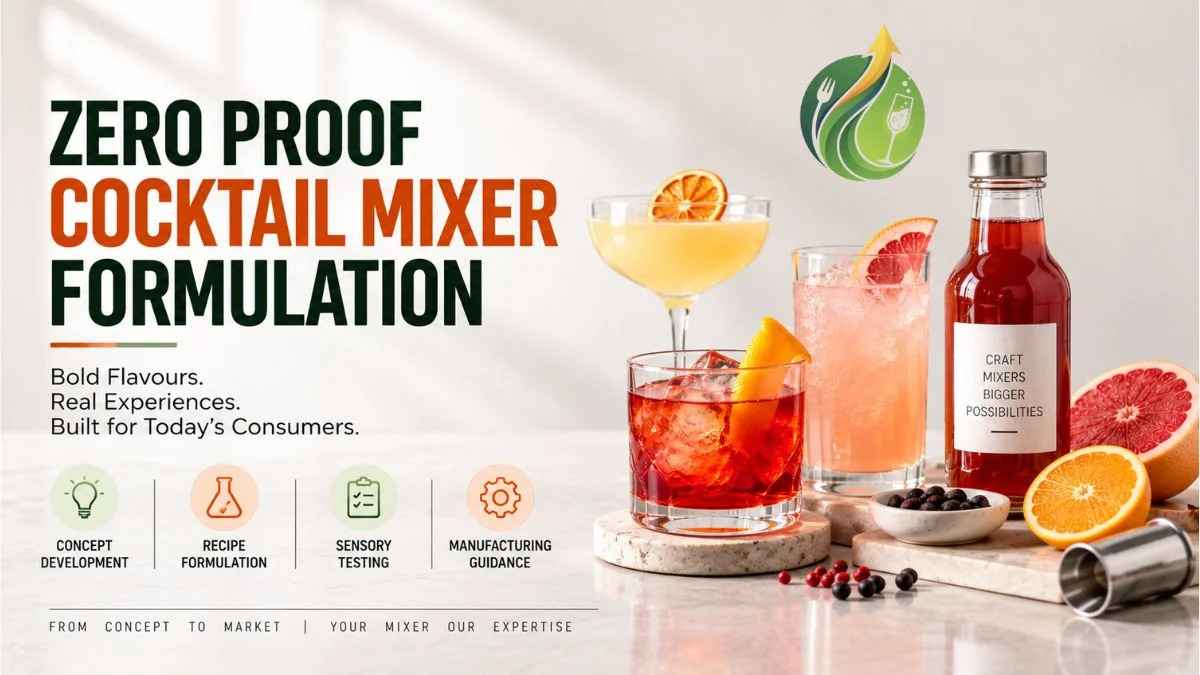
A structured development process can include concept development, ingredient selection, prototype formulation, sensory evaluation, stability testing, pilot production, packaging considerations, and commercial scale-up.
This is where professional beverage product development and formulation expertise can help brands reduce development challenges and move from an initial idea toward a commercially viable product.
Zero-proof cocktail mixers represent a broader change in beverage consumption. Consumers are increasingly interested in choice — including the ability to enjoy complex and social drinking experiences without alcohol.
For beverage entrepreneurs, this creates an interesting product-development opportunity. The challenge is no longer simply removing alcohol from a traditional drink. It is about designing a complete sensory experience from the ground up.
The brands that approach this category through thoughtful formulation, strong flavour development, technical testing, and consumer-focused product design can create products that feel intentional rather than simply alcohol-free.
As the category continues to evolve, zero-proof cocktail mixers are likely to become an increasingly important area of beverage innovation, offering new possibilities for bars, hospitality businesses, retailers, and emerging D2C brands.