Interactive 3D Product Configurator for Real-Time Customization
-

- March 25th, 2026
- 5,827 views

FREE SEO Topical Map Generator: Find Your Next Content Ideas
In today's competitive digital marketplace, customers no longer want to guess what a product will look like in their preferred color, material, or configuration. They want to see it instantly, accurately, and from every angle. This shift in consumer expectation has given rise to one of the most powerful tools in modern e-commerce and manufacturing: the interactive 3D product configurator.
Whether you are selling furniture, footwear, automobiles, industrial equipment, or personalized gifts, offering buyers a real-time customization experience through an online 3D configurator can dramatically improve engagement, reduce returns, and increase conversion rates.
What Is an Online 3D Configurator?
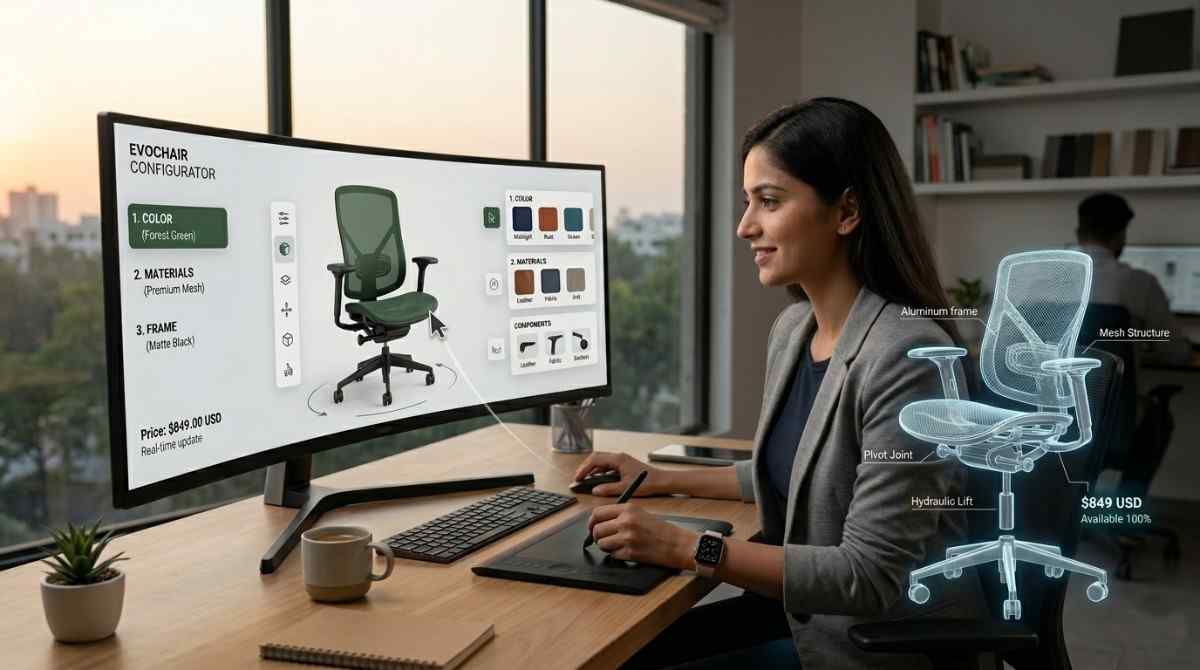
An online 3D configurator is a web-based or application-embedded tool that allows users to customize a product in three dimensions and see those changes rendered live on screen. Unlike static product images or even 360-degree photo carousels, a true 3D configurator generates the visual output dynamically, responding to every option the user selects in real time.
When someone changes the upholstery on a sofa, swaps the finish on a watch, or picks a different wheel design on a car, the online 3D configurator updates the model instantly. The experience feels tactile and personal, which is exactly what modern shoppers expect.
A 3D visualizer sits at the core of this technology. It is the engine that translates product data and user selections into a photorealistic, interactive image that updates on the fly. Without a robust 3D visualizer, a configurator would simply be a form with dropdown menus rather than an immersive product experience.
Core Features of a Real-Time 3D Configurator
Live Model Rendering
The heart of any 3D configurator is its rendering engine. A good system renders geometry, materials, lighting, and shadows in real time so that the product always looks photorealistic. Technologies such as WebGL, Three.js, Babylon.js, and GPU-accelerated rendering pipelines power most web-based 3D configurator implementations today.
Material and Texture Swapping
Users can select from a library of materials, such as leather, metal, fabric, wood, plastic, and see the texture, sheen, and surface detail update immediately through the 3D visualizer. This is far more informative than looking at a small color swatch next to a static image.
Component-Level Customization
Advanced versions of the 3D configurator allow users to add, remove, or replace individual components. Imagine building a desk where you choose the legs separately from the tabletop, or configuring a bicycle frame with different handlebar and saddle options. Each selection updates the model in context, powered by the 3D visualizer in real time.
Dimensions and Scale Adjustments
For products where size matters, such as furniture, custom apparel, and architectural elements, some online 3D configurator platforms let users adjust measurements and see the proportional changes reflected in the 3D view. This is particularly useful when the product will be placed in a specific room or space.
Augmented Reality (AR) Integration
Many modern 3D configurator solutions connect to AR frameworks, enabling customers to place the configured product in their actual environment using a smartphone camera. Seeing a sofa in your living room before purchasing it is a powerful confidence booster, and it is made possible by the same 3D visualizer technology that powers the web experience.
Pricing Engine Integration
As customers make selections in the online 3D configurator, the total price updates in real time, reflecting the cost of each option, upgrade, or add-on. This transparent pricing model reduces friction and helps users make decisions faster.
Why Businesses Are Adopting 3D Configurators
Reducing Product Returns
One of the highest costs in e-commerce is product returns. A significant portion of returns happens because the item did not match what the customer imagined. When buyers can see an accurate output from the 3D visualizer before placing the order, they make better-informed choices — and returns drop substantially.
Increasing Average Order Value
When customers feel engaged and empowered through an online 3D configurator, they tend to spend more. Configurators naturally encourage exploration of premium materials, added features, and higher-tier options. The upsell happens organically through the interface rather than through pushy sales tactics.
Streamlining the Sales Process
For B2B and manufacturing businesses, a 3D configurator replaces lengthy back-and-forth with sales representatives. A procurement manager can configure a machine, preview it through a 3D visualizer, and generate a quote all without waiting for a salesperson. This shortens the sales cycle significantly.
Standing Out From Competitors
Most product pages still rely on flat photography. Offering an immersive online 3D configurator experience immediately differentiates a brand and creates a memorable impression. Customers are more likely to share unique, engaging product experiences on social media, creating organic word-of-mouth.
Industries Leading the Adoption
Automotive was among the first industries to embrace the online 3D configurator. Carmakers let buyers build their vehicle online, selecting trim, paint, interior, wheels, and technology packages with every choice reflected live in the 3D visualizer long before visiting a dealership.
Furniture and Home Decor brands use a 3D configurator to help customers visualize pieces in different finishes, fabrics, and sizes. Companies across the globe have invested heavily in this technology to reduce showroom dependency.
Footwear and Apparel brands let customers design their own shoes, bags, and accessories through an online 3D configurator, choosing colors, materials, and even adding personalized text or graphics. The 3D visualizer makes every customized design look production-ready before the order is placed.
Jewelry retailers allow customers to choose metal type, stone shape, setting style, and engraving, then preview the final piece through a high-resolution 3D visualizer before ordering.
Industrial Equipment and Machinery companies use a 3D configurator to let engineers and procurement teams build product specifications without needing a technical sales rep on every call.
Electronics and Consumer Gadgets brands offer an online 3D configurator for laptops, desktops, audio equipment, and smart home devices, helping buyers tailor specifications to their exact needs.
How a 3D Configurator Works Under the Hood
Understanding the technology helps businesses evaluate vendors and platforms more effectively.
The 3D Model Layer
Every online 3D configurator starts with a high-quality 3D asset typically built in software like Blender, Maya, or SolidWorks and exported in formats like GLTF, OBJ, or FBX. The model needs to be structured so that individual parts can be shown or hidden and materials can be swapped independently within the 3D visualizer.
The Rendering Engine
The 3D visualizer takes the model and turns it into pixels. Web-based implementations of the 3D configurator typically use WebGL or WebGPU, often wrapped in libraries like Three.js or Babylon.js. Cloud rendering solutions push the heavy computation to servers and stream the result to the browser, enabling photorealistic output even on low-powered devices.
The Configuration Logic
A rules engine sits behind the interface of any online 3D configurator and governs which options are compatible. If a user selects a specific frame type, the logic might limit the available color options or automatically suggest compatible accessories. This prevents invalid configurations from being submitted.
The Integration Layer
A 3D configurator rarely stands alone. It connects to product information management (PIM) systems, e-commerce platforms, ERP systems, CRM tools, and pricing engines. This integration ensures that what the customer builds in the 3D visualizer is something the business can actually produce and deliver.
Choosing the Right Platform or Solution
When evaluating an online 3D configurator solution, businesses should consider the following factors.
Rendering Quality — Does the 3D visualizer output look photorealistic under different lighting conditions? Poor rendering undermines trust and defeats the purpose of the tool.
Performance — Does the 3D configurator load quickly and respond smoothly, even on mobile devices? Long loading times cause customers to abandon the experience.
Ease of Asset Management — How easy is it to update 3D models, add new materials, or introduce new product variants into the online 3D configurator? A solution that requires developer involvement for every update becomes expensive to maintain.
Integration Capabilities — Can the 3D configurator connect to your existing e-commerce stack, ERP, or CRM? Seamless data flow is essential for operational efficiency.
AR and Immersive Features — Does the 3D visualizer support augmented reality viewing? Is there a path to VR experiences in the future?
Analytics and Tracking — Can you see which options customers explore in the 3D configurator, where they drop off, and what configurations lead to purchases? This data is invaluable for product development.
Scalability — Will the online 3D configurator handle a large catalog with thousands of variants and high concurrent user traffic without degrading the 3D visualizer performance?
Implementation Best Practices
Start With Your Most Configurable Product
Rather than attempting to bring your entire catalog into a 3D configurator at once, identify the product that has the highest number of variants and the most customer confusion around purchasing decisions. Build the online 3D configurator around that product first, learn from the experience, and expand from there.
Invest in Quality 3D Assets
The output of any 3D visualizer is only as good as the input 3D models. Cutting corners on asset quality produces a configurator that looks underwhelming and erodes rather than builds customer confidence. Work with experienced 3D artists or convert existing CAD files properly.
Keep the User Interface Simple
The interface surrounding the 3D visualizer should be clean and intuitive. Too many options displayed at once overwhelm users. Use progressive disclosure to show basic options first and reveal advanced customization as users engage more deeply with the online 3D configurator.
Optimize for Mobile
A growing percentage of e-commerce browsing happens on smartphones. The 3D configurator must be fully functional, fast, and visually compelling on small screens. The 3D visualizer should render smoothly without lag on mid-range mobile hardware.
Test With Real Customers
Before a full launch of your online 3D configurator, conduct usability testing with actual potential buyers. Their behavior will reveal friction points, confusing labels, and missing options that internal teams often overlook.
The Future of Product Configuration
The technology behind the online 3D configurator and 3D visualizer continues to evolve rapidly. Real-time ray tracing, now available in web browsers through emerging WebGPU standards, is bringing studio-quality photorealism to interactive product experiences.
Artificial intelligence is being used to generate product variations automatically, suggest personalized configurations in the 3D configurator based on browsing history, and even create 3D models from 2D product photographs for use in the 3D visualizer.
As spatial computing and headsets become more mainstream, the online 3D configurator experience will move from the flat screen into immersive three-dimensional environments where customers can walk around a life-size model of the product they are designing. The businesses that build strong 3D configurator capabilities today will be well-positioned to adapt to these next-generation interfaces as they mature.
Conclusion
An interactive online 3D configurator is no longer a luxury reserved for automotive giants or luxury brands. Thanks to advances in 3D visualizer technology and the growing availability of accessible platforms, businesses of all sizes can now offer their customers an engaging, real-time customization experience.
The benefits are tangible: higher conversion rates, lower return rates, increased average order values, and a differentiated brand experience that earns customer loyalty. For any business that sells physical products with multiple variants or customization options, investing in a powerful 3D configurator backed by a high-quality 3D visualizer is one of the highest-return digital initiatives available today.