50 Mehndi Designs for Weddings: Bridal, Traditional, and Modern Patterns
-

- Published Updated
- 2,628 views
Mehndi for Weddings: An Introduction
Mehndi designs for wedding celebrations are a core part of bridal styling across South Asia and many multicultural ceremonies. These patterns range from dense bridal covers to delicate minimal motifs for engagement or sangeet events. Choosing the right design involves considering cultural style, dress details, skin tone, and how long the stain is expected to last.
- 50 styles covered: traditional, Arabic, Indian, Pakistani, Moroccan, and modern fusions.
- Design choice depends on occasion, placement, and artist skill.
- Use natural henna and follow aftercare to prolong stain; avoid black henna due to safety concerns.
Types of Mehndi Designs for Wedding
A wide variety of styles are used in bridal and wedding-related events. Below is a structured list of 50 types of mehndi designs for wedding occasions, grouped by style and typical placement.
Traditional and Regional Styles
- Indian bridal full-hand design — dense, paisley and floral fills with bride and groom portraits
- Rajasthani (Rajput) style — bold motifs, royal emblems, elephant and peacock themes
- Gujarati style — geometric patterns, banded wrists, and detailed finger designs
- Pakistani style — combination of Arabic flow with Indian detailing, often covering palms and feet
- Marwari motifs — traditional Rajasthani motifs adapted for bridal parties
- Bengali style — distinctive conch and floral motifs with negative space
- South Indian designs — temple-inspired motifs and symmetrical palm fills
Arabic and Middle Eastern Styles
- Arabic flow — bold outlines, spaced floral vines across the hand
- Moroccan / geometric — lattice, diamonds, and tessellated motifs
- Khaleeji style — Gulf-influenced patterns with dramatic wrist bands
Modern and Fusion Styles
- Minimalist / fine-line — light, delicate motifs popular for engagement and civil ceremonies
- Fusion Arabic-Indian — combines flowing vines with dense Indian fills
- Western fusion — henna combined with glitter, stones or temporary metallic accents
- Floral watercolor effect — soft shading techniques for a painted look
- Geometric modern — negative space and sharp geometric bands
Motif-Based Designs
- Peacock motif — classic bridal symbol of beauty
- Paisley motif (mango) — versatile and widely used
- Floral bouquet — clustered blooms across palm or backhand
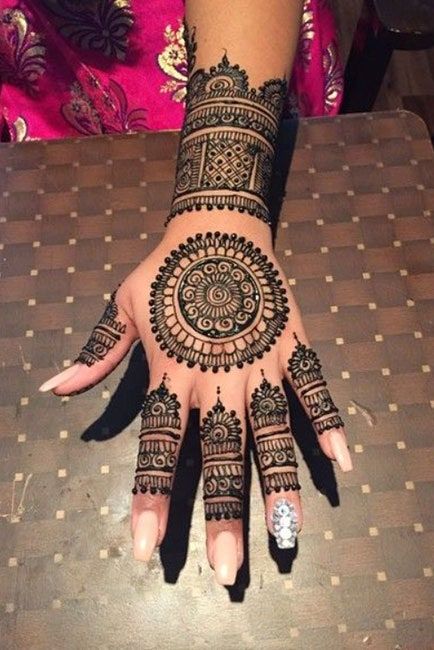
- Mandala centerpiece — radial mandala on the palm
- Vines and leaves — elongating designs for fingers and arms
- Bird and animal motifs — symbolic elements like elephants and doves
- Religious symbols — culturally specific motifs for blessings
Placement and Event-Specific Designs
- Full bridal hand and arm — covers hands, wrists, forearms
- Bridal feet design — matching toes, instep, and ankle bands
- Backhand bridal design — bold central motif on back of hand
- Wristbands and cuff styles — jewelry-like bands for mehndi parties
- Pocket-sized finger designs — small motifs for cocktail or city weddings
- Shoulder and back mehndi — for gowns exposing shoulders
- Pregnancy-friendly light designs — lower coverage and gentle cones
Specialty and Novelty Designs
- Portraits (bride/groom) — personalized scenes in bridal palms
- Storyline mehndi — sequential scenes along the arm
- Henna tattoos with negative-space initials — modern personalization
- Ring-finger bands — subtle bridal rings in henna
- Lacy pattern — delicate lace-like fills
- Bridal backstage stamp — quick stencils for large party groups
- Temporary white henna look-alike — cosmetic paint for seasonal style (not true henna)
- Glitter and stone accents over henna — decorative finish after stain sets
Minimal and Quick Styles
- Single-finger accent — elongated motif on one finger
- Thumb art — tiny motifs for thumb-only looks
- Half-moon palm — crescent-style central motif
- Casual palm dotwork — dotted geometry for casual events
- Short engagement designs — 10–20 minute patterns
Creative and Cultural Hybrids
- Indo-Arabic fusion — third-culture wedding appeal
- Contemporary Sufi motifs — whirling designs inspired by sufi art
- Art-deco inspired mehndi — 1920s geometric glamour
- Minimal bridal anklet — henna anklet for lehenga or sari
- Couple’s matching motifs — paired designs for coordinated looks
- Festival-style bold palm — celebratory heavy covers for pre-wedding events
- Eco-friendly plant-dyed henna patterns — emphasis on natural ingredients
Choosing an Artist, Preparation, and Safety
Selecting a Professional
Select a certified mehndi artist with a portfolio that matches the preferred style. Confirm timing, price, and whether practice sketches are offered. For major events, book the artist well in advance.
Henna Safety and Aftercare
Natural henna (Lawsonia inermis) is the traditional material for mehndi. Avoid products labeled "black henna," which may contain para-phenylenediamine (PPD) and can cause allergic reactions. For authoritative guidance on cosmetic ingredient safety, consult the U.S. Food and Drug Administration: FDA on henna. Aftercare tip: keep the paste on as long as possible, avoid water for the first 12–24 hours, and moisturize with natural oils to extend stain life.
Final tips
Consider garment colors and jewelry when selecting mehndi designs. Trial sessions or photos can help ensure the chosen pattern complements the bridal look. Artists often adapt motifs to personal or regional symbolism, so discuss any meaningful elements to include.
Frequently Asked Questions
What are the best mehndi designs for wedding for brides?
Full-coverage Indian bridal designs, Rajasthani motifs, peacock and mandala centers, or custom portrait scenes are popular choices for brides. The best design aligns with cultural preferences, outfit silhouette, and how much time is available for application.
How long does mehndi last on the skin?
Natural henna stains generally last one to three weeks depending on skin type, placement (hands and feet stain darker), and aftercare. Frequent washing and exfoliation shorten the lifespan.
Is it safe to use black henna or premixed cones?
Black henna may contain PPD, which can cause severe allergic reactions. Premixed cones from reputable professional artists often use natural ingredients; verify the product list. When in doubt, request a patch test and prefer natural henna powders mixed immediately before application.
Can mehndi be applied to non-traditional areas like shoulders or back?
Yes. Mehndi artists can adapt designs for exposed shoulders, backs, or even legs according to outfit style. Placement choice should consider stain visibility and longevity.