Adaptive Clothing for Seniors & the Elderly: Dress Comfortably, Independently & With Dignity Every Day
-

- September 13th, 2026
- 4,272 views
Getting dressed is one of the simple daily tasks that can become increasingly difficult with age. Arthritis, Parkinson’s disease, stroke rehabilitation, limited mobility, muscular weakness and joint discomfort can make it difficult for people to put on traditional clothing. Buttons can be hard to button, zippers can be a bother, and stretching the arms out to put on a garment can be uncomfortable.
This is where clothing for the elderly and aging can truly make a difference. Adaptive clothing is designed to overcome the dressing problems that older people encounter, with comfort, function, and style to help seniors maintain their independence and dignity.
What is adaptive clothing?
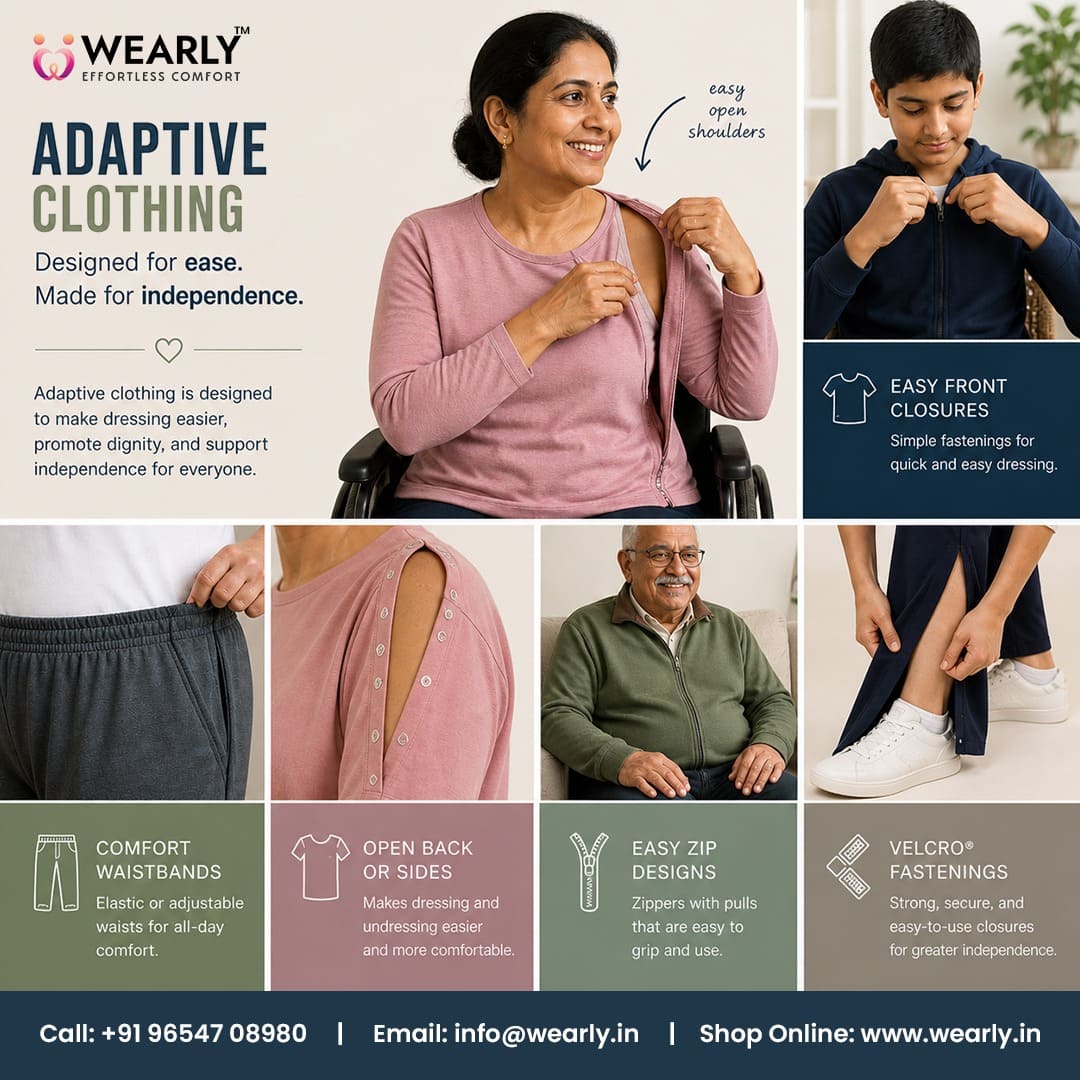
Adaptive clothing is clothing designed to make it easier for those with physical limitations, mobility challenges, or age-related conditions to get dressed. Unlike regular clothing, adaptive clothing has items such as:
* Velcro closures instead of buttons
* Open back styles to help you get ready
* Kurtis & open front tees
* Trousers with side zip
* Waistbands with elastic
* Openings for easy access
* Fabrics that are comfortable and breathable
These smart features enable elders and their caregivers to reduce the physical effort required to dress.
Benefits of adaptive clothes for the elderly
Many aging people suffer from health problems that make it hard for them to get dressed. Common problems are:
Arthritis Suffering :
If you have painful joints and poor finger dexterity, little buttons and zippers can be tough to handle.
Stroke rehabilitation:
Stroke survivors with limited use of one arm or poor coordination may find it difficult to wear conventional clothes.
Parkinson’s Disease:
Tremors and loss of motor control might make dressing oneself difficult.
Movement restrictions:
Seniors with shoulder, back, or mobility restrictions often find it difficult to manage overhead garments.
Bedridden Condition:
People who are unable to walk or even sit up may need clothing that would permit the caretakers to help them dress comfortably.
Benefits of Adaptive Clothing for Elderly Individuals
Adaptive garments can assist in solving these issues and make the elderly feel comfortable and confident.
Easier to Dress:
Adaptive clothing is made to make dressing easier. Features such as Velcro closures and front openings eliminate the need for complicated fasteners.
Greater Independence:
Adaptive clothing makes it easier for many seniors to get dressed, promoting self-confidence and independence.
More Comfortable:
The soft fabrics and relaxed fits mean less discomfort and all-day comfort, especially for elderly sensitive skin.
Reduced Caregiver Strain
Many caregivers spend many hours helping loved ones get dressed. Adaptive clothing makes dressing easier, faster, and less physically demanding with assistance.
Preserves Dignity
One of the main perks is the dignity. Adaptive clothing looks like regular clothing, not medical attire, which helps seniors feel safe and respected.
Adaptive Clothing Types That Work Best
1. Women’s Adaptive Kurtis
Older women with arthritis, shoulder pain, or restricted arm mobility adore the front-open, Velcro-closure adaptive kurtis. They make dressing so much easier and still give you the traditional style.
2. Adaptive Men's Shirts
Men’s Adaptive Shirts: Easy-open closures and soft cuts make dressing easier, yet they still look classy.
3. Open-Back Clothing
Open-back clothing is particularly useful for elders requiring caregiver help. The designs allow you to dress with the least amount of lifting or movement.
4. Trousers Stretch
Side-zip and elastic-waisted trousers are easier and more comfortable for wheelchair users and others with mobility problems to get dressed.
5. Sleepwear that fits
Custom-made sleepwear is comfy at night and makes changing and caregiving easier.
How to Choose the Right Adaptive Clothing
Here are some shopping tips for flexible clothing for senior citizens:
Comfort Wear
Check for soft, breathable fabrics like cotton blends that are easy on aging skin.
User-Friendly
Where appropriate, choose clothes with Velcro fastenings, front openings or elastic waistbands.
Travel requirements
Choose clothes according to the user's condition, such as arthritis, stroke recovery, wheelchair use, or bedridden care.
Easy Maintenance
Machine-washable fabrics simplify daily care and reduce maintenance effort.
Casual Wear
Adaptive garments should look and feel like regular clothes to boost confidence and self-esteem.
Who can benefit from adaptive clothing?
Adaptive clothing is ideal for:
* Older adults and seniors
* Arthritis Sufferings
* Survivors of stroke
* Wheelchair user
* People with Parkinson’s illness
* Post-operative patient
* People with limited mobility
* Caregivers to assist with daily dressing
Adaptive Clothing in India
As more families in India look for practical ways to solve senior care issues, awareness of adaptive clothes is expanding. The concerns of dressing in the traditional garments have not been generally addressed regarding aging and movement limitations.
Companies like Wearly are stepping in to fill this hole with adaptive apparel specifically designed for seniors, patients, and anyone with particular dressing needs. Clothes are practical, comfy, and familiar, to improve everyday life.
Conclusion
Getting ready shouldn’t be a daily struggle. Adaptive clothing for elders and elderly persons is a practical way to provide comfort, independence, and quality of life. Adaptive clothing can make getting dressed easier and more dignified each day if you have arthritis, are recovering from a stroke, use a wheelchair, or are just dealing with age-related mobility concerns.
The appropriate choice of adaptive attire can help families and caregivers help seniors stay comfortable, confident, a