How to Start an Adventure Park Business in India: Investment, ROI and Planning Guide
-

- Published Updated
- 8,226 views
Adventure parks are becoming one of the most interesting recreation business opportunities in India. With families, school groups, corporate teams, tourists and young adults looking for outdoor and experience-based entertainment, a well-planned adventure park can become a strong revenue-generating destination. Resorts, farm stays, tourism properties, highway destinations, real estate townships, schools and private entrepreneurs are now exploring adventure-based recreation as a serious business model.
However, starting an adventure park is not just about buying equipment or adding a few exciting activities. The success of an adventure park depends on proper planning, land selection, activity mix, safety systems, guest experience, operations, maintenance and realistic ROI calculation. Many projects fail because investors focus only on attractions, while ignoring the business and operational side of the park.
Understanding the Business Opportunity
India has a growing demand for family entertainment and outdoor recreation. People are looking for weekend destinations where children, adults and groups can spend several hours together. Adventure parks can serve multiple audiences: families, school students, corporate teams, resort guests, tourists, birthday groups and local visitors.
This makes the business more flexible than a single-attraction setup. A properly planned park can earn through entry tickets, activity packages, group bookings, school trips, corporate outings, food and beverages, events, birthday parties and seasonal promotions. The key is to design the park in a way that encourages repeat visits and group bookings, not just one-time footfall.
Choosing the Right Location
Location is one of the most important factors in adventure park success. A good site should have road access, parking space, visibility, safety clearance, utilities, drainage and expansion potential. The best locations are usually near tourist destinations, resorts, highways, school clusters, growing residential areas or city outskirts where families can travel easily on weekends.
The land should also be suitable for the type of activities planned. For example, a zipline or rope course requires height, structure and safety zones. A go-kart track requires proper track layout, surface quality, barriers and pit area. A water activity area needs drainage, water treatment, changing rooms and hygiene planning. A kids’ adventure zone needs soft safety surfaces, supervision and easy access for parents.
Activity Mix and Park Format
The right activity mix depends on the target audience and budget. A small adventure park or activity zone can include low ropes, kids obstacle courses, climbing features, net play, small ziplines and team-building activities. This type of setup is suitable for schools, resorts, farm stays and compact recreation properties.
A medium-sized adventure park can include ziplines, rope courses, obstacle courses, climbing walls, paintball, kids’ adventure areas, food court, seating zones and group activity spaces. This format works well for weekend destinations, resorts and private entrepreneurs.
A large adventure park can include multi-activity towers, go-kart tracks, pump tracks, water play, trampoline parks, large rope courses, zipline roller coasters, artificial climbing zones, food courts, event spaces and high-capacity attractions. This requires higher investment, stronger operations and a detailed business plan.
Budget Planning
The budget of an adventure park depends on many factors: land development, civil work, structure, equipment, safety systems, activity design, installation, staff training, approvals, utilities, branding and maintenance planning. Investors often make the mistake of calculating only equipment cost. In reality, the complete project cost includes design, foundations, fabrication, flooring, electrical work, water systems, pathways, toilets, seating, ticketing area, lighting, first-aid, signage, safety gear and operational setup.
A good budget should also include working capital for the first few months. Staff salaries, marketing, maintenance, consumables, insurance, electricity, water, repairs and administrative expenses should be considered before launch.
ROI and Revenue Streams
ROI depends on footfall, ticket pricing, operating cost, group sales and repeat customers. A park located near a strong catchment area can generate revenue from walk-in visitors and weekend families. A park linked with a resort can increase guest engagement and room occupancy. A park near schools can focus on student trips, annual outings and activity-based learning. A park near business hubs can attract corporate team-building events.
Revenue streams can include entry tickets, individual activity tickets, combo packages, school packages, corporate packages, birthday parties, food court sales, merchandise, events, memberships and seasonal offers. The strongest parks are those that do not depend on only one type of visitor.
Safety and Operations
Safety is the foundation of an adventure park business. A good park must be designed with proper load calculations, safety zones, fall protection systems, rescue access and certified equipment. Harnesses, helmets, ropes, cables, trolleys, connectors and braking systems should be inspected regularly. Staff must be trained to brief visitors, fit safety gear, supervise activities and respond during emergencies.
Daily inspection checklists, maintenance records, first-aid availability, emergency response planning and weather monitoring are essential. Outdoor adventure activities should not be operated casually during unsafe wind, rain or lightning conditions. Visitors should also be clearly informed about age, weight and health restrictions.
In India, there is no single dedicated national body that regulates every adventure park activity under one uniform code. Because of this, responsible design, professional installation, trained operations and regular inspection become even more important. Good operators often refer to international safety practices, manufacturer guidelines and activity-specific standards while also following local authority requirements.
Common Mistakes to Avoid
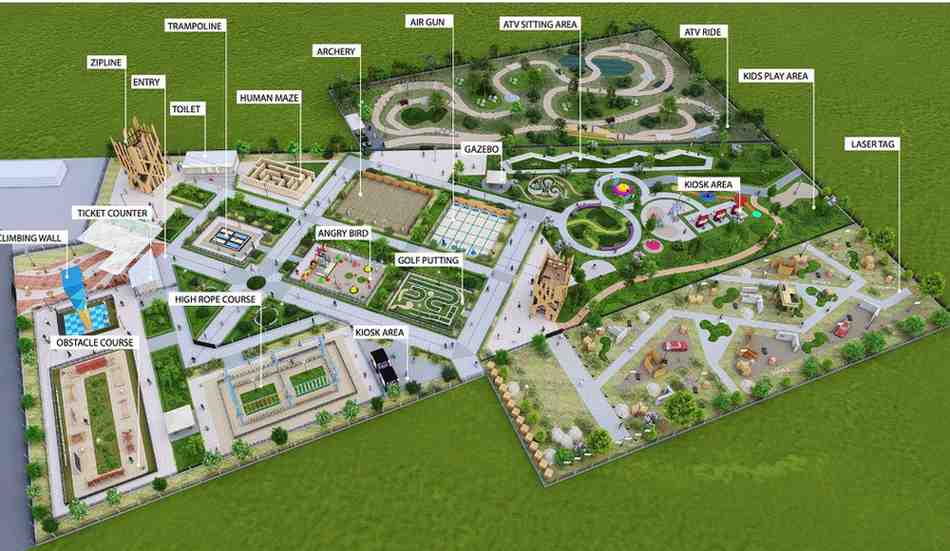
The most common mistake is building too many activities without understanding the audience. A park should not be a random collection of attractions. It should have proper visitor flow, clear zoning, rest areas, food options, toilets, shade, signage and safety supervision.
Another mistake is underestimating maintenance. Adventure equipment is exposed to wear, weather and heavy use. Regular inspections and preventive maintenance are necessary to keep the park safe and functional.
Many investors also ignore heat, comfort and waiting time. In Indian conditions, shade, drinking water, seating, clean toilets and food quality can affect customer satisfaction as much as the activities themselves.
Role of Professional Planning
Before investing, it is better to prepare a feasibility plan. This should include land study, target audience, competitor analysis, activity mix, layout, capex, opex, ticket pricing, revenue projections, staffing, safety planning and phased development strategy.
Professional planning helps avoid expensive mistakes. It also helps investors understand which activities should be launched first and which can be added later. For example, a park may begin with obstacle courses, climbing activities, kids’ adventure zone and food court, then add go-karting, zipline roller coaster or water attractions in later phases once footfall is proven.
For businesses looking for expert support, Oxo Planet provides adventure park design and planning services in India, including concept development, layout planning, activity selection, safety systems and project execution support. You can learn more here: Adventure Park Designing and Planning Services.
Conclusion
Starting an adventure park business in India can be a profitable opportunity if it is planned correctly. The key is to think beyond equipment and focus on the complete business model. Location, audience, activity mix, safety, operations, maintenance, guest comfort and revenue planning all play an important role.
A successful adventure park is not just exciting; it is safe, manageable, commercially viable and designed for repeat visits. Investors should begin with proper feasibility, phased planning and professional execution. With the right approach, adventure parks can become strong recreation destinations for families, schools, corporates, resorts, tourism projects and local communities across India.