AI Drip Campaign Generator: Step-by-Step Guide to Automated Email Sequences
-

- Published Updated
- 387 views

An AI drip campaign generator can automate creation, sequencing, and personalization of follow-up emails to move leads through onboarding, retention, or re-engagement funnels. This guide explains how to build and deploy an AI drip campaign generator, covers essential trade-offs, and offers a ready checklist to run production-ready automated campaigns.
- What it is: an AI-driven system that writes, sequences, and adapts email content and timing for automated email sequences.
- Goal: increase relevance and conversion while keeping compliance and deliverability intact.
- Includes: a practical AI-DRIP Checklist, step-by-step setup, real-world example, and 3–5 actionable tips.
How an AI drip campaign generator works
The core function of an AI drip campaign generator is to combine data about subscriber behavior, segmentation rules, and conversion goals with natural-language generation to produce tailored messages at predefined or adaptive intervals. Inputs typically include subscriber attributes, recent actions (opens, clicks, purchases), and campaign goals; outputs are subject lines, body copy, CTA variants, and scheduling instructions for drip campaign workflows. Related terms: personalization engine, ESP integration, segmentation, automation rules, and deliverability checks.
Step-by-step: build an AI-driven drip campaign
1. Define objectives and success metrics
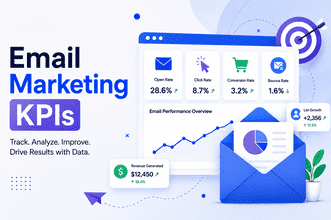
Specify the conversion events (signup, trial activation, renewal), and pick metrics: open rate, click-through rate, conversion rate, and time-to-convert. Link metrics to incentives and progression logic in automated email sequences.
2. Map audience segments and triggers
Create segmentation rules and triggers: sign-up, first purchase, inactivity > 30 days, feature usage threshold. Decide which segments need personalization with email personalization with AI and which can use generic templates.
3. Design sequence structure and timing
Decide on number of messages, cadence, and branching logic. Implement drip campaign workflows that support conditional sends (e.g., skip next email if user converted).
4. Generate content and control quality
Use the generator to produce subject lines, preview text, bodies, and CTA variants. Add review steps and guardrails: content tone, fact checks, and brand voice controls. Include placeholders for dynamic fields and use templates to maintain consistency.
5. Integrate with ESP and measurement
Connect the output to an email service provider (ESP) via API or export. Ensure tracking parameters, UTM links, and event hooks are in place to feed performance back into the system for iterative improvement.
AI-DRIP Checklist (named framework)
Use the AI-DRIP Checklist to validate each campaign before launch:
- Audience: segment definitions and suppression lists verified
- Intent: primary conversion goal and KPI mapped
- Deliverability: unsubscribe link, DKIM/SPF checks, suppression rules
- Risk controls: filters for sensitive content and privacy compliance
- Integration: ESP API keys, tracking, and rollback plan
Practical tips for reliable automated email sequences
- Limit variation early: start with 2–3 subject line variants and expand when A/B test data is robust.
- Use behavioral triggers: prioritize opens, clicks, and product usage events to make messages timely and relevant.
- Monitor deliverability: check spam complaints and bounce rates after each launch and pause automation if thresholds are exceeded.
- Maintain human-in-the-loop review for brand-sensitive communications to avoid tone or factual errors.
Trade-offs and common mistakes
Trade-offs
Automation increases scale and speed but can reduce nuance. Heavy personalization improves relevance but increases complexity and testing overhead. Choosing aggressive cadence may accelerate conversions but can harm deliverability and list health.
Common mistakes
- Publishing content without compliance checks (unsubscribe, CAN-SPAM/GDPR considerations).
- Over-personalization using inferred data without clear consent or fallback messaging.
- Neglecting deliverability: failing to warm IPs, monitor bounces, or set proper authentication records.
Real-world example
Scenario: a B2B SaaS onboarding sequence uses an AI drip campaign generator to create a five-message onboarding flow over 14 days. Triggered on signup, the system generates an initial welcome email, a second message highlighting setup steps (if no product usage is detected), a third message with a short case study (for high-intent segments), a fourth troubleshooting guide (if user opened but did not convert), and a final renewal/upgrade prompt. Performance is tracked: open rate, trial-to-paid conversion, and support ticket volume. Iteration focuses first on subject lines and CTA placement, then on email timing for highest conversion.
Compliance and deliverability — quick checklist
Follow legal best practices (unsubscribe, accurate sender info) and technical standards (SPF, DKIM, DMARC). For regulatory guidance see the official FTC CAN-SPAM compliance guide: FTC CAN-SPAM Guide.
Monitoring and optimization
Run A/B tests for subject lines, preview text, and send times. Use cohort analysis to compare drip variations across segments. Feed results back into the generator so content and timing become data-informed.
FAQ
How does an AI drip campaign generator work?
The system combines subscriber data, segmentation rules, and natural language models to create tailored messages and schedules for automated email sequences. It outputs content, metadata, and sequencing instructions for an ESP to execute.
What are the top metrics to track for automated email sequences?
Track open rate, click-through rate (CTR), conversion rate, unsubscribe rate, bounce rate, and time-to-conversion. Cohort attribution helps isolate the effect of a specific drip workflow.
How to integrate AI-generated content with an email service provider?
Export templates with dynamic fields or push generated drafts via ESP APIs. Ensure tracking parameters and webhooks are configured so open/click events feed back to the central analytics store.
Can AI personalization with AI replace manual segmentation?
AI can augment segmentation by suggesting micro-segments and personalization tokens, but manual rules are still valuable for compliance-sensitive or brand-critical campaigns. Combine both approaches for balanced control.
How to ensure compliance and deliverability in drip campaign workflows?
Maintain unsubscribe links, verify consent for personal data, configure SPF/DKIM/DMARC, monitor bounce/complaint rates, and include human review steps for high-risk content. Use suppression lists and warm-up practices for new sending domains.