How AI Is Transforming Mobile App Development in 2026
-

- September 11th, 2026
- 5,399 views
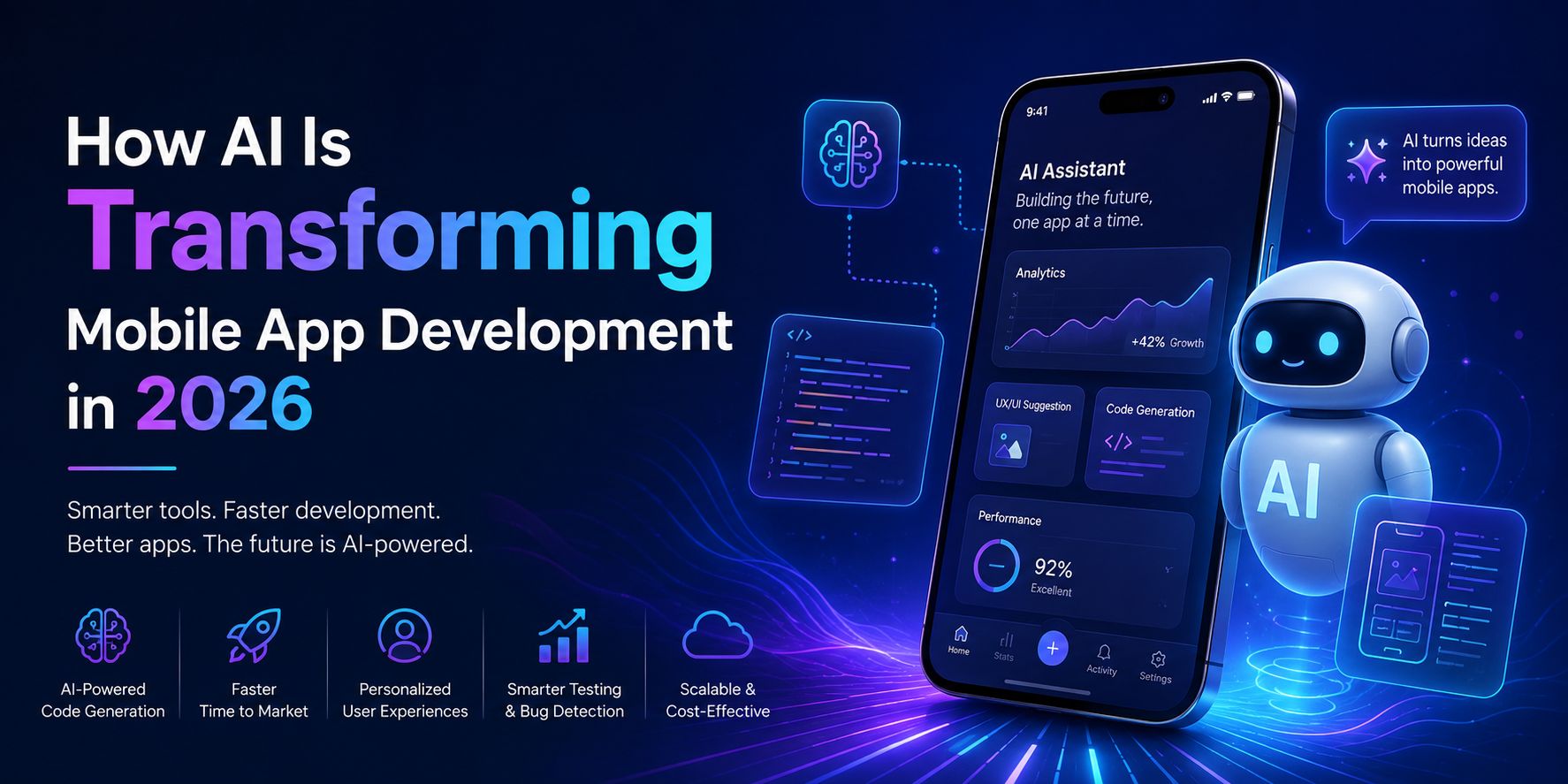
(AI) is no longer a futuristic concept—it has become a driving force behind innovation across industries. In 2026, AI is revolutionizing the way businesses build, launch, and manage mobile applications. From automated coding and intelligent testing to personalized user experiences and advanced security measures, AI is changing every stage of the mobile app development lifecycle.As businesses continue to compete in an increasingly digital world, integrating AI into mobile applications has become a strategic advantage rather than an optional feature. Whether you're a startup founder, entrepreneur, business owner, or technology enthusiast, understanding how AI is transforming mobile app development can help you stay ahead of the curve.This article explores the evolution of AI in app development, its key applications, benefits, challenges, and future trends shaping the industry in 2026.
The Rise of AI in Mobile App Development
Over the last decade, AI has evolved from basic automation tools into sophisticated systems capable of learning, analyzing, and making decisions. Initially, AI was primarily used for recommendation engines and simple chatbots. Today, it powers complex functionalities such as predictive analytics, voice recognition, image processing, and personalized user experiences.The growth of cloud computing, big data, machine learning, and advanced development frameworks has accelerated AI adoption in mobile applications. Modern businesses now partner with an experienced app development company to create intelligent apps that improve engagement, streamline operations, and drive revenue.The integration of artificial intelligence in mobile apps is transforming industries including healthcare, finance, retail, education, transportation, and entertainment.
AI-Powered Design and Development
AI-Powered App Design and Prototyping
One of the most significant changes in AI mobile app development is the automation of design processes.AI-powered design tools can:
- Generate UI/UX layouts automatically
- Suggest design improvements
- Create wireframes and prototypes
- Analyze user behavior to optimize interfaces
- Improve accessibility features
For example, AI design platforms can transform a simple project description into an interactive prototype within minutes. This significantly reduces design time and helps teams validate ideas faster.
Automated Coding and Development Assistance
Developers are increasingly relying on AI coding assistants to accelerate development.AI-powered tools can:
- Generate code snippets
- Detect programming errors
- Recommend best practices
- Automate repetitive coding tasks
- Improve code quality
In 2026, many development teams use AI to write routine functions, freeing developers to focus on innovation and complex problem-solving.For startups and businesses, this means faster project completion, lower development costs, and improved productivity.
Personalized User Experiences Through AI
User expectations continue to rise, making personalization a key factor in app success.AI-powered applications can analyze:
- User preferences
- Browsing habits
- Purchase history
- Engagement patterns
- Location-based behavior
Based on this data, apps can deliver highly customized experiences.
Real-World Example
Streaming platforms use AI algorithms to recommend movies and TV shows based on viewing history. Similarly, eCommerce apps provide personalized product suggestions that increase conversions and customer satisfaction.Benefits of AI-driven personalization include:
- Higher user engagement
- Improved retention rates
- Increased revenue opportunities
- Better customer satisfaction
As artificial intelligence in mobile apps becomes more advanced, hyper-personalization is becoming the new standard.
Smarter Testing and Quality Assurance
Testing is one of the most time-consuming stages of mobile app development. AI is making quality assurance faster and more effective.
Intelligent Testing and Quality Assurance
AI-powered testing tools can:
- Identify bugs automatically
- Predict potential failures
- Generate test cases
- Perform regression testing
- Monitor app performance in real time
Instead of manually testing every feature, development teams can use AI systems to continuously monitor applications and identify issues before users encounter them.
Industry Insight
Companies deploying AI-driven testing solutions have reported faster release cycles and significantly reduced software defects. This allows businesses to launch products more confidently and maintain higher quality standards.
AI Chatbots and Virtual Assistants
Customer service has been transformed by AI-powered chatbots and virtual assistants.Modern chatbots can:
- Understand natural language
- Answer customer queries instantly
- Provide product recommendations
- Handle bookings and transactions
- Offer 24/7 support
Examples include:
- Banking apps providing account assistance
- Healthcare apps offering appointment scheduling
- Retail apps delivering personalized shopping support
Unlike traditional scripted bots, AI chatbots continuously learn from user interactions, making conversations more accurate and human-like over time.For businesses, this means reduced support costs and improved customer satisfaction.
Predictive Analytics and User Behavior Insights
One of the most valuable applications of AI mobile app development is predictive analytics.AI can analyze massive amounts of data to predict:
- Customer behavior
- Market trends
- User churn
- Product demand
- Engagement patterns
Practical Example
A fitness app can analyze user activity patterns and predict when users are likely to stop using the app. It can then send personalized reminders or incentives to improve retention.Businesses benefit from:
- Better decision-making
- Improved marketing strategies
- Higher customer retention
- Enhanced product development
Predictive analytics enables organizations to make proactive decisions rather than reactive ones.
AI-Driven Security Features
As cyber threats continue to increase, security has become a top priority in mobile app development.
Enhanced App Security Through AI
AI-powered security systems can:
- Detect suspicious activity
- Prevent fraudulent transactions
- Identify malware threats
- Monitor unusual login behavior
- Improve authentication systems
Biometric technologies powered by AI, such as facial recognition and voice authentication, provide an additional layer of security while improving user convenience.
Real-World Use Case
Financial applications use AI to detect unusual spending patterns and immediately flag potential fraud. This helps protect both users and businesses from financial losses.As security threats evolve, AI will play an increasingly important role in safeguarding mobile applications.
Business Benefits of AI Integration
Businesses investing in AI-powered applications gain several competitive advantages.
Key Benefits Include:
Faster Development
AI automates repetitive tasks, reducing development time significantly.
Reduced Costs
Automation lowers operational expenses and increases efficiency.
Improved User Engagement
Personalized experiences encourage users to spend more time within apps.
Better Decision-Making
AI-driven analytics provide valuable business insights.
Increased Revenue
Enhanced user experiences often lead to higher conversion rates and customer retention.Partnering with an experienced app development company can help businesses successfully implement AI technologies and maximize these benefits.
Challenges of AI in App Development
Despite its advantages, AI integration comes with challenges.
Data Privacy Concerns
AI systems require large amounts of user data, raising concerns about privacy and compliance.
High Initial Investment
Developing AI-powered features can require significant resources and specialized expertise.
Data Quality Issues
Poor-quality data can lead to inaccurate predictions and ineffective AI models.
Ethical Considerations
Businesses must ensure transparency, fairness, and responsible AI usage.
Skill Gaps
There remains a growing demand for developers skilled in machine learning, data science, and AI implementation.Addressing these challenges is essential for successful AI adoption.
Future Trends to Watch in 2026
The future of AI mobile app development looks incredibly promising.
Generative AI Integration
Apps will increasingly generate content, recommendations, and personalized experiences automatically.
Voice-First Applications
Voice interfaces will become more sophisticated and widely adopted.
AI-Powered Low-Code Development
Businesses will build applications faster using AI-assisted low-code platforms.
Advanced Predictive Personalization
Apps will anticipate user needs before users even make requests.
Edge AI Processing
More AI computations will occur directly on devices, improving speed, privacy, and performance.
Hyper-Automation
Development workflows will become increasingly automated, reducing manual intervention.These innovations will continue reshaping the future of mobile app development across industries
Conclusion
Artificial Intelligence is fundamentally changing the way mobile applications are designed, developed, tested, secured, and optimized. In 2026, AI is no longer just a feature—it has become the foundation of modern mobile experiences.From AI-powered design tools and automated coding assistants to predictive analytics and advanced security systems, businesses are leveraging AI to build smarter, faster, and more user-centric applications.Organizations that embrace AI mobile app development today will be better positioned to meet evolving customer expectations, improve operational efficiency, and gain a competitive advantage in the years ahead. As artificial intelligence in mobile apps continues to advance, the opportunities for innovation will only continue to grow.