How AI-Native Brands Are Winning the Digital Race in 2025
-

- May 26th, 2026
- 6,503 views
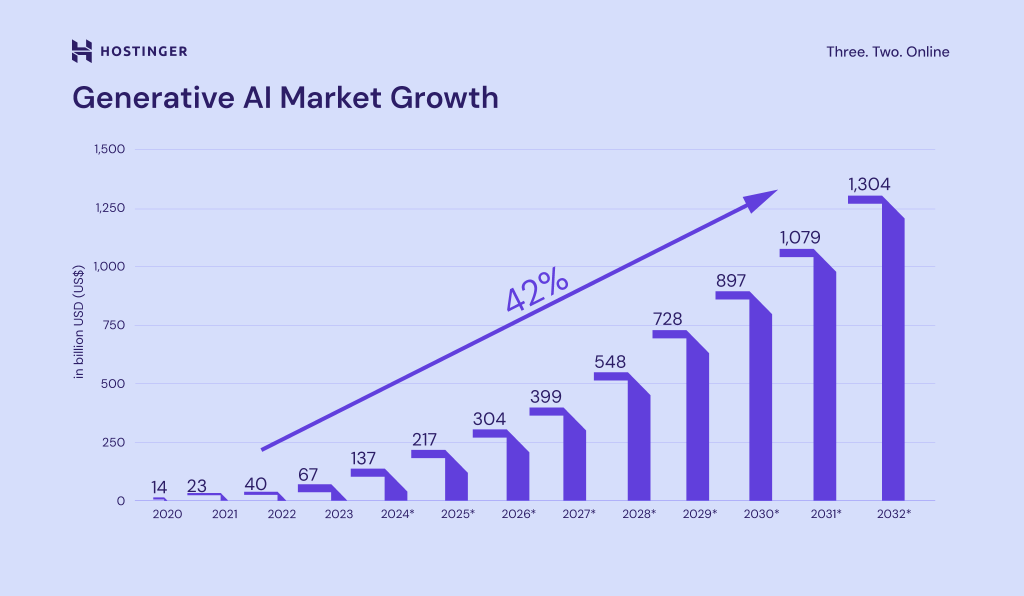
The businesses pulling ahead in 2025 are not necessarily the ones with the biggest budgets or the most recognisable names. They are the ones that built their digital infrastructure around AI from day one — and the gap between them and everyone else is widening fast.
The AI-native advantage
There is a meaningful difference between a business that uses AI tools and a business that is AI-native.
AI-tool users add AI to existing workflows — an AI writing assistant here, a chatbot there. The underlying architecture of how they build products, run marketing, and serve customers remains unchanged. AI is a layer on top.
AI-native brands are built differently from the ground up. Their brand strategy, product design, growth systems, and customer experience are architected around AI capabilities — not retrofitted with them. The operational leverage this creates is significant, and it shows up directly in how fast they move, how efficiently they scale, and how well they compete against larger incumbents.
What AI-native actually means for brand and growth
Brand strategy built for algorithmic distribution
AI-native brands understand that the discovery landscape has changed. Search is no longer just ten blue links. Google's AI Overviews, Perplexity, ChatGPT — these are increasingly where buyers first encounter brands. An AI-native brand strategy accounts for generative engine optimisation (GEO) and answer engine optimisation (AEO) alongside traditional SEO, ensuring visibility in every discovery environment.
Products that improve with use
AI-native products are not static. They learn from user behaviour, surface more relevant features over time, and create compounding personalisation that makes switching costs higher and retention stronger. This changes the economics of customer acquisition dramatically — the product itself becomes a retention and referral engine.
Growth systems that compound
Traditional growth is largely linear: more spend, more leads. AI-native growth systems compound. Content generated with AI at scale builds topical authority across hundreds of relevant queries. Automated testing optimises conversion paths continuously. Customer data feeds back into targeting with precision that manual analysis cannot replicate.
The five capabilities that separate AI-native leaders
1. Technical SEO and AI search visibility
Ranking in traditional search and appearing in AI-generated answers require different but related optimisations. AI-native brands invest in both simultaneously — structured data, semantic content architecture, E-E-A-T signals, and the kind of authoritative, well-cited content that AI systems reference when generating answers.
2. AI-powered product and experience design
The user experience of an AI-native product anticipates needs rather than just responding to them. Onboarding is personalised. Content recommendations are contextual. Support is genuinely intelligent rather than menu-driven. These design decisions drive the engagement and retention metrics that compound brand value over time.
3. Automated content at scale
AI-native brands produce content at a volume and velocity that was previously impossible without massive teams. The key distinction is quality control — AI accelerates production, but human editorial judgment determines whether the output builds authority or dilutes it.
4. Data infrastructure that feeds growth
Every user interaction is data. AI-native brands have the infrastructure to capture, process, and act on this data in near real-time — surfacing growth opportunities, identifying churn signals, and personalising acquisition messaging with precision.
5. Brand identity that stands out in a crowded AI landscape
Counterintuitively, as AI makes content production easier for everyone, distinctive brand identity becomes more valuable. AI-native brands that invest in genuine visual identity, a clear point of view, and a recognisable editorial voice cut through the noise that undifferentiated AI content creates.
Why this matters for US businesses specifically
The US market is the most competitive digital environment in the world. Customer acquisition costs are high, attention is scarce, and the pace of competitive movement is relentless.
In this context, the compounding advantages of an AI-native approach — faster iteration, more efficient content production, better data utilisation, stronger product retention — translate directly into lower CAC, higher LTV, and the ability to outmanoeuvre larger competitors with slower, more traditional digital infrastructure.
The window to build these advantages is not indefinitely open. As AI tools become commoditised, the differentiator shifts from having access to AI to having built genuinely intelligent systems around it. The brands doing this now will be significantly harder to catch in two years.
The bottom line
Being AI-native is not about using the latest tools. It is about building digital infrastructure — brand, product, growth, and engineering — that compounds over time in ways that traditional approaches cannot match.
The businesses that understand this distinction and act on it now are the ones that will define their categories in the next five years.
Digital Family is an independent digital agency for AI-native brands, building brand strategy, AI products, web design, and growth systems for ambitious US businesses.
Tags: #AI #DigitalMarketing #AINative #GrowthStrategy #SEO #USA #BrandStrategy