How Does AI Video Analytics Improve Smart City Surveillance Solutions?
-

- September 11th, 2026
- 3,757 views
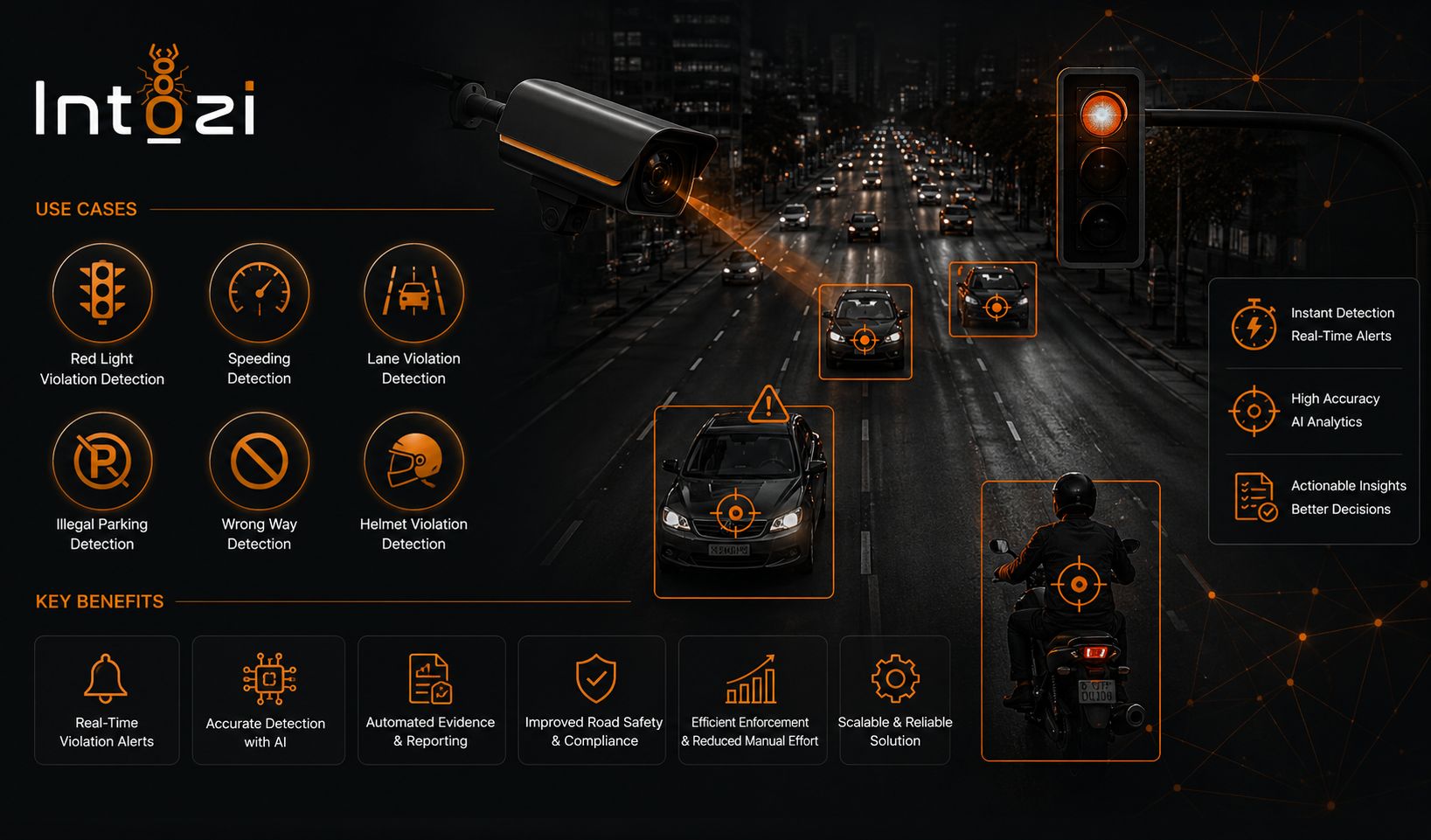
As cities continue to expand, managing public safety, traffic, critical infrastructure, and urban services has become increasingly complex. Traditional surveillance systems generate massive amounts of video footage, but most of it requires manual monitoring, making it difficult to identify incidents quickly. AI Video Analytics for Smart Cities addresses this challenge by transforming conventional camera networks into intelligent systems that automatically detect events, analyze patterns, and generate real-time alerts.
Instead of simply recording activities, AI-powered surveillance enables city authorities to respond faster, allocate resources more efficiently, and make informed decisions using actionable insights. This shift is driving the adoption of smart city surveillance solutions worldwide.
What Is AI Video Analytics for Smart Cities?
AI Video Analytics for Smart Cities uses artificial intelligence, computer vision, and machine learning to analyze live or recorded video from surveillance cameras. The technology automatically recognizes objects, detects unusual activities, tracks movement, and identifies predefined events without continuous human intervention.
By converting video into meaningful data, city administrators can improve safety, optimize operations, and support long-term urban planning.
Common deployment areas include:
City roads and intersections
Public parks
Railway stations
Airports
Metro stations
Government buildings
Schools and universities
Commercial districts
Industrial zones
Public gathering spaces
How AI Video Analytics Improves Smart City Surveillance Solutions
Modern smart city surveillance solutions go beyond video recording by continuously analyzing activities as they happen.
AI video analytics improves surveillance through several capabilities:
1. Real-Time Incident Detection
AI continuously monitors live camera feeds and immediately identifies unusual events.
Examples include:
Unauthorized access
Crowd formation
Suspicious activities
Traffic incidents
Fire and smoke detection
Abandoned objects
Restricted area violations
Real-time alerts enable faster response from city authorities and emergency services.
2. Intelligent Traffic Monitoring
Traffic is one of the most important components of a smart city.
Using smart city video analytics, authorities can:
Monitor traffic flow
Detect congestion
Identify accidents
Detect wrong-way driving
Monitor intersections
Measure vehicle speed
Improve signal timing
Analyze vehicle density
This helps improve mobility while reducing congestion and response times.
3. Public Safety Enhancement
AI strengthens urban safety by identifying potential risks before they escalate.
Capabilities include:
Crowd monitoring
Intrusion detection
Perimeter protection
Violence detection
Weapon detection
Emergency response support
Public area monitoring
Continuous surveillance helps authorities maintain safer public spaces without increasing manual monitoring efforts.
4. Automated Event Detection
Instead of reviewing hours of recorded footage, AI automatically identifies important events.
Examples include:
Illegal parking
Vehicle violations
Loitering
Object removal
Abandoned baggage
Fence crossing
Unauthorized vehicle entry
This significantly reduces operator workload while improving response times.
5. Vehicle Intelligence
AI video analytics can identify and analyze vehicle movement across the city.
Functions include:
Vehicle counting
Vehicle classification
Automatic Number Plate Recognition (ANPR)
Entry and exit monitoring
Traffic violation detection
Vehicle tracking
Parking analytics
These insights support both law enforcement and transportation planning.
6. Crowd Analytics
Managing large public gatherings requires continuous situational awareness.
AI helps authorities monitor:
Crowd density
Queue lengths
Crowd movement
Restricted area occupancy
Public event safety
Emergency evacuation routes
This improves planning for festivals, sporting events, transportation hubs, and city-wide celebrations.
Key Components of Vision AI for Smart Cities
A successful Vision AI for Smart Cities platform combines several advanced technologies.
These include:
Computer Vision
Deep Learning
Object Detection
Multi-Object Tracking
Facial Attribute Analysis (where permitted by applicable laws and regulations)
Automatic Number Plate Recognition (ANPR)
Edge AI
Video Intelligence
Predictive Analytics
Together, these technologies enable cities to convert surveillance data into operational intelligence.
Benefits of Smart City Video Analytics
Implementing smart city video analytics provides advantages across multiple departments.
Key benefits include the following:
24×7 automated surveillance
Faster incident detection
Reduced manual monitoring
Improved public safety
Better traffic management
Faster emergency response
Efficient resource allocation
Enhanced situational awareness
Centralized city operations
Data-driven urban planning
Scalable deployment across multiple locations
Applications of AI Video Analytics for Smart Cities
AI-powered surveillance supports a wide range of urban use cases.
Common applications include:
Traffic Management
Congestion monitoring
Traffic violation detection
Signal optimization
Vehicle counting
Public Safety
Intrusion detection
Crowd monitoring
Emergency incident detection
Suspicious activity alerts
Transportation
Railway station surveillance
Airport monitoring
Metro station analytics
Bus terminal management
Civic Infrastructure
Government facility security
Utility infrastructure monitoring
Smart parking
Waste management observation
Urban Planning
Pedestrian flow analysis
Public space utilization
Infrastructure planning
Traffic pattern analysis
Challenges in Smart City Surveillance
Although AI has significantly improved urban surveillance, city deployments must address several practical considerations.
These include:
Camera placement and coverage
Low-light or adverse weather conditions
High-density urban environments
Data storage requirements
Network bandwidth
Scalability across city-wide deployments
Privacy, governance, and compliance with applicable regulations
Modern AI platforms continue to improve performance through optimized models, edge processing, and flexible deployment options.
How Ikshana by Intozi Supports Smart City Surveillance
As municipalities and enterprises modernize their surveillance infrastructure, they increasingly need solutions that convert video feeds into actionable intelligence rather than simply storing footage. Ikshana, the Vision AI platform from Intozi, is designed to support a broad range of smart city surveillance solutions by analyzing live video streams in real time.
Depending on operational requirements, Ikshana can support capabilities such as:
AI Video Analytics for Smart Cities
Intelligent traffic monitoring
Traffic violation detection
Crowd analytics
Intrusion detection
Perimeter security
Fire and smoke detection
Vehicle tracking and ANPR
Smart parking analytics
Incident alerts and centralized dashboards
Edge, on-premise, or cloud deployment
By helping organizations extract meaningful insights from existing video infrastructure where appropriate, Ikshana enables faster decision-making, improved operational visibility, and more proactive city management.
Conclusion
The future of urban safety depends on the ability to interpret and act on data in real time. AI Video Analytics for Smart Cities enables city authorities to move beyond passive surveillance by automatically detecting incidents, monitoring traffic, analyzing public spaces, and supporting faster emergency response. Combined with Smart City Surveillance Solutions, Vision AI for Smart Cities, and smart city video analytics—these capabilities help create safer, more efficient, and better-connected urban environments.
Solutions such as Ikshana by Intozi demonstrate how Vision AI can assist governments, municipalities, and enterprises in transforming video data into actionable intelligence that supports smarter city operations and long-term urban development.
Frequently Asked Questions (FAQs)
1. What is AI Video Analytics for Smart Cities?
AI Video Analytics for Smart Cities uses artificial intelligence and computer vision to analyze video feeds from surveillance cameras, automatically detecting events, monitoring traffic, identifying safety risks, and generating real-time insights for city operations.
2. How do smart city surveillance solutions improve public safety?
Smart City Surveillance Solutions help authorities detect incidents faster, monitor public spaces continuously, identify suspicious activities, improve emergency response, and support proactive decision-making using AI-powered video analytics.
3. What is Vision AI for Smart Cities?
Vision AI for Smart Cities refers to the use of computer vision and artificial intelligence to automate surveillance, analyze urban environments, monitor infrastructure, and provide actionable intelligence for city management.
4. What is smart city video analytics used for?
Smart city video analytics supports traffic monitoring, crowd analysis, intrusion detection, vehicle tracking, public safety, smart parking, infrastructure monitoring, and emergency incident detection.
5. Can AI video analytics work with existing surveillance cameras?
Many modern AI video analytics platforms are designed to integrate with compatible IP and CCTV camera infrastructure, allowing organizations to enhance surveillance capabilities without replacing their entire camera network.
6. What are the benefits of AI video analytics for smart cities?
The technology helps improve public safety, automate surveillance, reduce manual monitoring, optimize traffic management, enhance situational awareness, support emergency response, and provide valuable data for urban planning.