AI Voicebot for Lead Qualification: A Complete Business Guide
-

- Published Updated
- 2,495 views
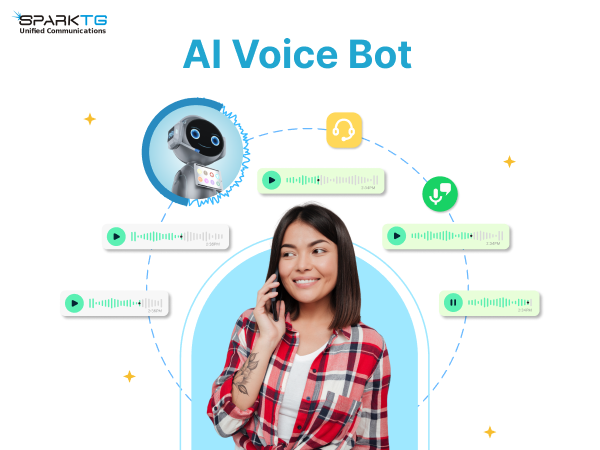
An AI Voicebot for Lead Qualification uses conversational AI and voice automation to interact with prospects, ask qualifying questions, identify intent, collect customer information, and route high-potential leads to sales teams. It helps businesses reduce manual calling, respond faster, prioritize prospects, and improve sales productivity without increasing agent workload.
Table of Contents
What Is an AI Voicebot for Lead Qualification?
Why Businesses Need AI Voicebots for Lead Qualification
Top Benefits
Key Features
How AI Voicebot Lead Qualification Works
Industry Use Cases
Real Business Challenges Solved
Traditional vs Cloud-Based vs SparkTG Solution
Why Choose SparkTG
Implementation Process
Best Practices
Common Mistakes to Avoid
Future Trends
Expert Recommendations
Frequently Asked Questions
Conclusion
Introduction
Generating leads is only the beginning of the sales process. The real challenge is identifying which prospects are genuinely interested, which are ready to buy, and which require further nurturing.
Sales teams often spend hours making repetitive calls, asking basic qualifying questions, updating CRM records, and following up with prospects who may not be ready to purchase. This creates a productivity gap between lead generation and lead conversion.
An AI Voicebot for Lead Qualification can close that gap.
Powered by conversational AI, voice AI software, cloud telephony, and automated workflows, AI voicebots can speak with prospects, understand their responses, collect relevant information, evaluate lead intent, and transfer qualified prospects to human sales representatives.
For startups, enterprises, contact centers, and growing sales teams, this creates a more scalable approach to sales automation and customer engagement.
What Is an AI Voicebot for Lead Qualification?
An AI Voicebot for Lead Qualification is an automated voice-based AI system that communicates with prospects, asks predefined or context-aware questions, evaluates their responses, captures lead information, and determines whether a prospect should be routed to sales, nurtured, or deprioritized.
Unlike traditional IVR systems that primarily depend on keypad inputs and menu selections, modern AI voicebots can support natural conversations and interpret spoken responses.
For example, instead of asking:
“Press 1 for sales. Press 2 for support.”
An AI voicebot can ask:
“Could you tell me what type of business solution you are looking for?”
The prospect can answer naturally, while the AI identifies relevant information and continues the conversation.
This makes AI voicebots particularly valuable for:
Lead qualification
Outbound sales calls
Appointment scheduling
Customer follow-ups
Product enquiries
Lead nurturing
Survey and feedback collection
Customer support automation
Call routing
Why Businesses Need AI Voicebots for Lead Qualification
Traditional lead qualification creates several operational challenges.
Sales representatives may need to manually call hundreds of prospects, repeat the same questions, update CRM systems, and determine which leads deserve immediate attention.
AI voicebots automate much of this repetitive workload.
1. Faster Lead Response
Leads lose value when businesses take too long to respond. AI voicebots can initiate conversations quickly and engage prospects outside traditional working hours.
2. Reduced Sales Workload
Sales representatives can focus on high-value conversations instead of spending their time on repetitive qualification calls.
3. Consistent Qualification
Human representatives may follow different questioning patterns. AI voicebots can use standardized qualification workflows, helping businesses maintain consistency.
4. Better Lead Prioritization
AI can categorize prospects according to factors such as:
Purchase intent
Budget
Business requirement
Location
Product interest
Timeline
Existing solution
Buying authority
5. Scalable Sales Automation
A growing business may generate more leads than its sales team can manually handle. Voice AI allows businesses to increase outreach without increasing calling manpower at the same rate.
Top Benefits of an AI Voicebot for Lead Qualification
1. Automates Repetitive Calls
AI voicebots can handle initial conversations that would otherwise require sales representatives.
2. Improves Sales Productivity
Instead of calling every lead manually, sales teams can receive a prioritized list of prospects who meet predefined qualification criteria.
3. Provides 24/7 Engagement
AI-powered calling doesn't have to be restricted to traditional office hours, subject to appropriate customer-consent and regulatory requirements.
4. Captures Structured Lead Data
Information collected during conversations can be passed into CRM and business systems for further action.
5. Reduces Missed Opportunities
Automated follow-ups can help businesses reconnect with prospects who did not respond during the initial interaction.
6. Creates Consistent Customer Experiences
Every prospect can receive a structured qualification journey based on the same business rules.
7. Supports Faster Human Handoffs
When a prospect demonstrates strong purchase intent, the workflow can route the interaction to an appropriate sales representative.
8. Improves Operational Efficiency
By automating routine conversations, businesses can use their human workforce for complex negotiations, relationship building, and high-value customer interactions.
Key Features of AI Voicebots for Lead Qualification
A business-grade AI voicebot should offer more than text-to-speech and speech recognition.
Important capabilities include:
Feature |
Business Value |
Natural-language conversations |
Makes interactions more conversational |
Speech recognition |
Converts customer speech into actionable information |
Text-to-speech |
Enables AI-generated voice responses |
Intelligent call routing |
Connects qualified prospects with the right team |
Lead scoring |
Helps prioritize prospects |
CRM integration |
Keeps customer information synchronized |
Call recording |
Enables monitoring and quality analysis where permitted |
Call tracking |
Measures campaign and agent performance |
IVR integration |
Connects AI conversations with existing telephony workflows |
Multi-language support |
Supports diverse customer audiences |
Analytics |
Provides visibility into call outcomes |
Automated follow-ups |
Helps maintain lead engagement |
Human handoff |
Transfers complex or high-intent conversations to agents |
A platform such as SparkTG AI Voicebot can become part of a broader business communication environment rather than functioning as an isolated calling tool.
How an AI Voicebot for Lead Qualification Works
A typical AI-powered qualification workflow can be implemented in six steps.
Step 1: Lead Enters the System
A prospect may come from:
Website forms
Click-to-call campaigns
Advertising campaigns
Social media
WhatsApp Business API
Landing pages
CRM databases
Inbound enquiries
Step 2: AI Initiates the Conversation
The voicebot contacts the prospect or handles an incoming enquiry, depending on the business workflow.
Step 3: AI Asks Qualification Questions
Questions can be designed around the company's sales criteria.
For example:
What product are you interested in?
What is your approximate requirement?
When are you planning to purchase?
Are you currently using another solution?
Would you like to speak with a sales specialist?
Step 4: AI Understands Responses
Conversational AI analyzes spoken responses rather than requiring customers to navigate rigid menus.
Step 5: Lead Is Classified
The business can categorize prospects as:
Hot lead
Warm lead
Nurture
Low priority
Not interested
Step 6: Qualified Lead Is Routed
High-intent prospects can be transferred or assigned to the relevant sales representative, while other leads can enter automated follow-up workflows.
Industry Use Cases
E-Commerce
AI voicebots can contact customers who abandoned high-value purchases, answer basic product questions, and identify purchase intent.
Real Estate
Real estate companies can qualify prospects based on property preferences, budget, location, and buying timeline before assigning them to sales teams.
BFSI
Financial businesses can use voice automation for initial enquiries, eligibility-related qualification workflows, appointment scheduling, and customer follow-ups, subject to applicable compliance requirements.
Healthcare
Healthcare organizations can use AI voicebots for appointment enquiries, lead qualification, reminders, and routing patients to appropriate teams, while handling personal data according to applicable privacy requirements.
Education
EdTech companies can qualify prospective students based on course interest, education level, preferred program, and enrollment timeline.
Travel
Travel businesses can qualify customers according to destination, travel dates, group size, budget, and package preferences.
SaaS and Technology
Technology companies can qualify inbound leads according to company size, use case, product requirement, implementation timeline, and budget.
Real Business Challenges Solved by AI Voicebots
Challenge 1: Too Many Low-Intent Leads
Solution: AI performs initial qualification before sales representatives invest significant time.
Challenge 2: Slow Lead Follow-Up
Solution: Automated calling workflows can initiate conversations faster.
Challenge 3: Sales Representatives Performing Repetitive Tasks
Solution: AI handles routine questions and qualification steps.
Challenge 4: Inconsistent Qualification
Solution: Standardized qualification logic creates a more consistent process.
Challenge 5: Poor Lead Data
Solution: Voice conversations can capture structured information and feed it into CRM workflows.
Challenge 6: Difficulty Scaling Outbound Calling
Solution: Cloud-based voice automation can support large-scale calling workflows without requiring a proportional increase in manual calling effort.
Traditional Solution vs Cloud-Based Solution vs SparkTG Solution
Capability |
Traditional Solution |
Cloud-Based Solution |
SparkTG Solution |
Manual qualification |
High |
Reduced |
Automated with AI |
Scalability |
Limited |
High |
Designed for scalable business communication |
AI conversations |
No/limited |
Depends on platform |
AI voicebot capabilities |
Intelligent routing |
Basic |
Available |
Integrated intelligent workflows |
CRM integration |
Manual |
Available |
Integration-oriented |
Analytics |
Limited |
Strong |
Call and interaction insights |
Multi-language support |
Limited |
Depends on platform |
Supports multilingual AI workflows |
Human handoff |
Manual |
Available |
AI-to-human handoff workflows |
Infrastructure |
On-premise heavy |
Cloud |
Cloud-based |
Automation |
Low |
High |
AI-driven automation |
The key difference is not simply replacing human calls with automated calls. The objective is to create an intelligent qualification workflow connecting lead acquisition, voice conversations, CRM data, routing, analytics, and sales action.
Why Choose SparkTG?
For businesses evaluating an AI voice solution, the technology provider matters as much as the AI capability.
SparkTG brings together cloud telephony, business communication, contact center capabilities, IVR, AI-powered voice solutions, and customer engagement technologies.
Reliability
Business calling requires dependable infrastructure. SparkTG's communication platform is designed for business-critical communication environments.
Scalability
As lead volumes grow, businesses need an architecture capable of supporting increased interactions without rebuilding the entire communication infrastructure.
Security
Customer conversations and business information require appropriate access controls, data handling practices, and security measures. Businesses should also configure their AI workflows according to applicable privacy and telecom regulations.
Support
AI voice deployments involve telephony, workflows, CRM integrations, call routing, and business logic. Technical support is therefore an important part of implementation.
Customization
Qualification criteria differ between industries. A real estate company may prioritize budget and location, while a SaaS company may focus on company size, use case, and implementation timeline.
The AI workflow should therefore be configurable around the organization's sales process.
Pricing Benefits
The strongest ROI case for AI voice automation is not simply reducing call costs. It is improving the economics of the entire sales funnel by reducing repetitive work, increasing response speed, and allowing sales representatives to spend more time on qualified opportunities.
Implementation Process
Businesses can follow this practical implementation framework:
Define the qualification objective
Identify ideal customer criteria
Map the qualification questions
Create conversation flows
Connect telephony infrastructure
Integrate CRM and lead-management systems
Configure routing and escalation rules
Test AI conversations
Launch with a controlled pilot
Measure results and optimize continuously
Start with one clearly defined use case rather than attempting to automate the entire sales process immediately.
Best Practices for AI Voicebot Lead Qualification
Keep Conversations Short
Qualification calls should focus on information that genuinely affects the sales decision.
Ask High-Value Questions
Avoid collecting information simply because it is available. Every question should have a business purpose.
Define Clear Qualification Rules
For example:
Hot Lead = Product requirement + purchasing timeline + decision-making authority
The exact criteria should reflect the organization's sales model.
Design Human Handoffs
AI should know when it has reached the limits of automation.
Complex objections, pricing negotiations, sensitive requests, and high-value opportunities may require human intervention.
Integrate With CRM
AI-generated lead information becomes significantly more valuable when sales teams can access it directly within their existing workflows.
Monitor Conversations
Use call analytics, recordings where lawful and appropriately consented, and outcome data to identify problems and improve conversation flows.
Common Mistakes to Avoid
Businesses should avoid these common implementation errors:
Automating calls without defining a clear objective
Making conversations excessively long
Using robotic or poorly designed voice experiences
Asking too many questions
Ignoring customer consent and applicable regulations
Failing to provide human escalation
Keeping AI and CRM systems disconnected
Measuring call volume instead of qualified opportunities
Launching without testing multiple conversation scenarios
Treating every industry use case as identical
The goal should be better-qualified conversations, not simply more automated calls.
Future Trends in AI Voicebots
AI voice technology is moving from simple scripted automation toward more context-aware customer interactions.
Key trends include:
Conversational AI
Voicebots are becoming better at understanding conversational intent and handling less rigid interactions.
AI + Human Collaboration
The future is unlikely to be purely AI or purely human. AI can handle repetitive interactions while human agents focus on complex and high-value conversations.
Omnichannel Customer Journeys
Voice interactions will increasingly connect with channels such as WhatsApp Business API, chat, email, CRM platforms, and contact center software.
Real-Time AI Analytics
Businesses will increasingly analyze customer intent, conversation outcomes, agent performance, and lead quality.
Multilingual Voice AI
For diverse markets such as India, support for multiple languages can help businesses engage customers more naturally.
Intelligent Lead Scoring
Voice interactions can become another source of behavioral and conversational signals for prioritizing sales opportunities.
Expert Recommendations
From a business and customer-experience perspective, the best way to deploy an AI Voicebot for Lead Qualification is to treat it as a sales-process optimization project—not merely a voice automation project.
Our recommendations are:
Start with one measurable business objective.
Define your ideal customer profile before designing the bot.
Automate repetitive qualification, not relationship-critical conversations.
Connect the voicebot to CRM and lead-management workflows.
Build clear AI-to-human escalation paths.
Measure qualified leads, conversion rates, response time, and sales productivity—not just call volume.
Continuously improve conversation flows using real interaction data.
Build privacy, consent, security, and regulatory considerations into the workflow from day one.
Recommended KPI Dashboard
Businesses should consider tracking:
Contact rate
Qualification rate
Qualified leads generated
Appointment-booking rate
Human handoff rate
Lead-to-opportunity conversion
Lead-to-sale conversion
Average qualification duration
Cost per qualified lead
Sales representative productivity
These metrics provide a much clearer picture of AI voicebot ROI than total call volume alone.
Frequently Asked Questions
1. What is an AI Voicebot for Lead Qualification?
An AI Voicebot for Lead Qualification is a conversational AI system that speaks with prospects, asks relevant questions, understands responses, captures lead information, evaluates intent, and routes qualified prospects to sales teams.
2. How does an AI voicebot qualify leads?
It uses predefined qualification criteria and conversational AI to collect information such as customer requirements, budget, timeline, product interest, and purchase intent. The system then categorizes or routes leads based on configured business rules.
3. Can AI voicebots replace sales representatives?
AI voicebots are better viewed as sales assistants rather than complete replacements for sales representatives. They can automate repetitive qualification and follow-up tasks while human representatives handle complex objections, negotiations, relationship building, and high-value opportunities.
4. Can an AI voicebot integrate with CRM software?
Yes. Depending on the platform and integration capabilities, AI voicebots can connect with CRM systems to capture lead information, update records, trigger workflows, and provide sales teams with conversation outcomes.
5. What is the difference between an AI voicebot and an IVR?
A traditional IVR generally guides callers through predefined menus using keypad or limited voice inputs. An AI voicebot uses conversational AI to understand natural-language responses and conduct more dynamic conversations.
6. Can AI voicebots make outbound sales calls?
Yes. AI voicebots can support outbound workflows such as lead qualification, follow-ups, appointment reminders, campaign outreach, and customer re-engagement, subject to applicable consent and telecom regulations.
7. Are AI voicebots suitable for small businesses?
Yes. Cloud-based AI voice solutions can allow startups and small businesses to automate repetitive calling activities without building a large contact center infrastructure.
8. Can AI voicebots support multiple languages?
Many modern voice AI platforms support multilingual conversations. This can be particularly valuable for businesses serving diverse customer populations, although the exact languages and quality depend on the technology provider.
9. How can businesses measure AI voicebot ROI?
Businesses can measure ROI using metrics such as qualified leads generated, cost per qualified lead, appointment conversions, lead-to-sale conversion, response time, sales productivity, and reduction in manual calling effort.
10. Can AI voicebots transfer calls to human agents?
Yes. A well-designed workflow can transfer or route conversations to human representatives when a prospect is qualified or when the interaction requires human expertise.
11. Is AI voicebot technology suitable for contact centers?
Yes. Contact centers can use AI voicebots for lead qualification, outbound campaigns, customer support automation, appointment scheduling, call routing, and other repetitive interactions.
12. What should businesses consider before implementing an AI voicebot?
Businesses should evaluate their use case, qualification criteria, telephony infrastructure, CRM integration, AI capabilities, multilingual requirements, analytics, security, consent requirements, human escalation processes, and expected ROI.
Conclusion
An AI Voicebot for Lead Qualification can transform the way businesses manage the gap between lead generation and sales conversion.
Instead of requiring sales teams to manually contact and qualify every prospect, AI can automate initial conversations, collect relevant information, identify customer intent, prioritize opportunities, and connect high-value prospects with the right representatives.
The greatest value comes when voice AI is connected with Cloud Telephony, CRM, IVR, Contact Center Software, Call Tracking, Intelligent Call Routing, WhatsApp Business API, and customer engagement workflows.
For organizations looking to scale sales automation without proportionally increasing manual calling effort, the SparkTG AI Voicebot can be part of a broader intelligent business communication strategy.
The future of lead qualification is not simply about making more calls. It is about making smarter conversations, faster decisions, and better sales connections.