Can an AI Virtual Assistant Improve the Efficiency of Business Calls
-
- Published Updated
- 50 views
Businesses are under constant pressure to respond faster, manage customer interactions efficiently, and provide support across multiple communication channels. As customer expectations continue to rise, companies are increasingly looking for smarter ways to handle routine conversations without putting additional pressure on their teams. This is where an AI Virtual Assistant can play an important role.
An AI Virtual Assistant can communicate with customers, answer common questions, support service requests, schedule appointments, collect information, and assist with follow-ups. When voice capabilities are included, these assistants can also participate in natural phone conversations and support outbound communication.
What Is an AI Virtual Assistant?
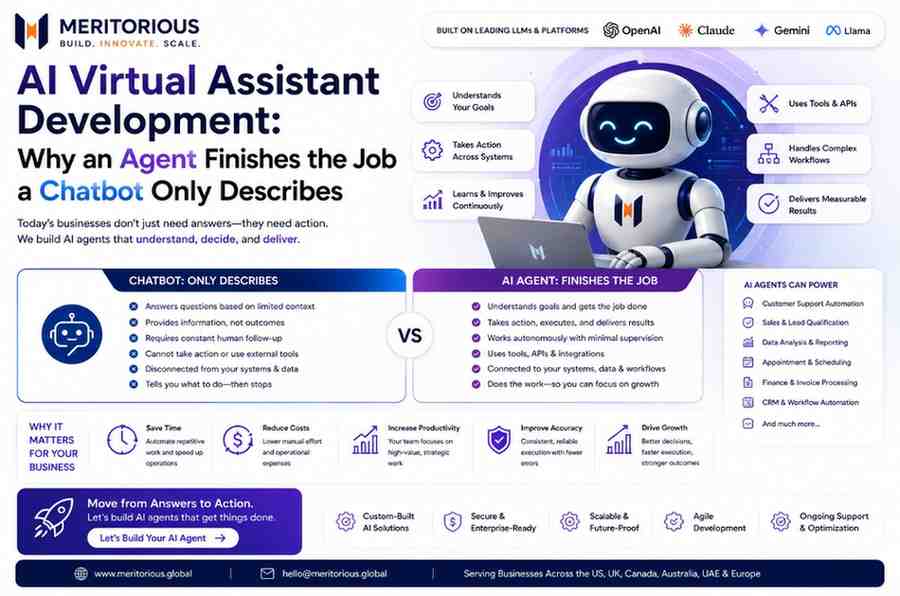
An AI Virtual Assistant is a software-based assistant designed to communicate with users and complete specific tasks through conversational interactions. Depending on how it is configured, it can work through text, voice, or a combination of communication channels.
Unlike traditional automated systems that depend heavily on fixed menus and predefined commands, modern virtual assistants can understand conversational language and respond according to the context of an interaction.
For businesses, this means routine customer conversations can be handled more efficiently while human employees can focus on situations requiring judgment, empathy, or specialized knowledge.
Common applications include customer support, appointment scheduling, lead qualification, order updates, reminders, surveys, payment-related communication, and customer follow-ups.
Can AI Make Outbound Phone Calls?
Yes, AI-powered voice systems can make outbound phone calls when they are connected to the appropriate calling infrastructure and configured for business use.
Outbound calling can be useful for many repetitive communication tasks. For example, a business may need to contact customers about appointments, confirm information, follow up on inquiries, remind customers about upcoming services, or conduct surveys.
Instead of requiring employees to manually make every call, an automated voice assistant can handle eligible conversations based on predefined business rules and workflows.
Outbound calling can also help businesses manage large contact lists. A voice system can prioritize calls, interact with customers who answer, record relevant information, and route conversations to human representatives when necessary.
However, businesses should use automated calling responsibly. Depending on the country, industry, and type of communication, regulations may apply to automated calls, consent, recording, and customer privacy.
How Does AI Calling Automation Work?
AI calling automation combines voice technology with business workflows to manage phone conversations. The system typically begins with a business-defined objective, such as confirming an appointment or following up with a potential customer.
When a call takes place, the voice system processes what the customer says and determines how the conversation should continue. It can use conversational context to provide an appropriate response rather than simply following a rigid sequence of recorded messages.
The system can also connect conversations with business software. For example, an automated calling workflow could retrieve customer information, check appointment details, update records, or trigger a follow-up based on what happens during the call.
Modern systems can also support multilingual conversations, allowing businesses that serve diverse customer groups to provide communication in different languages.
Weya AI focuses on voice-based business automation that can help organizations manage customer conversations at scale. By connecting voice interactions with business workflows, companies can move beyond simple automated messages toward more responsive customer communication.
The effectiveness of calling automation depends on several factors, including conversation design, speech recognition quality, response speed, integrations, business rules, and escalation processes. A well-designed system should know when it can complete a task independently and when a human employee should take over.
What Are the Benefits of AI Voice Agents?
AI voice agents can provide several operational benefits for organizations handling high volumes of customer conversations.
1. Faster Customer Communication
Customers often expect immediate responses. Voice agents can respond to routine requests without requiring customers to wait for an available employee.
This can be particularly useful outside standard business hours when customers still need basic information or assistance.
2. Higher Call Handling Capacity
Human teams have a limited number of hours available for phone communication. Automated voice agents can support a much larger volume of routine conversations, helping businesses manage periods of high demand.
This can be valuable for industries such as healthcare, financial services, telecommunications, travel, retail, and service businesses.
3. Reduced Repetitive Work
Employees often spend significant amounts of time handling repetitive calls. Appointment reminders, confirmations, basic FAQs, lead qualification, and follow-ups can consume valuable working hours.
Automating appropriate tasks allows employees to spend more time on complex customer requirements and higher-value activities.
4. Consistent Customer Interactions
A properly designed voice agent can follow the same business-approved workflows during every interaction. This can help maintain consistency when communicating information, collecting details, or following specific procedures.
Consistency is especially important for businesses managing large customer bases.
5. Better Lead Follow-Up
Delays in responding to leads can affect conversion opportunities. Voice automation can help businesses follow up with prospects more quickly after an inquiry.
The system can collect basic information, identify customer interest, answer common questions, and transfer qualified prospects to a human representative when appropriate.
6. Support for Multilingual Communication
Businesses increasingly serve customers who speak different languages. Voice technology can support multilingual interactions, making communication more accessible across different customer groups.
This can be especially useful for organizations operating across multiple regions.
7. Integration With Business Workflows
The real value of voice automation is not limited to the phone conversation itself. When connected with CRM systems, scheduling platforms, customer databases, and other business tools, voice agents can become part of a broader operational workflow.
For example, information gathered during a conversation can be used to update a customer record or initiate the next step in a business process.
How Can Businesses Use an AI Virtual Assistant?
There are many practical applications for an AI Virtual Assistant. Customer service teams can use one to answer frequently asked questions and provide basic support. Sales teams can use voice automation for lead qualification and follow-up.
Healthcare and service businesses can use automated calls for appointment confirmations and reminders. Financial organizations can use conversational systems for selected customer communication workflows, subject to applicable regulations and security requirements.
E-commerce businesses can use voice assistants to provide order-related updates, while travel companies can use them for booking-related communication and customer notifications.
Weya AI can be relevant for businesses looking to incorporate voice-based automation into customer communication workflows. The ability to handle conversations at scale can help organizations explore automation without relying exclusively on manual calling processes.
What Should Businesses Consider Before Implementing Voice Automation?
Successful implementation requires more than simply adding an automated voice system. Businesses should first identify which conversations are suitable for automation.
Simple, repetitive, and predictable interactions are generally easier to automate than highly sensitive or complex conversations.
Companies should also consider data security, customer consent, regulatory requirements, escalation procedures, call quality, integration requirements, and conversation design.
Another important consideration is the customer experience. Automation should make communication easier rather than creating additional frustration. Customers should have a clear path to reach a human representative when the situation requires human assistance.
Businesses should also measure performance after implementation. Useful metrics can include call completion rates, customer satisfaction, transfer rates, response times, appointment completion, lead qualification rates, and overall operational efficiency.
The Future of AI Virtual Assistants in Business
Voice-based automation is moving beyond basic scripted phone systems. As conversational technology continues to develop, businesses are increasingly exploring assistants that can understand context, maintain more natural conversations, and interact with multiple business systems.
The future is likely to involve a combination of automated and human communication rather than complete replacement of human teams. Virtual assistants can handle repetitive interactions while employees concentrate on complex cases, relationship-building, problem-solving, and decisions that require human judgment.
This hybrid approach can help businesses improve responsiveness while maintaining the human element that remains important in customer relationships.
Conclusion
An AI Virtual Assistant can help businesses improve how they manage customer communication by automating repetitive conversations, supporting outbound calls, handling routine requests, and connecting voice interactions with business workflows.
From appointment reminders and lead follow-ups to customer support and multilingual communication, voice automation offers practical opportunities across many industries. The most effective implementations focus on the right use cases, strong integrations, responsible automation, and seamless escalation to human employees.
As conversational technology continues to evolve, businesses that strategically adopt virtual and voice assistants can build more responsive communication processes while allowing their teams to focus on work that requires greater expertise and human interaction.
FAQs
1. Can an AI Virtual Assistant make phone calls?
Yes. Voice-enabled virtual assistants can make outbound calls for suitable business purposes, such as reminders, confirmations, follow-ups, surveys, and lead qualification, subject to applicable regulations.
2. Can AI voice agents receive incoming calls?
Yes. Voice agents can be configured to handle inbound calls, answer common questions, collect information, assist with routine requests, and transfer calls to human representatives when necessary.
3. What are AI voice agents used for?
AI voice agents can be used for customer support, appointment scheduling, reminders, lead qualification, surveys, follow-ups, order updates, and other repetitive communication workflows.
4. How does AI calling automation work?
AI calling automation combines conversational voice technology with calling infrastructure and business workflows. It interprets customer responses, provides relevant replies, and can interact with connected business systems during the conversation.
5. Are AI voice agents suitable for every business?
Not necessarily. They are generally most effective for repetitive, structured, and high-volume communication tasks. Complex, sensitive, or highly personalized conversations may still require human representatives.
6. What are the main benefits of AI voice agents?
Key benefits include faster communication, increased call-handling capacity, reduced repetitive work, consistent interactions, improved follow-up, multilingual support, and integration with business workflows.