Almond Processing Plant Investment Guide: Setup, Equipment & Profitability
-

- May 28th, 2026
- 6,462 views
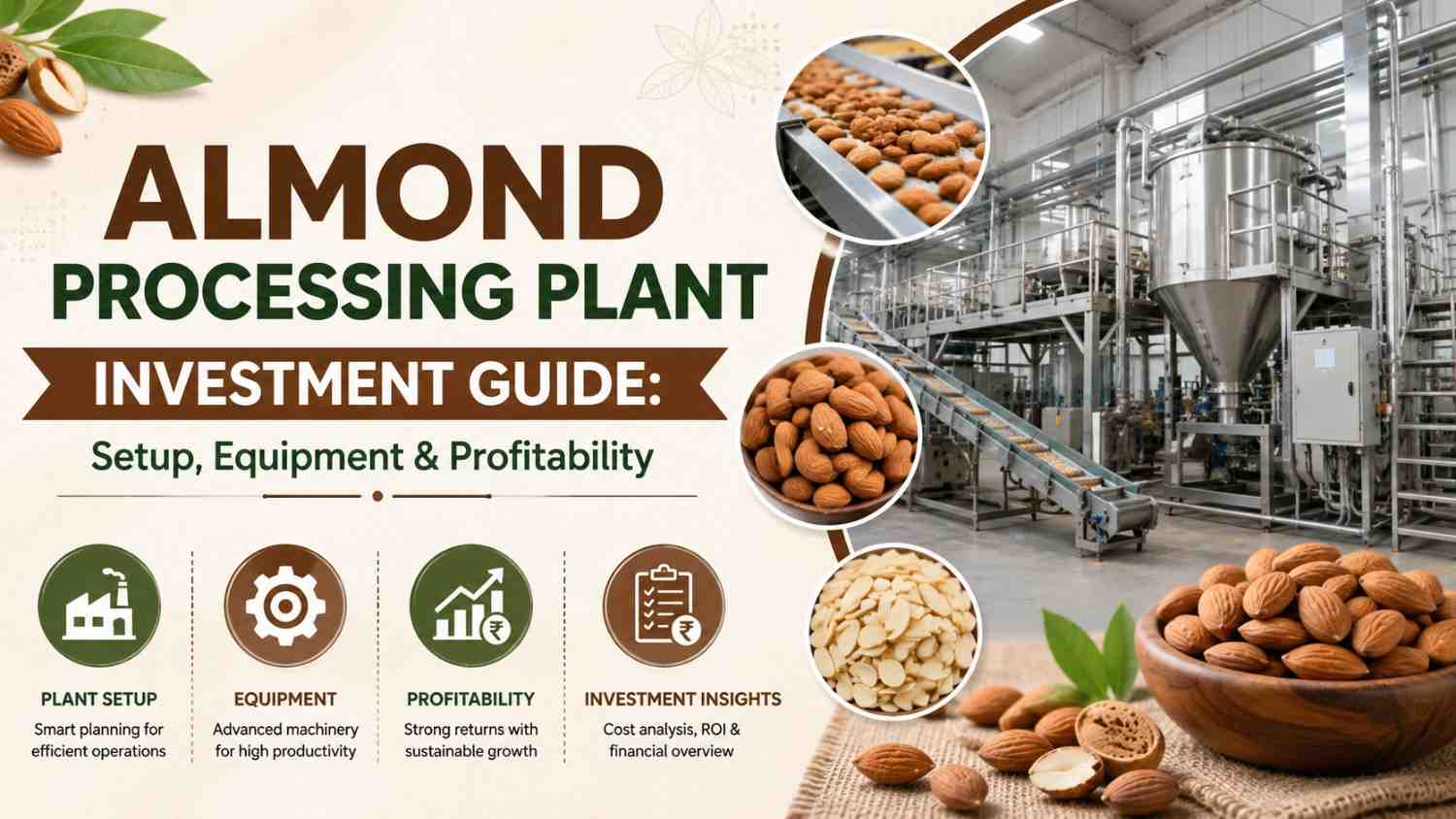
IMARC Group’s “Almond Processing Plant Project Report 2026: Industry Trends, Factory Setup, Machinery Cost, Raw Materials, Investment Opportunities, Cost and Revenue” report provides a comprehensive guide on how to successfully set up an almond plant. The report offers clarifications on various aspects, such as unit operations, raw material requirements, utility supply, infrastructural needs, machinery models, labour necessities, transportation timelines, packaging costs, etc.
In addition to the operational aspects, the almond processing plant project report also provides in-depth insights into almond plant processing, project economics, encompassing vital aspects such as capital investments, almond plant cost, project funding, operating expenses, income and expenditure projections, fixed and variable costs, direct and indirect expenses, expected ROI, net present value (NPV), profit and loss account, and thorough financial analysis, among other crucial metrics. With this comprehensive roadmap, entrepreneurs and stakeholders can make informed decisions and venture into a successful almond business plan and processing unit.
What is Almond?
Almond is an edible seed obtained from the fruit of the almond tree, scientifically known as Prunus dulcis. It is widely cultivated in regions with Mediterranean climates and is valued for its rich nutritional profile and versatile applications. Almonds are an excellent source of healthy monounsaturated fats, protein, dietary fiber, vitamins, and minerals such as vitamin E, magnesium, and calcium. They are commonly consumed raw, roasted, or processed into products such as almond milk, almond butter, almond flour, and confectionery ingredients. Almonds are extensively used in the food and beverage industry, bakery products, snacks, cosmetics, and personal care formulations due to their health benefits and natural properties. Regular consumption of almonds is associated with improved heart health, weight management, and better metabolic function. The growing preference for plant-based and nutrient-rich foods has further increased the popularity and global demand for almonds across various consumer segments.
Market Trend and Drivers of Almond:
The almond market is primarily driven by the increasing consumer preference for healthy and plant-based food products worldwide. Rising awareness regarding the nutritional benefits of almonds, including their high protein, fiber, and antioxidant content, is encouraging their incorporation into daily diets. The growing popularity of vegan and lactose-free alternatives has significantly boosted demand for almond-based products such as almond milk, snacks, and bakery ingredients. Additionally, the expansion of the functional food and nutraceutical sectors is supporting market growth, as almonds are widely recognized for promoting heart health and overall wellness. The food processing industry is also increasing the use of almonds in confectionery, cereals, and ready-to-eat products. According to IMARC Group estimates, the global almond market size was volumed at 1.70 Million Tons in 2025 and is expected to reach 2.28 Million Tons by 2034, exhibiting a CAGR of 3.3% from 2026 to 2034. Rising disposable incomes, changing dietary habits, and expanding retail distribution channels are further contributing to the sustained growth of the global almond market.
Request a Sample Report: https://www.imarcgroup.com/almond-processing-plant-project-report/requestsample
How to Setup an Almond Processing Plant?
Setting up an almond processing plant requires evaluating several key factors — from almond processing plant setup cost and machinery requirements to quality standards and operational efficiency.
Some of the key considerations include:
-
Detailed Process Flow: Almond processing involves multiple stages, material handling operations, and quality checks. Key aspects include:
o Unit Operations Involved
o Raw Material Requirements
o Quality Assurance Standards
o Technical Testing Parameters - Site Selection: The plant location should provide easy access to raw almonds, utilities, transportation, and target markets. Proper infrastructure, waste management, and compliance with local regulations are also essential.
- Plant Layout Optimization: The layout should improve workflow efficiency, reduce material handling, and ensure safe operations. Dedicated areas for storage, processing, quality control, and finished products should be planned.
- Equipment Selection: Selecting efficient and food-grade machinery is critical for smooth production. Understanding almond processing plant machinery cost is important at this stage. Common equipment includes cleaning, grading, blanching, roasting, slicing, packaging, and storage systems.
- Raw Material Sourcing: Reliable sourcing of high-quality almonds is necessary to maintain product consistency and production efficiency. Long-term supplier agreements can help stabilize pricing and supply.
- Safety and Environmental Compliance: Proper safety measures, hygiene standards, and waste management systems should be implemented to ensure worker safety and regulatory compliance.
- Quality Assurance Systems: A strong quality management system should be established to maintain consistent product quality, operational reliability, and compliance with food safety standards through regular testing, monitoring, audits, and SOPs.
Almond Plant Capacity & Profit Margins
The proposed almond processing plant is designed with an annual production capacity ranging from 10,000-20,000 MT, enabling efficient large-scale operations while maintaining flexibility for varying market demand. The project offers strong profitability potential under standard operating conditions, supported by consistent demand and expanding applications across the food and beverage sector.
Typically, almond processing plants achieve gross profit margins of around 20-30%, while net profit margins generally range between 8-12%, depending on raw material prices, production efficiency, and market positioning. Efficient plant operations, optimized sourcing, and value-added product offerings can further enhance profitability and long-term business sustainability.
Almond Plant Cost Analysis
The cost structure of an almond processing plant is largely influenced by raw material expenses, with raw almonds accounting for nearly 80-85% of the total operating expenditure (OpEx). Securing a stable and cost-effective supply chain is therefore critical for maintaining operational efficiency and profit margins.
Utility expenses, including electricity, water, fuel, and steam, typically contribute around 5-10% of the total operating cost. Additional expenses may include labor, packaging, maintenance, transportation, and quality assurance activities, all of which play an important role in overall plant economics.
Requirements to Setup an Almond Plant:
- Funds
- Machinery
- Lands
Types of Costs to Setup an Almond Factory:
- Land, Location and Site Development Cost
- Plant Layout Cost
- almond Plant Machinery Cost
- Raw Material Requirements and Costs
- Packaging Requirements and Costs
- Transportation Requirements and Costs
- Utility Requirements and Costs
- Human Resource Requirements and Costs
Project Economics:
- Capital Investments
- Operating Costs
- Expenditure Projections
- Revenue Projections
- Taxation and Depreciation
- Profit Projections
- Financial Analysis
Ask Analyst for Customized Report: https://www.imarcgroup.com/request?type=report&id=9398&flag=C
How IMARC Can Help?
IMARC Group is a global management consulting firm that helps the world’s most ambitious changemakers to create a lasting impact. The company provide a comprehensive suite of market entry and expansion services. IMARC offerings include thorough market assessment, feasibility studies, company incorporation assistance, almond factory setup support, regulatory approvals and licensing navigation, branding, marketing and sales strategies, competitive landscape and benchmarking analyses, pricing and cost research, and procurement research.
Services:
- Plant Setup
- Factory Auditing
- Regulatory Approvals, and Licensing
- Company Incorporation
- Incubation Services
- Recruitment Services
- Marketing and Sales
Contact Us:
IMARC Group
134 N 4th St. Brooklyn, NY 11249, USA
Email: [email protected]
Tel No:(D) +91 120 433 0800
United States: (+1-201971-6302)
Related Posts