Anxiety Psychologist Types of Anxiety Disorders and Treatment Options
-

- Published Updated
- 4,891 views
Let me tell you something that might surprise you. Anxiety is not just one thing. It comes in many forms. And the right anxiety psychologist can help you figure out exactly what you are dealing with. Because here is the thing – you cannot treat something if you do not know what it is.
You know that feeling when your heart races and your palms sweat for no reason. Or when you cannot sleep because your brain is spinning. Maybe you avoid social situations because they feel overwhelming. Or you have sudden panic attacks that come out of nowhere.
These are not just "being stressed." These are real conditions. And they are treatable. A good anxiety psychologist understands the differences between them. So let us break it down together.
The Main Types of Anxiety Disorders
Look, anxiety is not one-size-fits-all. Different types show up in different ways. And understanding which one you are dealing with is the first step.
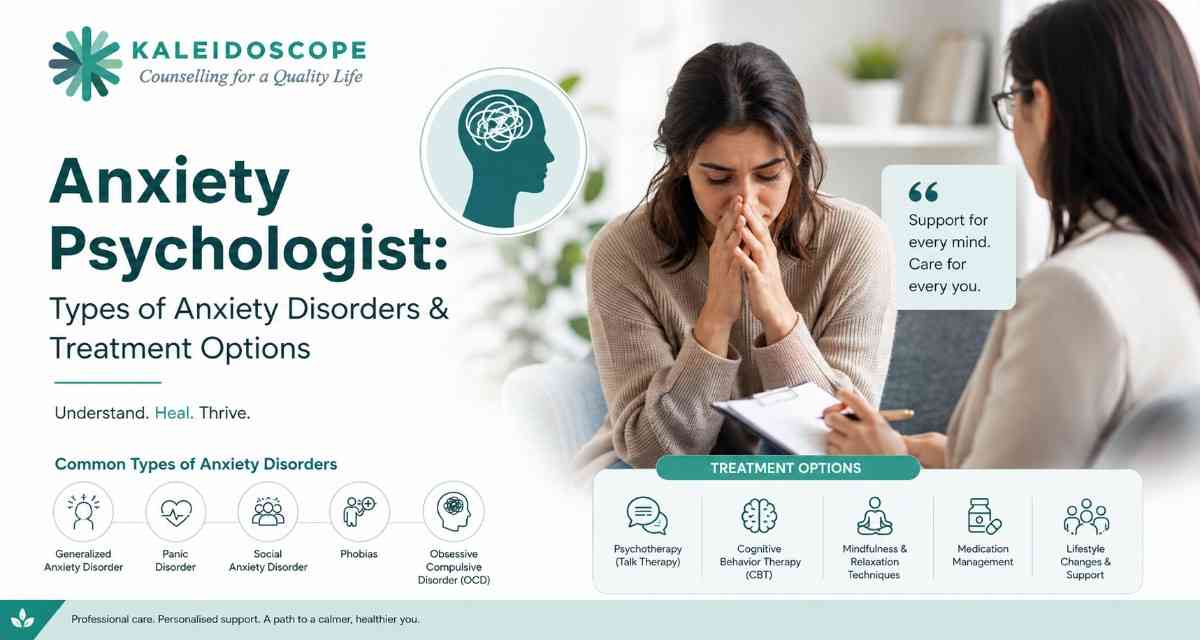
Generalized Anxiety Disorder (GAD)
This is the most common one. People with GAD worry excessively about everyday things. Work. Health. Money. Family. The worry is out of proportion to the actual situation. And it is hard to control.
Research shows that GAD affects about 3% of the population globally. The average age of onset is around 30 years old. But it can start at any age.
If you have been worrying non-stop for at least six months, you might have GAD. An anxiety psychologist can help you figure this out.
Panic Disorder
Panic disorder is different. It involves sudden, intense panic attacks. Your heart pounds. You feel like you cannot breathe. You might think you are having a heart attack or dying.
According to research, panic disorder is characterized by recurrent, unexpected panic attacks followed by persistent concern about having more attacks. This leads to avoidance behaviors. You might stop going places because you are afraid of having another attack.
Social Anxiety Disorder (Social Phobia)
This is more than just being shy. People with social anxiety fear being judged, embarrassed, or humiliated in social situations. They might avoid parties. Public speaking. Even eating in front of others.
Dr. Robert C. Ciampi, a clinical psychologist, explains that social anxiety is often mistaken for introversion. But it is different. Introverts prefer solitude. Social anxiety causes genuine fear.
In India, the Mental Health Care Act (2017) explicitly includes social anxiety disorder among the conditions requiring qualified mental health professionals for diagnosis and treatment.
Specific Phobias
Phobias are intense, irrational fears of specific things. Spiders. Heights. Flying. Needles. These fears go beyond normal caution. They interfere with daily life.
Research has found that virtual reality exposure therapy can be effective for treating specific phobias, particularly acrophobia (fear of heights).
Obsessive-Compulsive Disorder (OCD)
OCD involves obsessions (unwanted, intrusive thoughts) and compulsions (repetitive behaviors to reduce the anxiety from those thoughts). It is not just being neat or organized. It is a debilitating condition.
Research indicates that OCD affects approximately 2% of the population, causing significant distress and functional impairment.
Post-Traumatic Stress Disorder (PTSD)
PTSD develops after exposure to a traumatic event. Symptoms include intrusive memories, avoidance, negative mood changes, and hyperarousal.
Dr. Jibril I. Handulle explains that PTSD is a mental health condition triggered by experiencing or witnessing a terrifying event. Symptoms may include flashbacks, nightmares, and severe anxiety.
How an Anxiety Psychologist Diagnoses You
So what actually happens when you go see an anxiety psychologist?
Assessment and Evaluation. Your psychologist will use structured clinical interviews and standardized questionnaires. These include the GAD-7 for generalized anxiety, the Panic Disorder Severity Scale, and the Social Phobia Inventory.
Dr. Ciampi uses assessment tools like the Anxiety and Related Disorders Interview Schedule (ADIS-5) to make accurate diagnoses.
Rule Out Other Conditions. Some medical conditions mimic anxiety. Thyroid problems. Heart conditions. Medication side effects. A good anxiety psychologist will work with your doctor to rule these out.
Look at Your History. Research shows that stressful life events significantly increase the risk of developing anxiety disorders. Your psychologist will explore your personal and family history.
Treatment Options That Actually Work
Here is the good news. Anxiety is highly treatable. And an anxiety psychologist has real tools to help you.
Cognitive Behavioral Therapy (CBT)
This is the gold standard. The American Psychological Association strongly recommends CBT for anxiety disorders. Research shows that internet-delivered CBT for anxiety disorders shows moderate to large effect sizes.. d