Apple Pay Launch In India: Can Apple’s Tap-To-Pay Compete With UPI?
-

- Published Updated
- 3,379 views
India has become one of the world's most advanced digital payment markets, where smartphones have steadily replaced cash for everyday transactions. From neighborhood grocery stores and roadside tea vendors to luxury retail outlets, digital payments are now deeply woven into daily life. At the heart of this transformation is the Unified Payments Interface (UPI), a platform that has reshaped the country's financial ecosystem by making instant bank-to-bank transfers accessible to virtually everyone. With billions of transactions taking place every month, UPI has become more than a payment method—it has become a national habit.
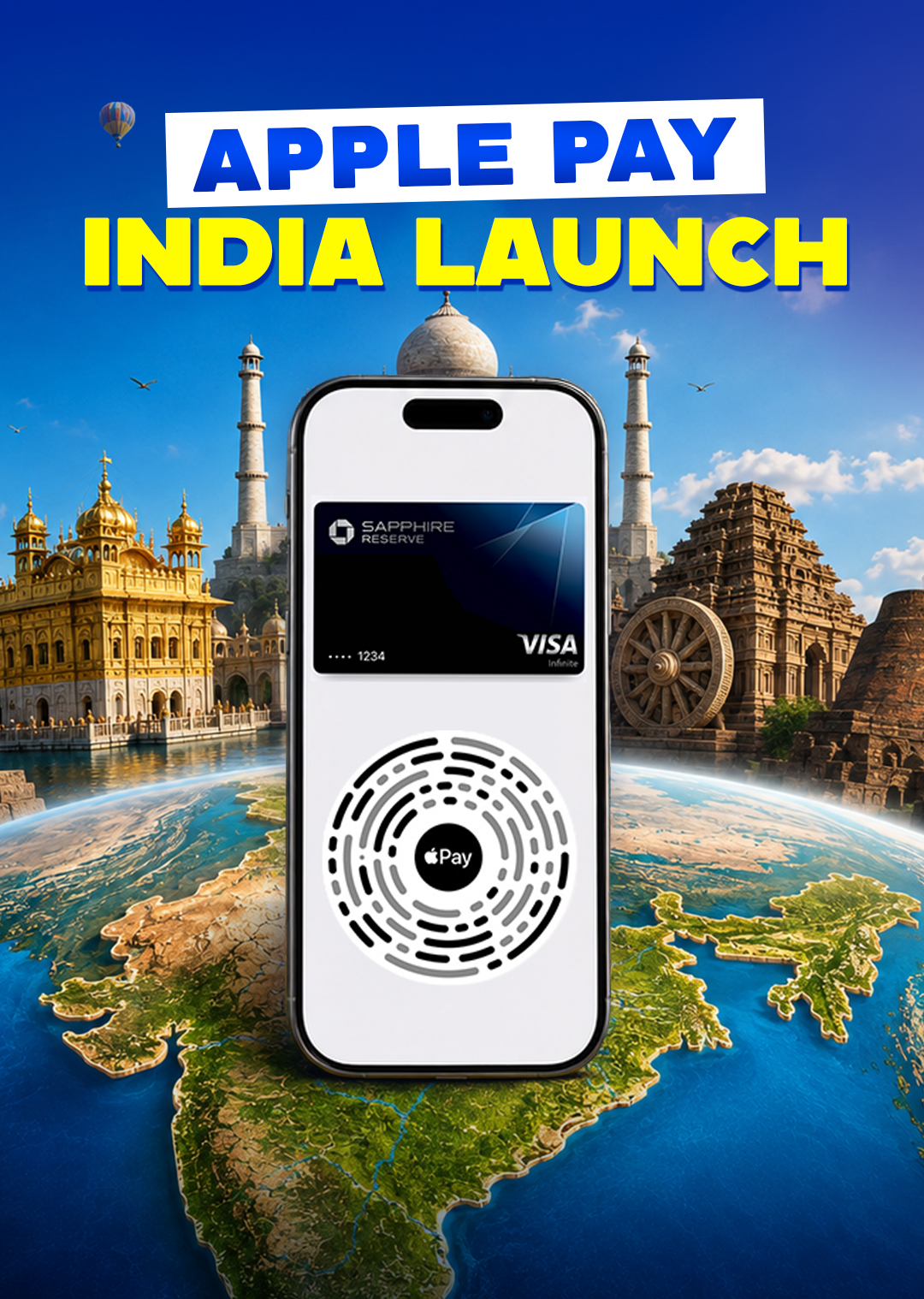
Now, Apple appears ready to make its long-awaited entry into India's digital payments landscape. Although the company has not officially confirmed a launch date, multiple industry reports suggest that Apple Pay could arrive during late September or October 2026. Unlike launches in several other countries, however, Apple's initial rollout in India is expected to focus on Visa and Mastercard credit cards instead of integrating directly with UPI. That means Apple Pay would begin life as a premium contactless card payment service rather than another UPI application.
This distinction changes the entire conversation. Apple Pay is unlikely to compete directly with India's dominant payment network from day one. Instead, it is expected to target premium iPhone and Apple Watch users who already rely heavily on credit cards for shopping, dining, travel, and lifestyle purchases. By offering secure, tokenized card payments through Apple Wallet, the service could make contactless payments faster and more convenient without asking users to change their preferred banking relationships.
The challenge ahead is enormous. UPI processed an astonishing 23.66 billion transactions worth ₹29.88 trillion during July 2026 alone, illustrating its unmatched reach across the country. Meanwhile, Apple's iPhone continues to occupy only a small percentage of India's smartphone market despite growing rapidly in the premium segment. As a result, Apple Pay is entering a market where consumers already have an established payment routine that works almost everywhere.
Can Apple convince users to tap their iPhone instead of scanning a QR code? The answer depends less on technology and more on where Apple chooses to compete.
Apple Pay India Launch: What Is Currently Known?
Although Apple has remained silent regarding an official release schedule, industry reports suggest that preparations are well underway. Sources indicate that Apple has been working with leading banks, payment networks, and financial partners to finalize commercial agreements before introducing Apple Pay to Indian consumers.
Current reports point toward a launch window during late September or October 2026. However, Apple's official list of supported countries still does not include India, making these timelines speculative until the company formally announces availability.
Executives from India's payments industry have also hinted that Apple Pay's arrival may not be far away. Pine Labs CEO Amrish Rau recently expressed confidence that Apple Pay would enter the Indian market before the end of the year. While such comments strengthen expectations, they should not be viewed as official confirmation.
For consumers eagerly waiting for Apple Pay, the safest conclusion is that the service appears close, but Apple alone will determine when it officially becomes available.
How Apple Pay Is Expected To Work
If reports prove accurate, Apple Pay will initially function as a secure digital wallet for supported Visa and Mastercard credit cards instead of operating as a UPI-based payment application.
Users would add eligible cards to Apple Wallet on their iPhone or Apple Watch. At checkout, authentication would occur using Face ID, Touch ID, or the device passcode before the phone or smartwatch is placed near an NFC-enabled payment terminal. The transaction would then be completed within seconds without requiring the physical card.
Apple's payment system places significant emphasis on security. Instead of storing the original card number, banks generate a unique device account number that is securely stored inside the Secure Element. Every payment also receives a unique transaction-specific security code, ensuring the original card information is never shared with merchants during purchases.
This tokenization system significantly reduces the chances of card details being exposed during transactions and has become one of Apple Pay's strongest security advantages globally.
It is also important to distinguish Apple Pay from Apple's separate merchant solution called Tap to Pay on iPhone. Apple Pay allows consumers to make contactless payments, whereas Tap to Pay on iPhone enables merchants to accept contactless payments directly using another iPhone without requiring dedicated payment hardware.
Apple recently restored support for card payments for Apple Account purchases in India as well. While unrelated to Apple Pay itself, the move signals Apple's continued investment in expanding its payments ecosystem within the country.
Apple Pay vs UPI: Two Different Payment Ecosystems
Although comparisons between Apple Pay and UPI are inevitable, the two systems are designed around completely different payment infrastructures.
UPI enables instant bank-to-bank transfers that work through QR codes, UPI IDs, payment intents, NFC Smart QR systems, and multiple third-party applications. Apple Pay, on the other hand, is expected to begin with tokenized credit card payments processed over Visa and Mastercard networks.
This distinction affects both merchants and consumers.
UPI has become nearly universal across India because it works across banks, apps, smartphones, and businesses of every size. Millions of merchants accept UPI, from multinational retailers to roadside vendors selling tea and vegetables.
Apple Pay's availability will depend on several conditions being met simultaneously. Users must own a compatible Apple device, possess an eligible credit card, have support from their issuing bank, and shop at merchants equipped with NFC-enabled payment terminals.
As a result, Apple Pay's early footprint is likely to remain concentrated in premium retail environments rather than neighborhood stores where QR-code payments dominate everyday commerce.
Another important difference lies in consumer behavior. Indians have become accustomed to scanning QR codes for nearly every payment. Apple Pay asks users to tap their devices instead, offering a smoother experience only where compatible hardware already exists.
Where Apple Pay Could Find Success
Despite entering a highly competitive market, Apple Pay still has several opportunities to establish itself successfully.
Its biggest advantage lies in serving premium customers who already spend heavily using credit cards. Many iPhone owners regularly use cards for shopping, restaurants, airline bookings, hotels, luxury purchases, and online subscriptions. Apple Pay simply removes the need to carry the physical card while preserving all existing card benefits.
Consumers can continue earning reward points, cashback offers, travel miles, EMI options, and credit periods without changing their spending habits.
Apple Watch compatibility could further increase convenience. Paying with a smartwatch requires only a quick wrist movement, making the checkout experience even faster.
Apple also benefits from its tightly integrated ecosystem. Users already relying on Apple Wallet for boarding passes, event tickets, loyalty cards, and digital keys may find adding payment cards to the same application both convenient and intuitive.
Rather than replacing UPI, Apple Pay could become the preferred payment method whenever users choose to pay with credit cards.
Challenges Apple Pay Must Overcome
The biggest obstacle facing Apple Pay is the absence of UPI integration during its reported first phase.
Without UPI support, Apple Pay cannot participate in the massive network of QR-code payments that dominate India's digital economy. Countless merchants either do not own NFC-enabled terminals or rarely process card payments because QR transactions have become faster, cheaper, and more familiar.
Industry reports also indicate that Apple has been negotiating transaction fees with Indian banks. While Apple reportedly seeks a share of credit card transaction revenue, issuers are believed to be pushing back over commercial terms.
Cost becomes particularly important because UPI remains free for consumers, making it difficult for card-based systems to compete on economics alone.
Another limitation involves Apple's ecosystem itself. Apple devices continue to maintain tight control over NFC functionality compared with Android smartphones. This controlled environment supports Apple's security philosophy but also limits broader payment flexibility.
Finally, market size remains a practical challenge. Even though Apple's presence in India continues to grow, Android devices still account for the overwhelming majority of smartphones. Consequently, Apple Pay's addressable market remains significantly smaller than UPI's nationwide user base.
Can Apple Pay Really Compete With UPI?
The answer depends on how competition is defined.
If the expectation is that Apple Pay will replace UPI across India, the answer is almost certainly no. UPI's enormous merchant acceptance, interoperability, widespread banking support, and deeply ingrained consumer habits give it an overwhelming advantage.
However, Apple does not necessarily need to defeat UPI to succeed.
Its immediate goal is more likely to strengthen the premium card payment experience for existing Apple customers. In that role, Apple Pay could become the preferred payment option for millions of iPhone users whenever contactless card payments are available.
The situation could change dramatically if Apple eventually integrates UPI into Apple Pay. Instead of replacing UPI, Apple Pay would then become another interface through which iPhone users access India's most popular payment rail. Such an evolution would significantly expand Apple's relevance within India's digital payments ecosystem.
Until then, Apple Pay and UPI are likely to complement each other rather than compete head-on.
The Future Of Digital Payments In India
India's payment ecosystem continues to evolve rapidly, with innovation coming from banks, fintech companies, smartphone manufacturers, and payment networks alike. Consumers increasingly expect payments to be instant, secure, and frictionless regardless of whether they use QR codes, NFC, cards, or digital wallets.
Apple Pay's arrival would add another premium payment option rather than fundamentally changing consumer behavior overnight. Its strengths lie in security, convenience, biometric authentication, and seamless integration across Apple's hardware ecosystem.
Meanwhile, UPI continues expanding into offline payments, international acceptance, recurring payments, and NFC-enabled Tap & Pay capabilities, ensuring it remains at the center of India's digital payment revolution.
Rather than witnessing one system replacing another, India is likely to see multiple payment methods coexist, each serving different customer segments and purchase scenarios.
Conclusion
Apple Pay's expected arrival marks an important milestone for India's premium smartphone ecosystem, but expectations should remain realistic. The service is entering a market already dominated by one of the world's most successful real-time payment systems.
During its reported first phase, Apple Pay is expected to focus on secure, contactless credit card payments for iPhone and Apple Watch users. That positions it as a premium convenience feature instead of a direct challenger to UPI's vast transaction network.
For Apple, success will not necessarily be measured by replacing QR-code payments. Instead, it will depend on becoming the preferred payment method whenever its users reach for their iPhone instead of their wallet.
If Apple eventually brings UPI integration to Apple Pay, the competitive landscape could evolve considerably. Until then, UPI remains India's everyday payment champion, while Apple Pay is poised to become a polished, secure, and convenient option for premium card users looking for a faster way to tap and pay.