Arabescato Marble vs Calacatta: Which Should You Choose?
-

- Published Updated
- 2,149 views
Arabescato and Calacatta are two highly attractive Italian marble varieties, and both can bring a luxurious character to interiors. At first glance, they may look similar because both can feature white backgrounds with natural grey veining. However, their patterns, visual intensity, and overall character can differ considerably.
Choosing between them is easier when you know what kind of look you want, where the marble will be used, and how much visual movement suits your interior. Instead of choosing based only on the name of the marble, it is better to examine the actual slab and consider how it will work within your space.
Understanding Arabescato Marble
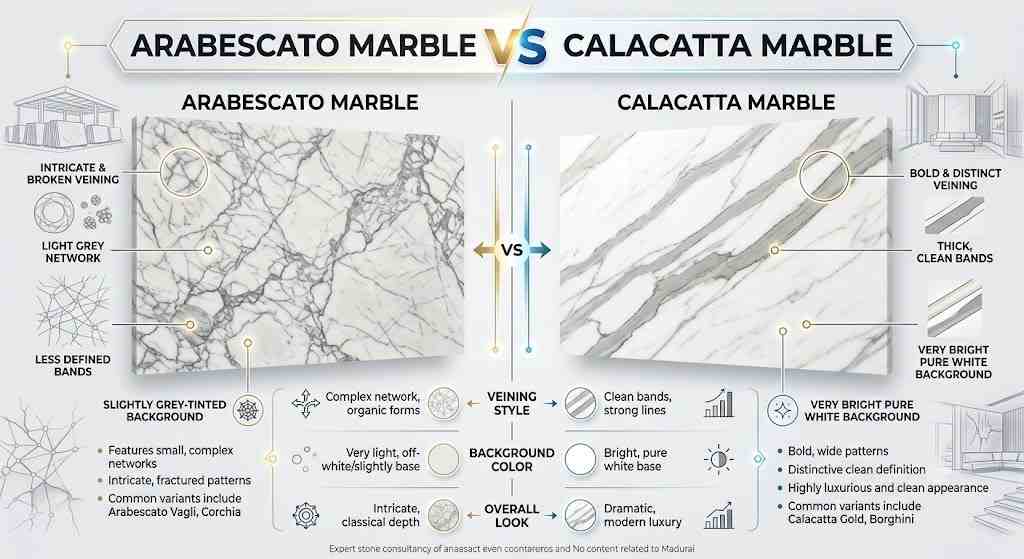
Arabescato marble is generally recognized for its white or light background combined with distinctive, flowing grey veining. The veins can create curved, interconnected, or cloud-like patterns, giving each slab a strong natural character.
Because of its expressive pattern, Arabescato can work particularly well when you want the marble itself to become a design feature. It can be used for walls, flooring, bathrooms, countertops, backsplashes, and other decorative applications, depending on the specific stone and project requirements.
One important point is that Arabescato is not visually identical from slab to slab. Natural stone varies, so inspecting the material before purchase is important.
What Makes Calacatta Different?
Calacatta is also associated with Italy and is known for its light background and prominent veining. Compared with many softer white marbles, Calacatta can have stronger grey or warmer-toned veins that create a dramatic appearance.
The combination of a light base and bold veining can make Calacatta particularly appealing for feature surfaces. A large kitchen island, statement wall, bathroom vanity, or entrance area can showcase its natural pattern effectively.
However, Calacatta is not one uniform visual style. Different selections can vary considerably in background tone and vein pattern. This is why looking at the exact slab is more useful than relying only on a general description of the marble.
Arabescato vs Calacatta: The Main Visual Difference
The biggest difference for many buyers is the character of the veining.
Arabescato often creates a more intricate and flowing appearance, with veins that can spread across the slab in complex patterns. Calacatta can provide a cleaner contrast between its lighter background and larger, more pronounced veins.
If your interior already contains several decorative elements, a marble with controlled movement may create a more balanced appearance. If the design is relatively simple and you want one surface to stand out, a strongly veined Calacatta slab can make a striking focal point.
Neither option is universally better. The right choice depends on the design direction of your project.
Choosing Based on Interior Style
Your existing interiors should play an important role in the selection.
Arabescato can complement spaces where you want movement and detail without relying on additional decorative patterns. Its naturally intricate veining can add depth to otherwise simple interiors.
Calacatta can suit interiors that focus on bold, high-end visual elements. It can pair well with simple cabinetry, neutral walls, understated flooring, and carefully selected fixtures.
When comparing options at the Marble Market in Bangalore, take photographs of your kitchen, bathroom, or living space with you if possible. This can make it easier to compare slabs against your existing colours and materials.
Which Is Better for Kitchen Countertops?
Both types can be considered for countertop applications, but the suitability depends on the specific marble, finish, installation, and expected use.
Kitchen countertops experience regular exposure to food, liquids, heat, and cleaning. Marble can be susceptible to staining, scratching, and etching, so users should understand the maintenance requirements before choosing it for a frequently used work surface.
For a countertop, examine the complete slab carefully. A dramatic pattern may look impressive in a showroom but could dominate a smaller kitchen. On the other hand, a simpler surrounding design can allow a heavily veined slab to become the centrepiece.
Always discuss the intended application with the stone supplier and installer before making the final decision.
Maintenance Should Not Be Overlooked
The beauty of natural marble comes with the need for appropriate care. Regular cleaning using products suitable for natural stone can help maintain the surface. Acidic substances and unsuitable cleaning chemicals may cause etching or surface damage.
Spills should be cleaned promptly, especially in kitchens and other areas where the marble regularly comes into contact with food and liquids.
Depending on the marble and application, sealing may also be recommended. Ask the supplier or stone-care professional about the appropriate maintenance routine for the specific material you purchase.
Always Compare Actual Slabs
Online photographs and small samples are useful for narrowing down your choices, but they cannot show the complete natural variation of a large marble slab.
When comparing Arabescato and Calacatta, examine several slabs whenever possible. Look at the background colour, vein direction, intensity, surface finish, and how the stone appears under different lighting conditions.
Also consider how multiple slabs will be joined if your project requires more than one piece. Vein direction and slab placement can have a significant impact on the finished appearance.
So, Which One Should You Choose?
Choose Arabescato if you prefer intricate, flowing veining and want a surface with noticeable natural movement. Choose Calacatta if you prefer a lighter background with stronger, more dramatic veins that can create a statement feature.
The decision should ultimately be based on your interior style, application, maintenance expectations, slab availability, and personal preference. Comparing actual slabs with your cabinetry, flooring, and lighting will give you a much clearer idea of the final result.
Final Thoughts
Arabescato and Calacatta can both create sophisticated interiors, but their natural patterns give them different personalities. Arabescato tends to offer intricate visual movement, while Calacatta can deliver a bolder contrast and statement-making appearance.Check out: Pratibha marbles Rather than selecting a marble solely because it is considered luxurious, focus on how the specific slab fits your space. Careful comparison, professional installation, and appropriate maintenance will help ensure that your chosen marble looks beautiful and remains practical for its intended use.