Australia Student Visa 2026: What International Students Should Know
-

- Published Updated
- 3,396 views
Australia's international education sector is expanding in 2026, but prospective students are entering a system where opportunity and uncertainty exist side by side.
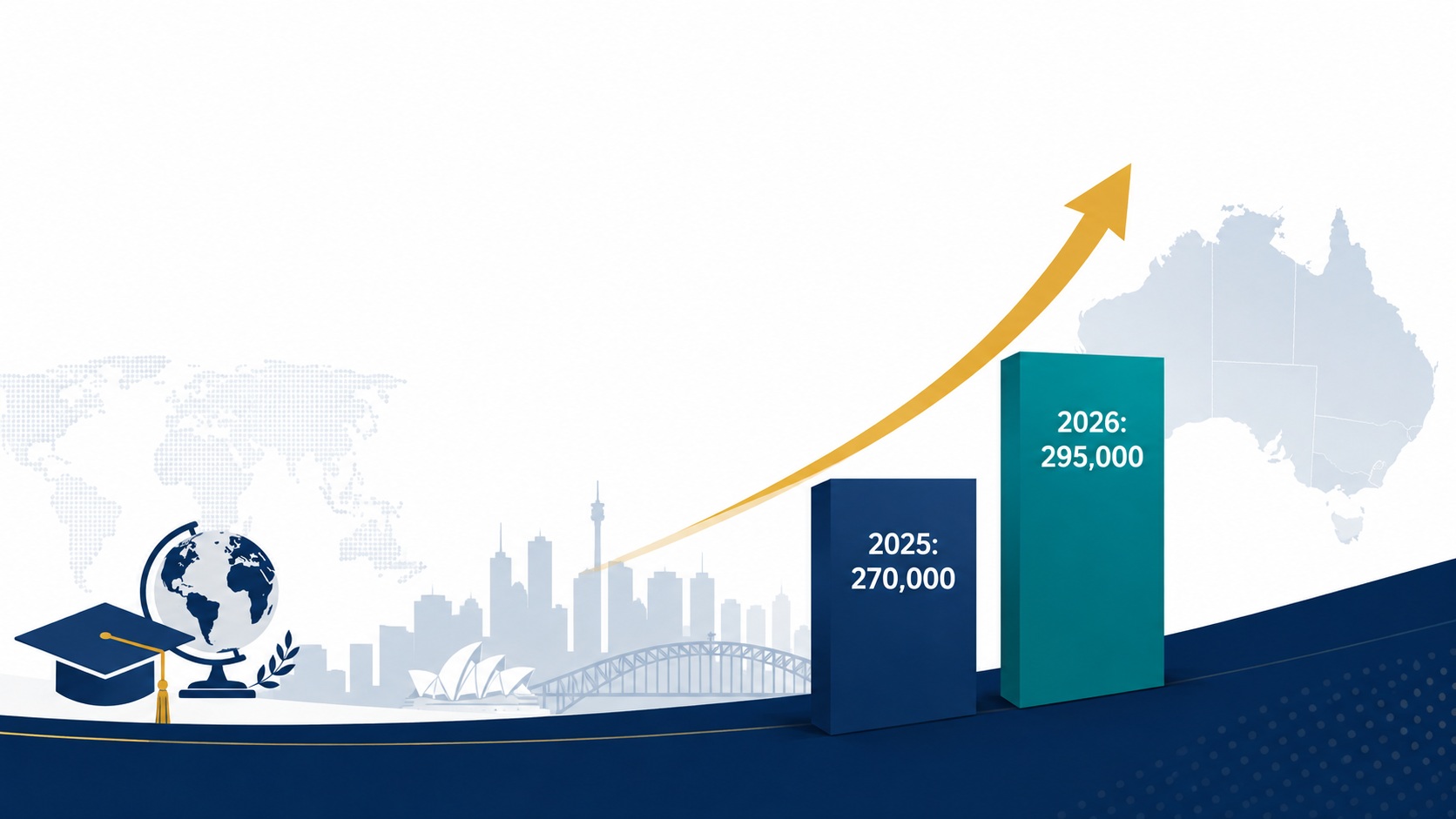
The country has set a National Planning Level of 295,000 new international student commencements for 2026, up from 270,000 in 2025. The 9% increase creates more opportunities for overseas students, but it does not guarantee a straightforward journey from application to graduation.
Visa processing has become more selective, while housing shortages and living costs remain major concerns. Once students arrive, they also have to adjust to university coursework and assessment expectations.
For anyone considering an Australia student visa 2026, understanding this wider picture is as important as choosing the right course.
More student places come with more planning
The higher 2026 intake is a clear sign that Australia continues to attract international students. More planned commencements can give overseas applicants additional opportunities to pursue education through Australian universities and pathway providers.
But increased student numbers also place pressure on education providers.
According to the source, universities seeking to grow their allocations must demonstrate stronger regional engagement and progress on student accommodation. This requirement follows years of housing shortages in Melbourne and Sydney, where many international students settle.
That creates an important consideration for students.
Choosing a university is not only about course rankings or academic reputation. Location and accommodation can affect the cost and practicality of the entire study experience.
A student living close to campus may save time on commuting but face higher rent. A cheaper option may require longer travel each day. When these decisions are made within a limited student budget, the effects can quickly become significant.
The larger intake therefore needs to be viewed alongside the resources available to support those students.
Visa processing is becoming part of the planning equation
The student visa process is another area where prospective students need to pay attention.
The uploaded source states that rejection rates for several major source countries increased during the first half of 2026. It also identifies priority processing for selected cohorts, including Southeast Asian applicants, Pacific and Timor-Leste students, and scholarship holders.
Other applicants may face longer waits.
For a student planning an international move, waiting for a visa decision can create uncertainty around flights, accommodation and arrival arrangements. It can also make preparation for the academic year more complicated.
This does not mean students should avoid Australia. It means they need to treat visa preparation as part of the broader study plan.
The source also connects visa policy with institutional capacity. Universities seeking larger allocations must demonstrate progress in areas such as accommodation, showing that student growth is being considered alongside practical capacity.
Australia is therefore managing international education on several fronts at once.
Living costs can influence the academic journey
Housing is not the only financial concern. The source identifies cost of living as one of the leading issues raised by international students.
That matters because financial pressure can spill into academic life.
A student who spends more than expected on rent and daily expenses may have to adjust their work schedule, reduce discretionary spending or devote more time to managing finances. Those pressures can arrive at exactly the wrong time, such as during an important assessment period.
This is why academic preparation deserves attention before students arrive.
Understanding how assignments are structured, identifying difficult subjects early and developing a realistic study routine can make it easier to deal with competing demands.
For students studying information systems, strategic planning can be an area where theory and practical business decisions intersect. Expertsmind’s information systems strategic planning resource can serve as an additional reference for students exploring this subject area.
The purpose of using such material should be to strengthen understanding. Students still need to research, analyse and produce their own academic work.
When used correctly, academic resources can make difficult topics easier to approach and help students spend their time more effectively.
Adjusting to Australian assessment expectations
International students may also need to adapt to a different style of academic assessment.
A student can understand a subject but struggle with an assignment if the expected approach is unfamiliar. Australian university coursework may require students to analyse theories, apply them to practical examples and develop a clear argument.
Competitive strategy illustrates the challenge.
Knowing the definition of competitive advantage is not enough for an assignment that asks students to examine how a company competes in its market. Students need to connect theory with evidence and explain the reasoning behind their conclusions.
Students studying this area can use Expertsmind’s competitive strategy assignment sample as a reference when exploring how competitive strategy concepts can be developed in academic work.
This approach applies to many other disciplines.
Engineering students may need to apply technical knowledge to practical problems. Computing students may need to explain how technology supports organisational objectives. Business students may need to evaluate several strategic options before making a recommendation.
The adjustment is easier when students understand what their assessments demand before deadlines become urgent.
The real challenge starts after admission
The rise to 295,000 planned international student commencements is important, but it should not be treated as the full story of Australian international education.
The source presents a more complicated picture. Australia is increasing opportunities for overseas students while continuing to deal with housing shortages, cost pressures and changes in visa processing.
Those conditions matter because students experience them directly.
For prospective students, preparation should therefore cover more than admission. Accommodation, budgeting, visa timing and academic expectations all deserve attention.
The 2026 experience may also have longer-term significance. The source indicates that Australia has flagged similar intake levels for 2027 while continuing to scrutinise visa processing and accommodation capacity.
That means the questions raised in 2026 are unlikely to disappear immediately.
Australia remains an attractive destination for international education, but students should approach the opportunity with realistic expectations. A successful study experience depends on being prepared for the practical realities as well as the academic ones.
The biggest lesson is simple: getting a student visa and securing a university place opens the door, but preparation determines how well students can move through it.