Global Business Mobility Visa: UK Routes and Business Expansion
-

- Published Updated
- 45 views
Expanding a business into the UK or transferring experienced employees from an overseas office requires careful planning. The Global Business Mobility Visa https://salamimmigration.co.uk/global-business-mobility-visa/
offers several immigration routes for eligible overseas businesses that need to send workers to the UK for specific business activities. Understanding the correct route, sponsorship requirements and eligibility criteria can help employers and employees avoid unnecessary delays. For tailored information about the available options, explore the Global Business Mobility Visa guidance before preparing an application.
Global Business Mobility Visa: The Main UK Routes
Choosing the right route is one of the most important steps in the application process. The main categories include the following.
1. Senior or Specialist Worker Visa
This route is designed for eligible senior managers and specialist employees transferring to a UK branch or connected business. The applicant generally needs to work for an organisation with the appropriate sponsor licence and meet the relevant job, salary and employment requirements.
It may suit international businesses that need to move experienced staff into senior or specialist positions within their UK operations.
2. Graduate Trainee Visa
The Graduate Trainee route supports eligible employees taking part in a structured graduate training programme that leads to a senior management or specialist role. Applicants must meet the route’s requirements, including the relevant overseas employment and training conditions.
3. UK Expansion Worker Visa
The UK Expansion Worker route is intended for eligible employees sent to establish a UK presence for an overseas business that has not yet begun trading in the UK. The overseas business and applicant must satisfy the specific requirements for this route.
Businesses should check whether this route remains appropriate for their circumstances, particularly if their UK operations have already started.
4. Service Supplier Visa
This route may apply to eligible overseas workers providing services in the UK under a qualifying international trade agreement or an eligible contractual arrangement. Applicants must meet the relevant nationality, employment, contract and sponsorship conditions.
5. Secondment Worker Visa
The Secondment Worker route may be available to employees assigned to the UK as part of a qualifying high-value contract or investment by their overseas employer. The arrangement must meet the applicable immigration rules, including the requirements relating to the contract and sponsoring organisation.
Documents Required for an Application
Preparing the correct documents before applying can reduce avoidable errors and delays. Depending on the route and personal circumstances, applicants may need:
· A valid passport or other accepted travel document.
· A Certificate of Sponsorship reference number.
· Details of the UK job, including the role and salary.
· Evidence of employment with the overseas organisation, where required.
· Information about the employer and its UK operations.
· Evidence of personal savings or maintenance funds, if applicable.
· Certified translations of documents that are not in English or Welsh.
Additional evidence may be required for particular routes. Applicants should follow the official document checklist and ensure that names, dates, employment details and salary information are consistent across the application.
How to Apply for a Global Business Mobility Visa
The process generally involves several stages.
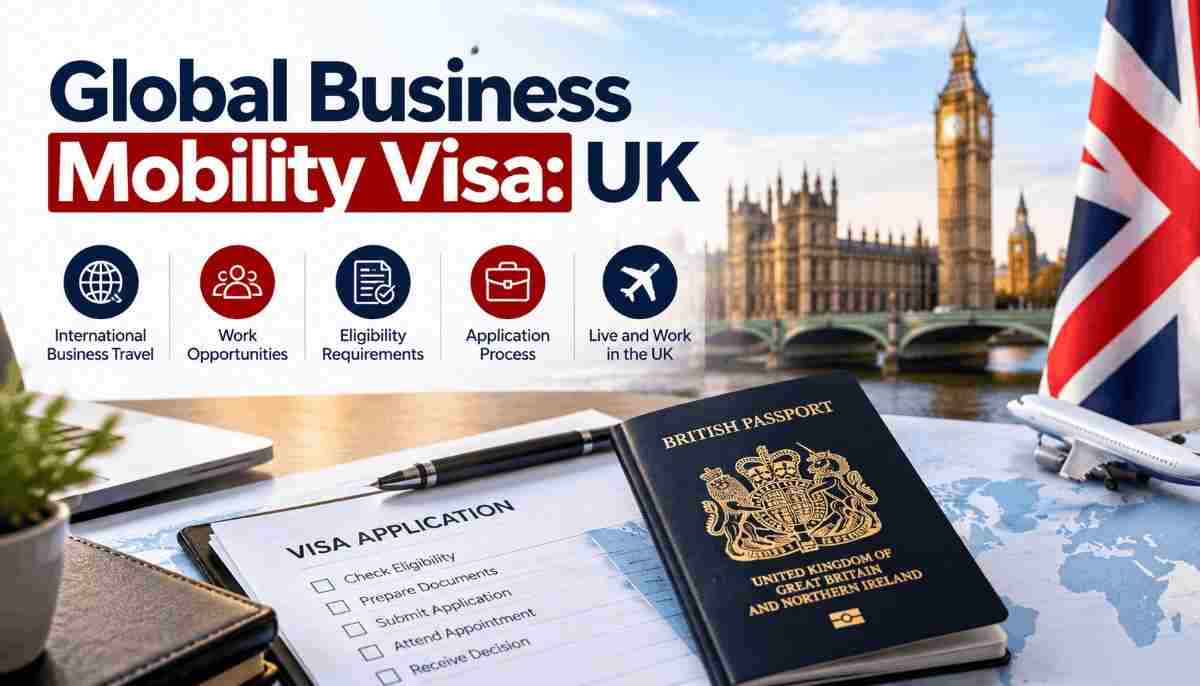
1. Confirm the correct route. Identify the category that matches the business assignment, employment arrangement and purpose of travel.
2. Check sponsorship. Confirm that the relevant organisation is eligible to sponsor the worker and can meet its sponsor duties.
3. Review the eligibility criteria. Check the job, salary, overseas employment and other requirements that apply to the chosen route.
4. Gather supporting documents. Collect the required identity, employment and sponsorship information before completing the form.
5. Submit the application. Apply through the official UK government process and pay the applicable visa fee and any required immigration health surcharge.
6. Wait for a decision. Processing times can vary depending on the application type, location and whether further checks are needed. Applicants should avoid making irreversible travel arrangements until they understand the relevant decision and travel requirements.
The official UK work visa guidance can help applicants review the wider work immigration system.
Common Mistakes to Avoid
Errors in route selection or supporting evidence can complicate an application. Common issues include choosing a route that does not match the assignment, assuming every overseas employee qualifies, overlooking salary or employment conditions, and submitting inconsistent documents.
Employers should also understand their sponsorship responsibilities. A sponsor may need to maintain accurate records, report certain changes and ensure the worker performs the permitted role. Immigration compliance continues after the visa is granted.
Summary
The Global Business Mobility Visa provides several routes for eligible overseas businesses and workers involved in international transfers, expansion, training and service delivery. Each category has distinct requirements, so selecting the correct route is essential. Careful preparation, accurate documents and a clear understanding of sponsorship duties can make the process more straightforward.