Auto Infotainment Market Trends: AI, Connectivity, Digital Cockpits, and Software Transforming In-Car Experiences
-

- September 26th, 2026
- 2,000 views
Introduction
The auto infotainment market is undergoing a significant transformation as vehicles become more connected, intelligent, and software-driven. Infotainment systems have moved well beyond traditional radio, navigation, and hands-free communication. Modern platforms combine entertainment, smartphone connectivity, cloud services, voice interaction, vehicle information, navigation, and personalized digital functions.
The auto infotainment market trends reflect a broader shift toward connected and continuously evolving vehicle experiences. Consumers increasingly expect the technology inside their cars to offer the same convenience, responsiveness, and personalization they experience with smartphones and other digital devices.
As a result, automakers and technology providers are focusing on artificial intelligence, digital cockpits, advanced displays, software-defined architectures, electric vehicle integration, cybersecurity, and connected services.
Artificial Intelligence Becomes a Core Infotainment Feature
Artificial intelligence is becoming one of the most important trends influencing automotive infotainment. Voice assistants are evolving from systems that recognize simple commands into more conversational platforms capable of understanding natural language.
AI can help users manage navigation, select entertainment, access information, make calls, and control compatible vehicle functions. More advanced systems can potentially understand context across multiple requests, reducing the need to repeat instructions.
Generative AI is also creating new possibilities for in-car assistants. Instead of navigating through several menus, users may increasingly communicate with their vehicles in a conversational manner.
The challenge will be ensuring that AI remains accurate, predictable, fast, and safe while the vehicle is moving.
Software-Defined Infotainment Gains Momentum
Software-defined vehicle architecture is changing the way infotainment systems are developed. Traditional systems were often designed around fixed hardware with limited opportunities for improvement after vehicle delivery.
Newer software-driven platforms can receive over-the-air updates that improve performance, fix problems, enhance security, and introduce selected capabilities.
This trend creates a more flexible ownership experience. Instead of remaining unchanged for years, infotainment systems can evolve as technology and consumer expectations change.
For manufacturers, software also provides an opportunity to maintain a longer-term relationship with customers after the initial vehicle purchase.
Digital Cockpits Become More Integrated
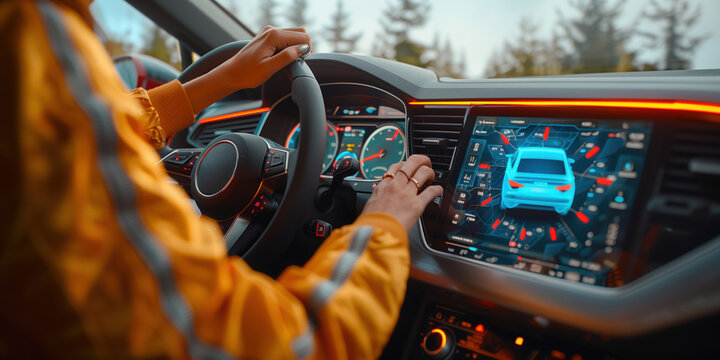
Digital cockpit technology is reshaping vehicle interiors. Instrument clusters, center infotainment displays, head-up displays, passenger screens, and voice interfaces are increasingly being designed as interconnected systems.
This integration allows information to be distributed more effectively between the driver and passengers. Drivers can receive navigation and vehicle information, while passengers can access entertainment and communication functions.
Future digital cockpits are likely to focus on intelligent information management rather than simply adding more screens. Clear layouts and intuitive interaction will remain essential.
Smartphone Connectivity Continues to Expand
Smartphone integration remains a major trend because consumers already depend on mobile devices for navigation, music, messaging, communication, and digital services.
Modern infotainment platforms increasingly provide wireless connectivity, allowing users to access familiar applications without constantly connecting a cable.
The future will likely involve even closer integration between personal devices and vehicle systems. User profiles, preferences, applications, and cloud-based services may increasingly move seamlessly between smartphones and vehicles.
Electric Vehicles Drive New Infotainment Requirements
The growing importance of electric vehicles is influencing infotainment development. EV owners depend on digital interfaces for battery status, range estimates, charging locations, energy consumption, and route planning.
Infotainment platforms can combine navigation with charging information to help drivers plan journeys more efficiently. Systems may recommend charging stops according to battery levels, travel distance, traffic conditions, and charging availability.
This makes infotainment an important part of the EV ownership experience rather than simply a platform for entertainment.
Personalization Becomes More Sophisticated
Personalized digital experiences are becoming increasingly important to vehicle users. Infotainment systems can remember preferences such as favorite destinations, music choices, interface layouts, and frequently used applications.
AI can make personalization more proactive by identifying patterns and recommending relevant content or services.
However, greater personalization also creates greater responsibility around data protection. Automakers need to provide transparent privacy controls and ensure that connected information is handled securely.
Advanced Displays and Augmented Reality
Display technology continues to develop rapidly. High-resolution center screens, digital instrument clusters, curved interfaces, and head-up displays are becoming important elements of modern vehicle interiors.
Augmented-reality technology offers another promising direction. AR-enabled displays can potentially place navigation guidance and other relevant information within the driver's visual field.
The emphasis will increasingly shift from screen size toward useful information delivery. Displays need to provide information clearly without overwhelming or distracting drivers.
Immersive Audio and Passenger Entertainment
Entertainment is expanding beyond traditional music and radio. Premium audio systems, spatial sound, streaming services, rear-seat displays, and passenger-focused applications are creating richer in-car experiences.
As vehicles become more automated, passengers may have more opportunities to use entertainment and productivity features during travel.
This could encourage greater development of video, gaming, communication, and personalized content services within connected vehicle environments.
Cloud Connectivity and Real-Time Services
Cloud-based connectivity is becoming increasingly important for modern infotainment. Connected systems can access real-time traffic information, weather conditions, navigation updates, charging information, media services, and other digital content.
Cloud platforms also support software updates and personalized user profiles.
The combination of cloud connectivity and software-defined architecture allows infotainment systems to become continuously connected rather than functioning as isolated vehicle components.
Cybersecurity Becomes a Major Priority
As infotainment systems become more connected, cybersecurity is becoming an essential consideration. Modern platforms interact with smartphones, cloud services, applications, and vehicle networks, creating a larger digital environment.
Manufacturers are focusing on secure software architecture, authentication, protected communications, data management, and regular security updates.
Consumers increasingly expect connected vehicle technology to provide convenience without compromising personal information or system security.
Growth of Connected Digital Services
Infotainment platforms are becoming gateways to broader digital services. Navigation, roadside assistance, remote vehicle functions, entertainment, personalized recommendations, and other connected capabilities can be integrated into a single ecosystem.
This development may also create new business opportunities through optional software features and subscription-based services.
However, long-term customer acceptance will depend on whether these services provide clear and practical benefits.
Greater Focus on User Experience
One of the most important trends is the increasing emphasis on usability. Advanced technology has limited value if drivers find it difficult to operate.
Future infotainment systems will need responsive interfaces, straightforward menus, accurate voice recognition, fast connectivity, and well-designed controls.
Manufacturers are increasingly recognizing that simplicity can be a competitive advantage. A system that performs a smaller number of functions extremely well may provide a better experience than one overloaded with complicated features.
Strategic Technology Partnerships
The growing complexity of infotainment is encouraging collaboration across industries. Automakers are working with software developers, semiconductor companies, AI specialists, connectivity providers, cloud platforms, and audio technology companies.
These partnerships allow manufacturers to access specialized expertise and accelerate innovation.
The competitive landscape is therefore expanding beyond traditional automotive companies, with technology capabilities becoming an increasingly important factor in product differentiation.
Conclusion
The auto infotainment market trends demonstrate a clear movement toward intelligent, connected, personalized, and software-driven vehicle experiences. Artificial intelligence, software-defined platforms, digital cockpits, smartphone integration, EV functionality, advanced displays, immersive entertainment, cloud connectivity, and cybersecurity are shaping the industry's direction.
The next generation of infotainment will focus on more than technological sophistication. Successful systems will need to be intuitive, reliable, secure, responsive, and genuinely useful to drivers and passengers.
As vehicles continue evolving into connected digital platforms, infotainment will become an increasingly important part of automotive design, customer experience, and long-term brand differentiation.
Written as -https://www.pristinemarketinsights.com/auto-infotainment-market-report